

(Conversation recorded on May 17th, 2023)
Show Summary
On this episode, Nate is joined by Daniel Zetah, who practices regenerative agriculture on his family farm in Minnesota. Daniel shares his experiences in becoming aware of the global challenges we face and his journey back to his family farm, where he has been instrumental in naturally cultivating the land back to life again. While much of The Great Simplification covers the intricacies of the metacrisis we face, Daniel brings the perspective of someone who has stepped outside of the system and into what he calls ‘personal sovereignty’. What are the time, energy, and labor requirements of being in tune with the land in this way? Where do animals – especially cows – fit into this story? Can deep, healthy topsoil be sexy? Is Daniel creating a blueprint for what many more happy, fulfilling lives could look like in a simplified future?
About Daniel Zetah
Daniel grew up on a farm in Minnesota where he learned to fix all manner of things driven from an insatiable curiosity about how things worked. He studied economics and business at university and lived abroad for 15 years where he bought and sold classic cars, worked as a snake relocator and scatologist, and the chemical spraying auditor for Tasmania. After waking to our planetary predicament, he became a full time environmental activist, then moved to an off grid community in the mountains where he studied permaculture and built straw bale houses. He moved back to America to help steer culture in a more sane direction, where he realized as long as the majority of people are incapable of meeting most of their fundamental human needs, even committed activists are feeding the dragon they’re trying to slay. He and his wife Stephanie moved back to the family farm in Minnesota where they are growing 80% of their calories, rebuilding the local ecology, and educating and empowering people to wrest back control of their sovereignty as human beings.
Daniel and Stephanie’s Farm – www.newstoryfarm.com
Watch on YouTube
Show Notes & Links to Learn More:
00:30 – Daniel Zetah, New Story Farm, New Story Farm Resiliency School
05:38 – Spread and idealization of American culture
17:40 – Ecologically conscious people tend to be clustered in urban areas rather than rural
20:01 – Nate’s Frankly on Reality, Probability, and Perception
27:27 – History of agrarian communities in the U.S.
28:14 – Robert Lustig + TGS Episode
28:20 – U.S. Subsidies towards agriculture
28:49 – Yellow Dent #2
29:21 – Large Scale Industrial Agriculture
30:35 – Dirt vs Soil
31:30 – Industrial Agriculture deteriorating soil quality
32:05 – Topsoil depletion over time
33:39 – Iowa once had up to 12ft of topsoil
34:05 – Average topsoil depth in Iowa
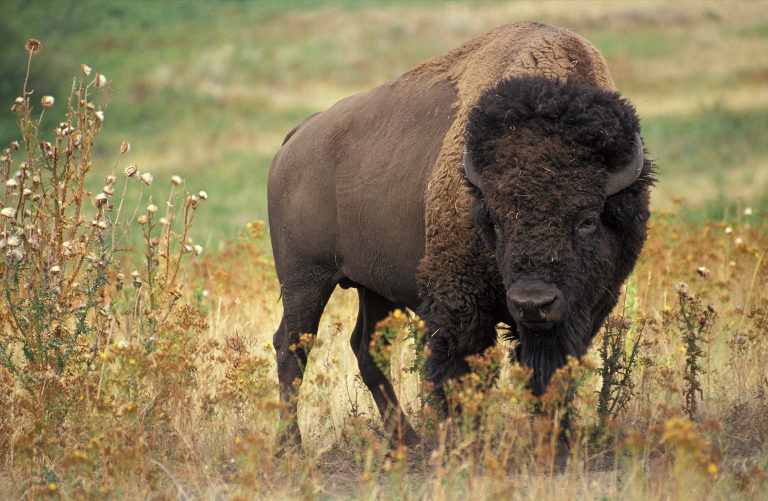
35:20 – Bison and topsoil production
36:05 – Perennial grasses and carbon storing
36:35 – The average soil carbon percentage prior to settlers was 12-15%* – now is is <2%
37:08 – Global average soil carbon content is ~1%*
37:22 – 93 million acres of corn in the U.S. every year
38:45 – Regenerative farming practices can increase .75-1% of carbon content per year*
39:08 – Kim Stanley Robinson + TGS Episode
39:20 – If we could get average global carbon content in soil to 3%, we could reduce carbon ppm to 350-375
40:09 – Americans pay around 7% of take home pay on food vs rest of world
41:05 – How removing all subsidies would affect food costs
42:10 – Profitability of regenerative farms
45:40 – Less than 1% of Americans live and work on farms producing food
48:01 – Ruminants and regenerative agriculture
48:43 – Pioneer species
49:55 – Indigenous food systems
52:22 – Problem with Industrial Animal Agriculture (CAFOs)
55:30 – Cows on a regenerative farm produce a fraction of methane than those from CAFOs
56:35 – Cows sequester carbon in a regenerative farm setting
1:05:01 – Slaughterhouse working conditions
1:07:56 – Joslin Faith Kehdy + TGS Podcast
1:11:58 – Ishmael by Daniel Quinn
1:12:48 – Genesis Creation Story
1:15:45 – Hutterites
1:16:35 – Charles Eisenstein
1:16:59 – Old Order Amish
1:19:55 – Meditation, Flow states
Teaser photo credit: By Jack Dykinga – This image was released by the Agricultural Research Service, the research agency of the United States Department of Agriculture, with the ID K5680-1 (next)., Public Domain, https://commons.wikimedia.org/w/index.php?curid=343547



Comments
We changed commenting systems on September 10, 2026 as part of a site-wide functionality and security upgrade. Your past comments have not disappeared, and you can still log in with your old Disqus account credentials if you wish. Contact us with any questions.
I was surprised they barely touched on that–but to be fair, Daniel did say he invites people to share the farm. I saved money and bought 21 acres in West Virginia in 1979–then married a neighbor and lived on his, had kids, got divorced and ended up with $5000 and no land. After remarrying and saving more money, we were invited to live on a land trust so we didn’t have to pay for our land, but technically don’t own it, we have a lifetime lease. Land is cheap in WV but the price I pay is being as isolated Daniel feels–I find my life of growing half our food (I’m trying to raise that) making our bread, hanging out laundry, doing some writing but no paid work, very satisfying but feel cut off from the obvious next step which is community. But, we built our own house here, on what would be considered low wages–my jobs prior to moving here paid $24,000/year for 15 months and then $20,000 for 2 years…on which I saved enough to build the house (my husband did most of the work but I had raised most of the money). So it isn’t impossible. And when things start falling apart, likely it will be possible to find places to squat and start building and farming without the deed for a deed. But also without access to a lot of things available today that would make it a whole lot easier–and as Daniel said, without skills.
I may sound cynical, but is personal souvereignity dependent on inheriting a farm? Because, in that case, the first step is already impossible for most of us