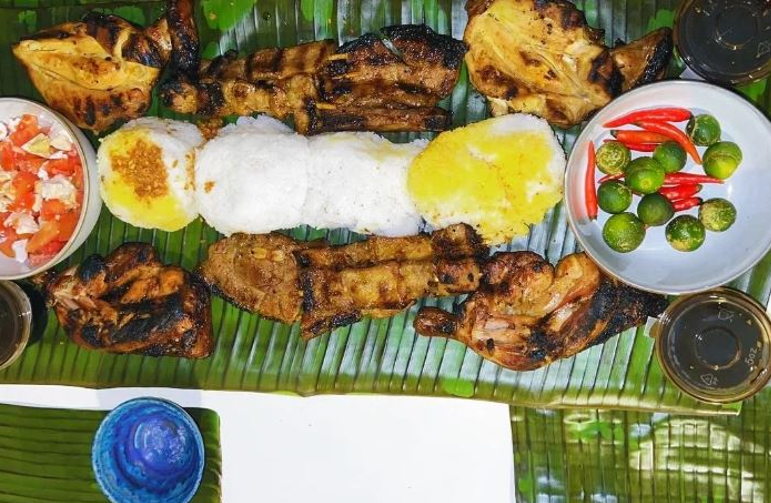
It’s always been my dream to host a kamayan meal as an adult. Kamayan is a traditional style of eating for Filipinos in the motherland and beyond. In this tradition, friends and family gather and share an enormous meal together—quite literally share a meal, because there is no separate plating. Instead, banana leaves are spread out to cover the table where the grilled protein and produce, rice, corn, tropical fruits, and salted egg salad are placed. The best part is we get to use our bare hands to partake in the feasting (kamayan is Tagalog for “by hand” or “to use one’s hands”). Because our bodies were more involved in receiving the sustenance, I felt more present.
I finally chose a night to host a kamayan event in my home with a few good friends, and as that fateful day approached, I saw how the preparation process was just as communal as the feast itself. Aldwyn brought steamed banana leaves from his backyard. Carl and Toni brought the libations. After putting every tasty thing together, we gazed at the generous meal before us—which was roughly no more than $50—and we took in the delicious moment with deep belly breaths. As we commenced, I said a prayer to thank the Universe for the opportunity to preserve our ancestors’ traditions through our bare hands. We then savored and were nourished—in every sense possible.
Our kamayan night instantly became a core memory of my year, and from there I wondered, how have I forgotten the reinvigorating power and intimacy of sharing a meal? For years, I necessarily paid attention to the alarming sociopolitical issues surrounding food, like the global threats to food security, eating disorders, fatphobia and body shame, the intersection of racism and diet culture, and unethical food production and distribution. These structural and social realities have distorted our relationships with food and severed us from the medicinal properties of food and its sacred presence in our lives and relationships. How, then, do we remind ourselves of food’s healing elements, especially in our social connections?
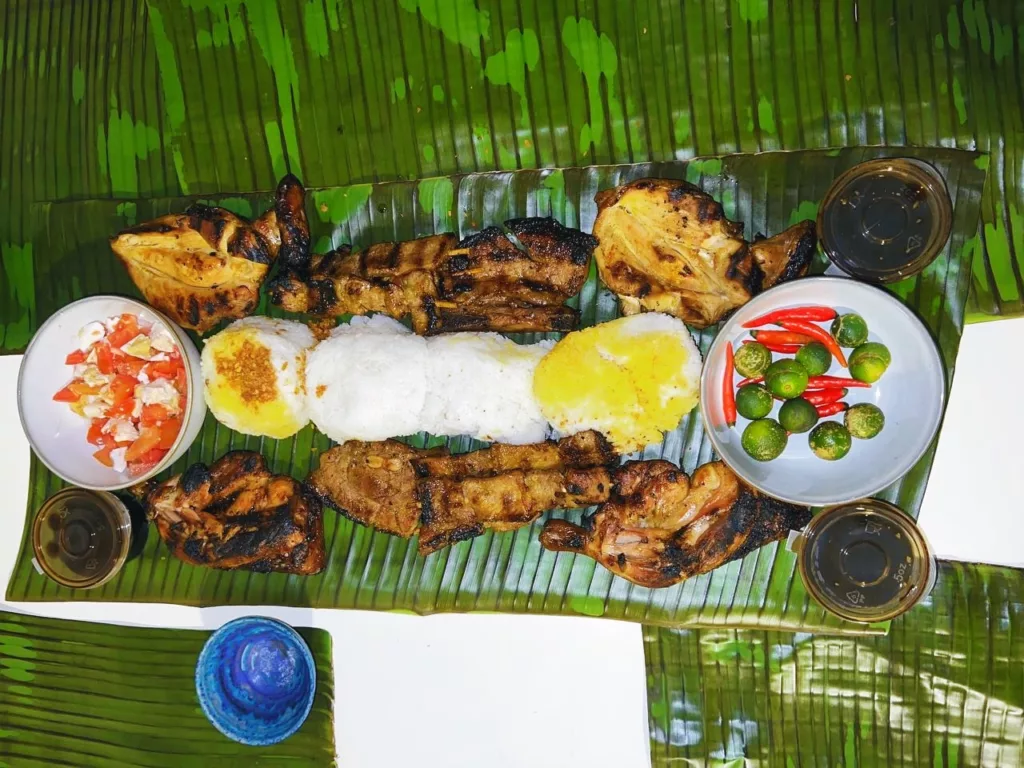
Photo taken by author’s friend Toni from kamayan night.
As early as ancient times, there is a continuous existence of food superstitions. This ranges from throwing grains of uncooked rice at weddings for fortune, hanging garlic at home to keep vampires or the aswang away, or cracking a wishbone. Somehow, across history and cultures, humans have an intuitive sense of the power of food. One of the friends I invited for kamayan night, Carl Cervantes, a professor and the creator of the Filipino psychospiritual project Sikodiwa, reminded me of an ancient Filipino belief called paglilihi (conception). It is believed that when a pregnant person has specific food cravings during the first trimester, the characteristics of the food they craved will have an impact on their unborn child’s future personality. For instance, Toni (another friend at my kamayan feast) shared that her mom craved fruit salad while pregnant with her. Because of that, Toni became the “jack-of-all-trades” at school because the fruit salad contained a variety of ingredients, thus making Toni versatile with various skills. While the research is inconclusive, this superstition unveils our ancestors’ understanding of our interconnectedness. Even as early as the womb, we are irreversibly connected through food.
Today, these spiritual ideas likely raise numerous eyebrows in disbelief. Food industries have become so severed from ancient wonder and the magical practice of food sharing. This is apparent in the industry’s abusive work environments and its vast spectrum of inaccessibility, ranging from lack of food access to the often pretentious language and culture of food elitism and critics. Stories like The Menu show how the industry curates world-renowned eating experiences exclusive to less than 1% of the world. Food reflects who and where we are in our society and, perhaps more importantly, the stark divisions within it.
When capitalism and colonization sever us from our connectedness, we can aim to reconnect by returning. In the essay “Food as a Portal—to Myself,” Ayu Sutriasa compellingly writes about the desire to heal one’s relationship with food in the midst of food colonization. She then beautifully narrates a pivotal stage of reconnecting with her roots through cooking. Ayu cooked Indonesian meals as loving, meditative acts of embodiment and remembrance—revering her roots and the power of the senses in the process. She writes, “Eating is a sensory experience that stimulates our touch and spirit and connection to each other as much as it satisfies our smell and taste.” This is what it means to return: to re-root and re-member, after being violently dismembered by capitalism and colonization.
Similarly, mainstream storytelling demonstrates this same invitation as the antidote to the loss of vitality in toxic food industry environments: to return to why the chef protagonist started cooking in the first place. The story almost always ends with cooking simple, childhood meals, like ratatouille in Ratatouille, sandwiches in The Bear, and, spoiler alert, a cheeseburger in The Menu. The medicine was to return.
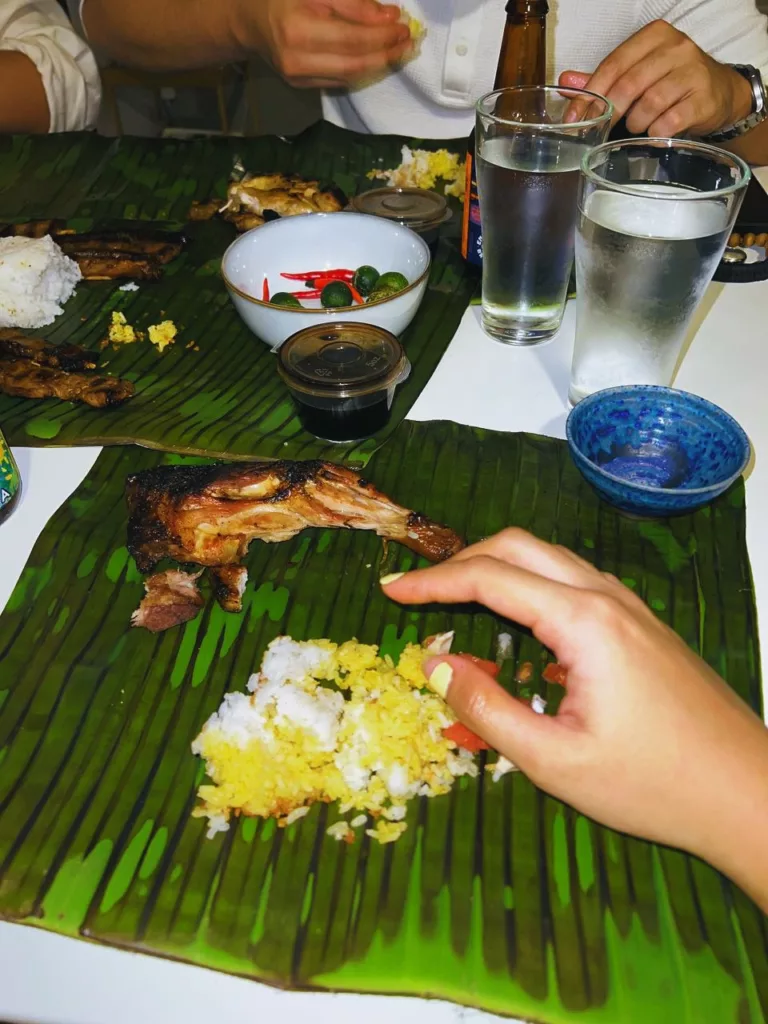
Photo taken by author’s friend Toni from kamayan night.
It is no wonder the kamayan meal I shared with Aldwyn, Carl, and Toni was so healing to me. Together, we returned to a Filipino tradition while having conversations about spirituality and superstitions that deepened our conversations and our connections to each other and to our ancestors. There was even active embodiment: With our hands, we took in every spicy and savory flavor. We relished in a deeper, tastier kind of intimacy. We were mesmerized and messy, laughing from our very full and delighted bellies.