

I think it’s fair to say that the recent Energy Outlook from the International Energy Agency represents a significant moment in the discourse around renewable energy.
I’ve pulled this post together from several sources, but let’s start with the the IEA’s Executive Summary, which argues that there’s still a window of opportunity that can keep us to 1.5 degree warming by 2050.
Four critical actions
It involves four critical actions:
- ‘A massive additional push for clean electrification that requires a doubling of solar PV and wind deployment relative to the APS (Announced Pledges Scenario); a major expansion of other low-emissions generation, including the use of nuclear power where acceptable; a huge build-out of electricity infrastructure and all forms of system flexibility, including from hydropower; a rapid phase out of coal; and a drive to expand electricity use for transport and heating.’
This would close one-third of the current gap between the APS and the Net Zero Environment (NZE) 2050 scenario, and is the best policy lever available to policy makers.
- ‘A relentless focus on energy efficiency, together with measures to temper energy service demand through materials efficiency and behavioural change.’
Energy efficiency has been increasing by 2% a year; it needs to double in the coming decade.
- ‘A broad drive to cut methane emissions from fossil fuel operations. Rapid reductions in methane emissions are a key tool to limit near-term global warming.’
To be clear: this requires active steps to reduce methane emissions, not just reduction in fossil fuel use.
- ‘A big boost to clean energy innovation. This is another crucial gap to be filled in the 2020s, even though most of the impacts on emissions are not felt until later.’
Prototypes and demonstrators
This is probably the most contentious area, but the IEA believes that half of the technologies that contribute to emissions reductions in 2050 will come from technologies at the ‘demonstration’ or ‘prototype’ stage. That really depends on how quickly they can come through to market; energy is an area where technologies have long lifetimes, and slow turnover rates.
On the upside:
More than 40% of the actions required are cost-effective, meaning that they result in overall cost savings to consumers compared with the pathway in the APS. All countries need to do more: those with existing net zero pledges account for about half of the additional reductions, notably China.
The decline of oil
In its coverage Forbes focussed on the accelerating forecasts in the Report about the decline of oil in particular. Their projection for peak demand for oil is now 2025, a lot sooner than previous projections. The Report has a telling chart comparing the IEA’s previous projections for oil, gas, and coal demand.

The reason I say that it’s a decisive moment is that the IEA was set up to represent the interests of energy consuming nations in the wake of the oil crisis in the 1970s, and has always seemed close to fossil fuel interests.
‘When the facts change’
Carbon Commentary re-published a fascinating note written by Kingsmill Bond of Carbon Tracker—headed, ‘The IEA finally starts to believe in the energy transition’. He captured this sense of a change of direction:
In the same way as it is much more profitable to buy an unloved stock where management turns it around, the impact of the IEA’s analysis is all the more powerful because they have moved over the course of the last couple of years from supporting continuity of the fossil fuel system to embracing renewables. And why not – when the facts change, you change your mind after all.
His note captures the main points from the news conference held by the IEA to launch the 2021 report. It’s a long list, so let me just pull out a few here:
- This is the decade of disruptions. Coal demand has already peaked and oil and gas demand will likely peak by 2025. 2019 thus was the peak in fossil fuel demand, and we are bouncing along the plateau.
- There is a lot that we can do at no economic cost to reduce emissions this decade. By 6Gt extra in total. And we can deploy 800 GW of new solar and wind at no economic cost as they are cheaper than the fossil fuel alternative.
- A new geopolitics of energy will emerge as trade shifts from fossil fuels to minerals and hydrogen.
- New energy is a huge market opportunity, with demand increasing tenfold to over $1tn and a new opportunity bigger than oil today.
The whole of Kingsmill’s note is well worth reading.
This article was also published on my Just Two Things Newsletter.
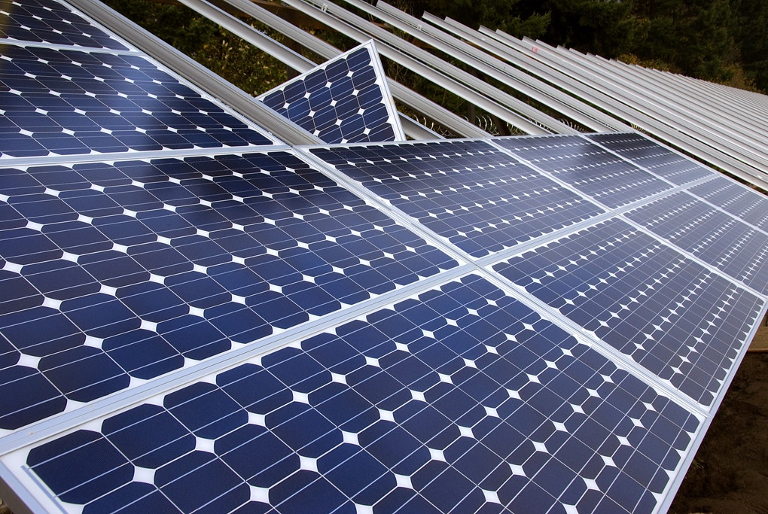
Teaser Photo: Oregon Department of Transportation/flickr, CC BY 2.0




Comments
We changed commenting systems on September 10, 2026 as part of a site-wide functionality and security upgrade. Your past comments have not disappeared, and you can still log in with your old Disqus account credentials if you wish. Contact us with any questions.
We’ll see. I suspect that under conditions of rapidly declining affluence countries will “temporarily” return to the cheapest fossil fuel available, including coal. We see this happening now all over the world due to the recent surge in gas prices.
This seems to ignore limits on materials and energy for producing renewable energy infrastructure, as though the fact that solar and wind are now cost-competitive with fossil fuels means we can just ramp up production at an enormous pace and solve the problem. But that would actually exacerbate the problem, if we continue wasting and using energy and materials at the current rate while adding on the energy and materials that go into the solar and wind infrastructure. Also, the suggestion that current improvements in efficiency need to double seems to assume that such improvements can simply be ordered like a meal in a cafe–but surely it will be harder and harder to find ways to improve efficiency, and eventually impossible.
Looking at this issue as a degrowth doomer changes the dynamics from the Green/Brown partisan fight that is all the rage these days. A degrowth doomer is honest about science. Green/Browns are only honest optionally according to their political goals. A degrowth doomer see that solar and wind do not have what it takes to power the society we have today. This goes further to say the real cost of renewables is multiples of what is indicated by fake greens both environmental and economic. Browns are not honest about the net energy decline of fossil fuels. Browns think substitution will improve energy issues. They are not appreciative of the importance of renewables to beef up resilience of our grid. EVs are vital in the effort to beef up our transportation networks. A degrowth doomer knows the planet can’t be save by humans. The planet is the only one that will save the planet. Fake greens want their cake and eat it with saving their kind of planet of human affluence and call it saving the planet.
You see the dynamics and why I am a degrowth doomer? I am not FAKE Green. I am not TRUE Green. I am REAL Green. I am realistically and relatively adapting to a stance of green prepping. I want to be TRUE Green but honestly understand that is an ideal no longer possible to most. Green prepping involves permaculture localism. It involves rejecting the delocalization of tech and efficiency whenever possible. This is my green filter. Tech that delocalizes is digital and transport related. Start moving distances and you delocalize. All kinds of knock-on effects occur as delocalization increases. Efficiency is another FAKE Green policy that must be filtered. Efficiency is vitally important until it delocalizes. Delocalized efficiency is when it reaches diminishing returns to cost and when it requires transport and centralized control through automation. This is classic reality testing.
Browns are not honest about net energy decline of fossil fuels. They think more pipelines and drilling is called for. They want prices to remain low and people the economic freedoms to choose. The markets will solve the problem. This denial of net energy decline puts society in a dangerous position. Instead, they should be boosting their interest in renewables, EVs, and permaculture localism. They instead push for more of the same of monocultures and whatever energy is price competitive in the market place. Long term EROI is not considered. Green permaculture and localism are fine for those greenies but it should not be subsidized is their postion. It is a hobby thingy in their view.
As a degrowth doomer I see the value of the status quo stability to make changes for a dangerous time ahead. What this means is all hands-on deck in regards to energy and efficiency but an effort that is realistic and relative. First delocalization and economic denial must be addressed. This means affluence issues must be faced. A degrowther is honest about the cost and the inability of affluence to be maintained let alone increased. If affluence can’t be maintained or increased then the current system will decline and in some local situations rapidly decline. Limits are here for green and brown. No amount of tech, efficiency, or fake capital will Make America Great Again or Build Back Better. These are lies and actually dangerous lies of control and manipulation.
Energy is in net decline and both green and polices are denial policies. Efficiency is in diminishing return in a value sense but also technical and economic. The value sense is in regards to delocalization. Hyper efficiency is a destructive force when it lowers local resilience and sustainability. Technically efficiency increases are dubious if it complicates because this makes the system more brittle and prone to failure. Economically if you destroy real value of growth then you are just draining your bank account. What this means is if you allow unproductive growth of any kind that is claimed as real growth then you are economically downcycling. Generally, this growth is a sham growth when the returns are far into the future or based on yet to be perfected technology. This is a snapshot of the green new deal.
Degrowth doom is simple. Downsize because we are in a paradigm shift of decline on ALL levels of the physical world. The only growth areas are in niches freed up where decline allows it. The spiritual world of meaning is the other growth area. This will be a time of energized meaning and with that comes heroes and great leaders. Degrowth doom is honest and accepts consequences. This means a value judgment on going forward. Honesty and acceptance are the only way to get to real value. In a time of decline if you can’t define value then abandonment, dysfunction, and irrational policy will be far worse. Realgreenadaptation.blog
Degrowth doom. Cool term. Better than Happy McDoomster and whatnot. What has your success with being this kind of honest been like? Because folks really don’t want to discuss the impact to their lifestyles, should the world be ordered tomorrow afternoon to not only go to net zero emissions, but take the stuff out of the atmosphere directly as well. I mean seriously, the world has been avoiding effective collective action since climate change became a cause celeb.
Bill, thanks for your response. I have had no success locally with my ideas. People like what I am doing with my permaculture but if I were to talk to them like I do with many of the posts I make here they would not be receptive. I think part of the problem is some of these issues are too academic for many people. I am hoping a few who read my low traffic blog might find some of what I say useful. Locally, I don’t even talk about it except to the rare individual that is enlightened to the reality of decline.
I am not looking to start a movement. What I am doing is trying to help a few connect the dots and begin a process of adaptation. The top is gone with environmentalism. Techno optimist or social justice warriors have hijack honest environmentalism. The result is academics who have never got their hands dirty talking about what is good for the planet! There is no talking to browns. This is why environmentalist like us are here on resilience. At the bottom with the grass roots there is an opportunity for a few to make proper changes. It is my feeling that offering people some kind of blueprint for action for the individual and small groups is the best I can do. It is my opinion these people will have outsized impact when decline accelerates. In this frame of mind, I am throwing seeds in the wind hoping that a few find fertile ground.