

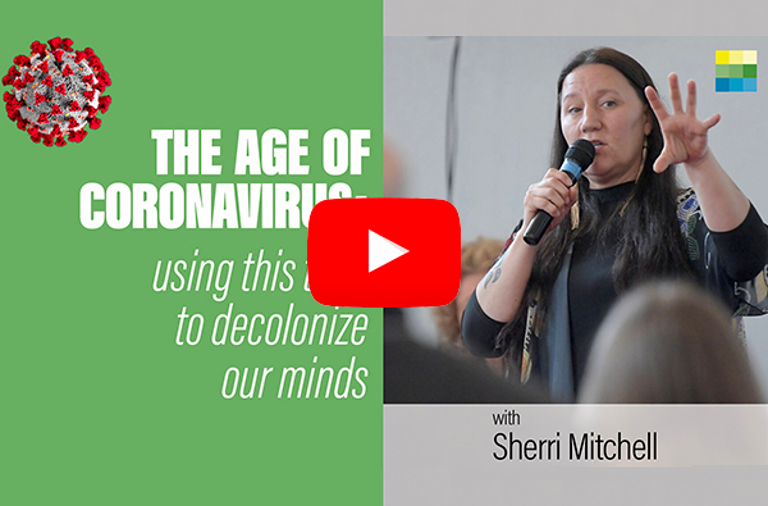
The recent surge in Black Lives Matter protests following the murders of George Floyd, Breonna Taylor, and Ahmaud Arbery, along with growing evidence that COVID-19 is disproportionately hitting communities of color, have raised urgent questions about structural racism and white privilege in the U.S.
But to address these and other systemic injustices we must first understand them and get at their roots. These go back further and are embedded more deeply in the structures and foundational beliefs of our society than most of us realize.
In fact, according to Sherri Mitchell (Weh’na Ha’mu Kwasset), their origins go back to the papal bulls of the 15th century, which codified the subjugation of land and peoples by European colonizers, and even further back to slavery in the days of Rome and the commodification of women’s bodies thousands of years ago.
I spoke recently with Sherri on the long history of colonization and conquest—upon which our legal, religious, and educational structures continue to be based—and how the coronavirus pandemic and the growing recognition of white privilege present a unique opportunity to decolonize our society, minds, and hearts.
Sherri Mitchell is a lawyer, educator, writer, speaker, and organizer who has been actively involved with Indigenous rights and environmental justice work for more than 25 years.
Please give it a watch, or if you’d rather give it a listen on your favorite podcasting app, we’ve also released the interview on Crazy Town. And please share and discuss it with your friends and loved ones.
I hope you get as much out of this conversation as I did.
Stay healthy. Stay curious. Stay engaged.
Teaser photo credit: Sherri Mitchell’s Facebook page.




Comments
We changed commenting systems on September 10, 2026 as part of a site-wide functionality and security upgrade. Your past comments have not disappeared, and you can still log in with your old Disqus account credentials if you wish. Contact us with any questions.