

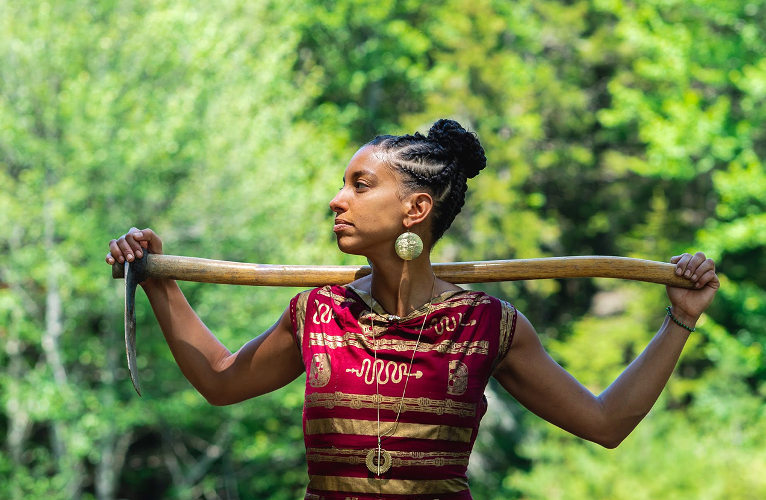
Some of our most cherished sustainable farming practices – from organic agriculture to the farm cooperative – have roots in African wisdom. Yet, Black farmers experience discrimination and marginalisation worldwide. Author, activist, farmer and founder of Soul Fire Farm in New York, Leah Penniman is committed to ending racism and injustice in our food system. Through programmes such as the Black-Indigenous Farmers Immersion, a sliding-scale farmshare delivery programme, and reparations work, Soul Fire Farm is part of an international network of farmers working to increase farmland stewardship by people of colour, restore Afro-indigneous farming practices, and end food apartheid. Watch Leah talk about this growing global movement and how ORFC delegates can contribute and help build a food system based on justice, dignity and abundance for all members of our community.
Act: Inspiration
Farming While Black: African Diasporic Wisdom for Farming and Food Justice, Leah Penniman
January 31, 2020
Related Articles
'SELECT SQL_CALC_FOUND_ROWS wp_posts.ID
FROM wp_posts LEFT JOIN wp_term_relationships ON (wp_posts.ID = wp_term_relationships.object_id)
WHERE 1=1 AND wp_posts.ID NOT IN (3479922) AND (
wp_term_relationships.term_taxonomy_id IN (4,8988,8992,8997)
) AND wp_posts.post_type = \'post\' AND ((wp_posts.post_status = \'publish\'))
GROUP BY wp_posts.ID
ORDER BY wp_posts.post_date DESC
LIMIT 0, 3'

Notes from an old farmer: Revitalizing our rural communities
There is a new energy among our younger citizens to seek a more meaningful life in the country. Now is the time to take advantage of their new-found passion to live and work in a rural community.
October 13, 2026
‘The countryside cannot be made a sacrifice zone for the city’: Coming home to part-time farming – book excerpt
Cities cannot feed themselves, thus people who live in cities will be forever detached from the problems that come with extracting the resources they depend on and producing the food they eat.
October 2, 2026

For 6,000 years humanity controlled water. Climate change is changing the equation
As climate change brings more extreme floods, droughts and heatwaves, a growing number of cities are exploring a different path: adapting to water’s rhythms rather than trying to dominate them.
September 30, 2026


Comments
We changed commenting systems on September 10, 2026 as part of a site-wide functionality and security upgrade. Your past comments have not disappeared, and you can still log in with your old Disqus account credentials if you wish. Contact us with any questions.