

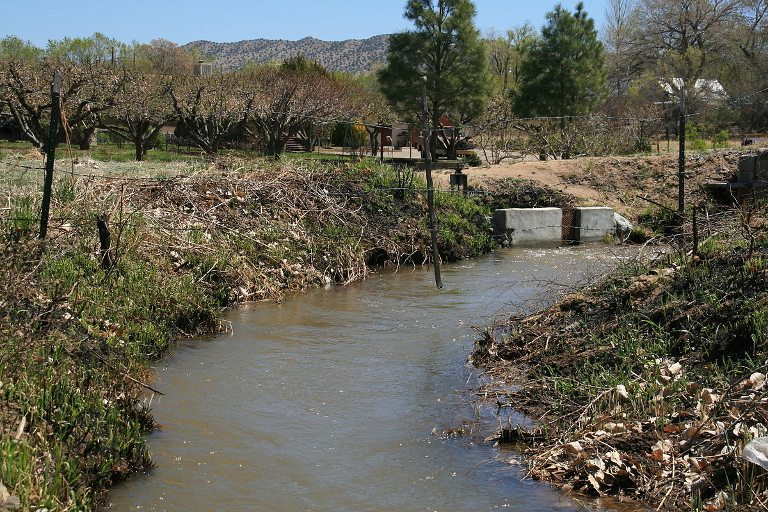
Devon Peña is Professor of American Ethnic Studies and Anthropology at the University of Washington. He is also founder and president of the Acequia Institute an organization devoted to strengthening traditional communal irrigation practices in the San Luis Valley of Colorado. He and host Alan Wartes spoke about his advocacy of what he calls the “decolonization of identity” among indigenous peoples in particular but also how everyone can benefit from this concept.
Related Articles
'SELECT SQL_CALC_FOUND_ROWS wp_posts.ID
FROM wp_posts LEFT JOIN wp_term_relationships ON (wp_posts.ID = wp_term_relationships.object_id)
WHERE 1=1 AND wp_posts.ID NOT IN (3475383) AND (
wp_term_relationships.term_taxonomy_id IN (5,8988,8992,9001)
) AND wp_posts.post_type = \'post\' AND ((wp_posts.post_status = \'publish\'))
GROUP BY wp_posts.ID
ORDER BY wp_posts.post_date DESC
LIMIT 0, 3'

Without pluralism within the climate movement, we risk handing the future to the far right
The climate crisis demands urgency, not ideological uniformity. In an already fragmented movement, requiring adherence to specific positions on issues beyond climate action deepens division and opens space for anti-democratic influence.
April 14, 2026

The empty desk policy: Why remote work is the sustainability win we’re ignoring
The daily commute is more than an inconvenience; it is a major source of pollution and wasted time. As return-to-office demands grow, remote work may be one of the most overlooked tools for reducing emissions while improving quality of life and accessibility.
April 10, 2026
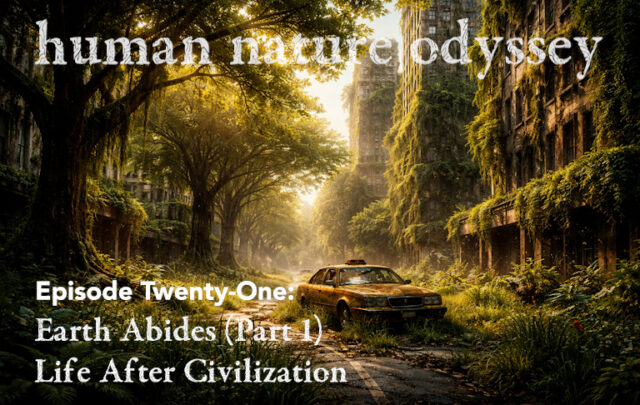
Human Nature Odyssey, Episode 21. Earth Abides (Part 1): Life After Civilization
You ever go on a little trip, to just get away from it all — only to come home and find all of civilization collapsed while you were gone and you might be the last person left on earth? Well then you could totally relate to George R. Stewart’s 1949 science-fiction novel, “Earth Abides.”
April 9, 2026

