

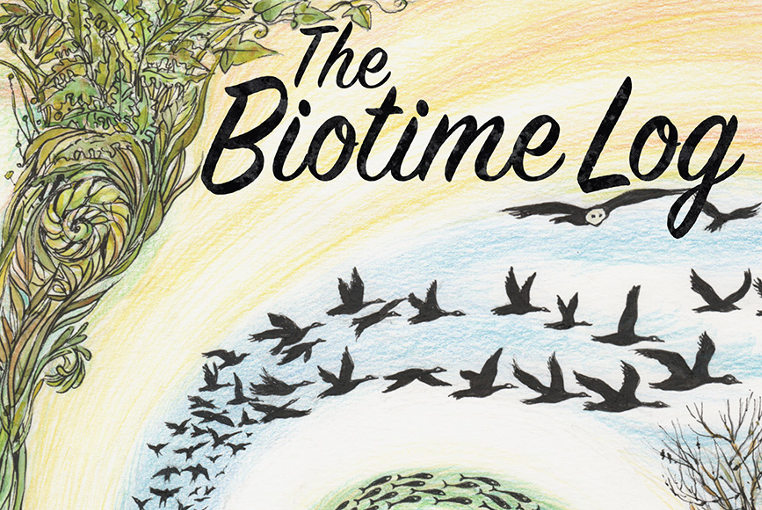
 Biotime, or biological time, runs at a very different pace and rhythm to human time. It can be observed by recording events in the natural world. These can be as varied as the day the first spring bulb opens, the last frost before summer, or the first sighting of a species of bird or insect in a new habitat.
These events can be part of a larger natural rhythm, like the turning of the seasons, or an indicator of slow changes in an ecosystem, like unusual weather patterns or an increase of average temperatures. This helps gardeners, nature watchers. On a larger scale, we can also reflect on our own biological rhythms relating to the waxing and waning of the moon and the seasons and beyond!
The Biotime Log provides a sound introduction to biotime and how to keep your own log. This is useful for:
- Gardeners to plan new plantings and crops protection
- Nature lovers to record natural rhythms like the annual migration of birds
- Ecologists to log new volunteer species in the local ecosystem
- For health and wellbeing, to record our own biological rhythms relating to the waxing and waning of the moon and the seasons.
Beautifully illustrated, this ready-made book in which you can note your day-to-day observations will last for years. There are no days or years, just the dates of each month with two days allocated to each page. This allows you to record events by first adding the year at the beginning of each of your entries.
Over time you build a picture that you can refer to year on year to compare your observations. Create your own fascinating record of your local environment and its rhythms and mysteries! Your observation will deepen your connection with the natural world around you, your understanding of its cycles, and your appreciation of your local ecosystems.
The Biotime Log is published by Permanent Publications and is available to buy direct from them at http://permanentpublications.co.uk/port/the-biotime-log-by-maddy-harland.



Comments
We changed commenting systems on September 10, 2026 as part of a site-wide functionality and security upgrade. Your past comments have not disappeared, and you can still log in with your old Disqus account credentials if you wish. Contact us with any questions.