NOTE: Images in this archived article have been removed.
Download
 “Back in the 1930s on the Olympic peninsula, people were paying their taxes in alternative money…The banks shut them down. This is an example of the monopoly the banks have, and the level of control they have over peoples’ economic lives… People need to know [local currency] is a possibility, an option, a realistic tactical and powerful way to take back your economic power from the bankers.” Fourth Corner Exchange co-founder Francis Ayley says the current debt-based global money system is an unsustainable Ponzi-scheme that will crash. By contrast, local currencies are unlimited, based on whatever members want to exchange. He and director Lia Ayley share the nuts and bolts for new members starting to exchange, how values are set, and exchanges involving both Life Dollars and US dollars. The biggest challenge, they say, is changing our mindset from the scarcity built into the existing monetary system to one based on relationships, cooperation and plenty. [fourthcornerexchange.org]
Watch our 2006 interview of Francis Ayley: Local Currencies – Replacing Scarcity with Trust (episode 49).
Related Articles
'SELECT SQL_CALC_FOUND_ROWS wp_posts.ID
FROM wp_posts LEFT JOIN wp_term_relationships ON (wp_posts.ID = wp_term_relationships.object_id)
WHERE 1=1 AND wp_posts.ID NOT IN (2771195) AND (
wp_term_relationships.term_taxonomy_id IN (2,8988)
) AND wp_posts.post_type = \'post\' AND ((wp_posts.post_status = \'publish\'))
GROUP BY wp_posts.ID
ORDER BY wp_posts.post_date DESC
LIMIT 0, 3'
By Jan Spencer, Resilience.org
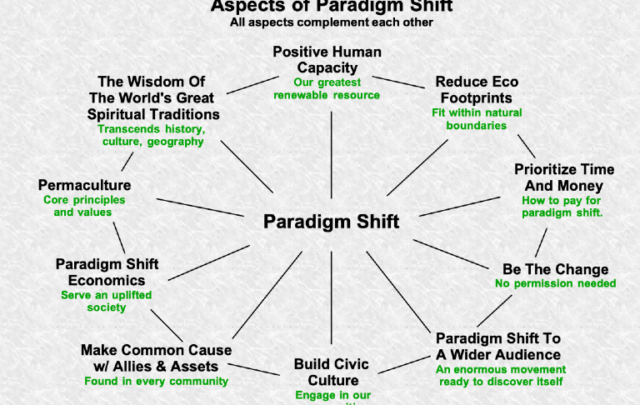
Benicia, California, is set to lose its largest single employer and source of tax revenue, a sprawling oil refinery. A Guardian article about this issue catalyzed this essay that describes what a thoughtful process might look like, if a community – any community – chose to pursue sustainability instead of economic growth.
April 2, 2026
By Miho Soon, Post-Growth Institute
It’s curious that money trauma hasn’t gone into the mainstream yet. It’s one of the most fundamental forces shaping how we move around in our lives, and yet it remains incredibly taboo.
March 31, 2026
By Jeremy Lent, Resilience.org
The gap between the beckoning future of an ecocivilization and today’s grim reality is only too clear. But to the extent that meaningful hope does arise, it emerges from the very ruptures of our present breakdown. As the weave of our dominant system unravels, possibilities emerge to reweave our societal fabric into a new design.
March 31, 2026