NOTE: Images in this archived article have been removed.
 How much junk do you own? You’re probably not technically a “hoarder” but like most Americans, you may have way more stuff than you know what to do with – stuff that is no longer valuable to you, but that you don’t want to just throw away. This week on Sea Change Radio, we talk to Adam Werbach, the co-founder of Yerdle, an online sharing platform that allows people to trade things they no longer need or want in exchange for other people’s stuff that they do want, using a points-based economy. No currency changes hands, and no new materials are used to make more stuff.
Then, host Alex Wise speaks to the author of The Ogallala Road, Julene Bair. Her touching new memoir is a personal account of how the ascendance of industrial farming in America has laid waste to the social fabric of the heartland.
Tags: agriculture, industrial farming, reuse, Waste, waste reduction
Related Articles
'SELECT SQL_CALC_FOUND_ROWS wp_posts.ID
FROM wp_posts LEFT JOIN wp_term_relationships ON (wp_posts.ID = wp_term_relationships.object_id)
WHERE 1=1 AND wp_posts.ID NOT IN (2284528) AND (
wp_term_relationships.term_taxonomy_id IN (5,8988)
) AND wp_posts.post_type = \'post\' AND ((wp_posts.post_status = \'publish\'))
GROUP BY wp_posts.ID
ORDER BY wp_posts.post_date DESC
LIMIT 0, 3'
By Sharon Stein, Resilience.org
Green AI will likely continue to stretch as different communities bring their own priorities and imaginaries to the term. But if its dominant forms remain tethered to extractive assumptions, it risks becoming little more than an alibi for the systems driving planetary breakdown.
March 25, 2026
By Tom Murphy, Do the Math
The entire Community of Life—humans included—were better off when shrouded in the mysterious magic of the living world: held in awe, humility, and respect. We came into being inside the feedback loop, and threaten to destroy much when presuming to extract ourselves from its magical protection.
March 25, 2026
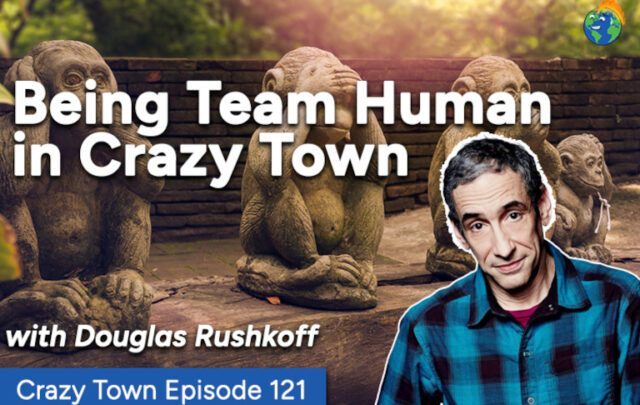
By Asher Miller, Jason Bradford, Rob Dietz, Douglas Rushkoff, Resilience.org
The question of who’s the real nut often arises for us collapse-aware folks living here in Crazy Town. Since Mr. Peanut is no longer returning their phone calls, Rob, Jason, and Asher invite Douglas Rushkoff, media theorist, professor, and host of the Team Human Podcast to answer the question.
March 25, 2026