 In this episode, Local Bites interviews Stacy Mitchell of the Institute for Local Self-Reliance to talk about the multiple social, economic and environmental benefits of local business ownership and community-scaled financial institutions. Mitchell lays out the evidence for why local ownership matters, and provides a thorough debunking of the idea that large, global corporations are more efficient or create more jobs than smaller-scale, community-rooted enterprises. After warning listeners about the growing consolidation of economic power in the hands of fewer and fewer global corporations, Mitchell exposes the policy decisions that have led to such concentrated ownership. She concludes by highlighting several promising initiatives from the growing localization movement, and articulating the key components of a ‘localist policy agenda’.

Related Articles

New tools for growing the commons, and how I discovered them
After the financial crash of 2008-9, I started to discover tools and ideas that I thought were promising, but discrete and disconnected. But they’re not: they can be (and are being) used together to form networks that have the potential to grow exponentially to challenge the status quo – to build a commons economy, a commons society, a commons world.
March 12, 2026
Chokepoint
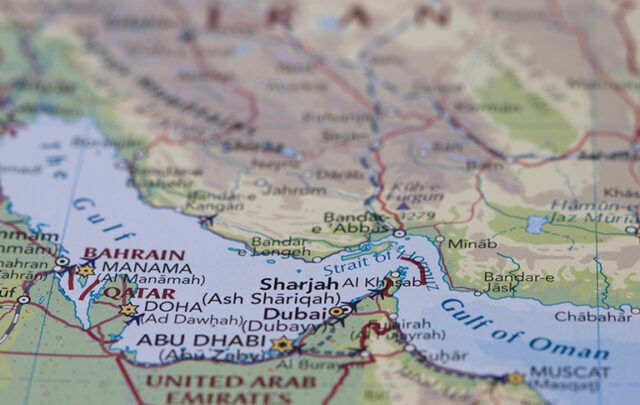
The 24-mile-wide Strait of Hormuz in the Persian Gulf, through which roughly 20 percent of world oil shipments pass, is an obvious pinch point for a vital industrial resource. But it also serves as an apt metaphor for the brittle global supply chains upon which the entire economy depends.
March 12, 2026

Wide Boundary News: The Iranian War, Rising Gas Prices, and the Single Point Failure
In this installment, Nate addresses the U.S. and Israeli military offensive against Iran and traces the reverberating effects that extend far beyond the conflict itself, starting with what the closure of the Strait of Hormuz means for a civilization that routes a massive share of its physical economy through a single maritime corridor.
March 11, 2026