NOTE: Images in this archived article have been removed.
This essay comes from the book ENERGY: Overdevelopment and the Delusion of Endless Growth Published by the Foundation for Deep Ecology in collaboration with Watershed Media and Post Carbon Institute.
Download Retooling the Planet
Retooling the Planet
This essay was adapted from the report Retooling the Planet, which ETC Group prepared for the Swedish Society for Nature Conservation; lead authors were Diana Bronson, Pat Mooney, and Kathy Jo Wetter.

Read more and take action at energy-reality.org
ETC Group is an international civil society organization that promotes critical analysis of emerging technologies. Based in Canada, the organization works to sustain cultural and biological diversity and to advance food sovereignty and human rights.
Tags: energy-reality, geoengineering, geopolitics
Related Articles
'SELECT SQL_CALC_FOUND_ROWS wp_posts.ID
FROM wp_posts LEFT JOIN wp_term_relationships ON (wp_posts.ID = wp_term_relationships.object_id)
WHERE 1=1 AND wp_posts.ID NOT IN (1948253) AND (
wp_term_relationships.term_taxonomy_id IN (1)
) AND wp_posts.post_type = \'post\' AND ((wp_posts.post_status = \'publish\'))
GROUP BY wp_posts.ID
ORDER BY wp_posts.post_date DESC
LIMIT 0, 3'
By Chris Rhodes, Energy Balance
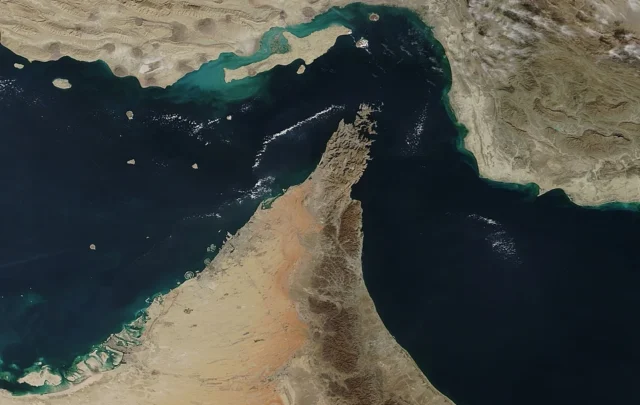
Hence, the severe restrictions in the flow of oil though the Strait of Hormuz, resulting from the recent US-Iranian attacks, may be seen as a stark rehearsal for the consequences of a severe shock in the global oil supply, as might be experienced from a “peak oil” crisis, with volatile price spikes and supply chain disruptions.
March 13, 2026
By Ben Shread-Hewitt, The Geopolitical Climate
This is the paradox both Saudi Arabia and the UAE are now navigating. The grey war they are waging — economically, culturally, through regional proxies — is a race to secure the post-oil future before the other does.
March 12, 2026
By Richard Heinberg, Resilience.org
The 24-mile-wide Strait of Hormuz in the Persian Gulf, through which roughly 20 percent of world oil shipments pass, is an obvious pinch point for a vital industrial resource. But it also serves as an apt metaphor for the brittle global supply chains upon which the entire economy depends.
March 12, 2026