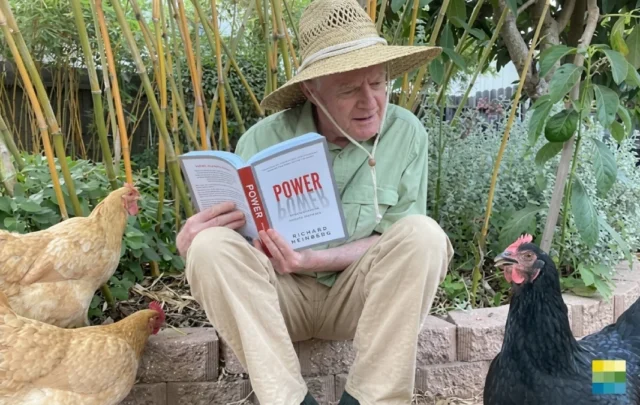
A couple of weeks ago I spoke at TedxExeter, a fantastic occasion with many great speakers (have a look at their website as more and more of the films from the day go online). I spoke for the first time in detail about Totnes as a case study, and what, after 6 years, we can draw from the experience of Transition Town Totnes. I hope you enjoy it.
My TEDxExeter talk: ‘My town in Transition’
By Rob Hopkins, originally published by Transition Culture
May 1, 2012
Rob Hopkins
Rob Hopkins is a cofounder of Transition Town Totnes and Transition Network, and the author of The Transition Handbook, The Transition Companion, The Power of Just Doing Stuff, 21 Stories of Transition and most recently, From What Is to What If: unleashing the power of imagination to create the future we want. He presents the podcast series ‘From What If to What Next‘ which invites listeners to send in their “what if” questions and then explores how to make them a reality. In 2012, he was voted one of the Independent’s top 100 environmentalists and was on Nesta and the Observer’s list of Britain’s 50 New Radicals. Hopkins has also appeared on BBC Radio 4’s Four Thought and A Good Read, in the French film phenomenon Demain and its sequel Apres Demain, and has spoken at TEDGlobal and three TEDx events.
An Ashoka Fellow, Hopkins also holds a doctorate degree from the University of Plymouth and has received two honorary doctorates from the University of the West of England and the University of Namur. He is a keen gardener, a founder of New Lion Brewery in Totnes, and a director of Totnes Community Development Society, the group behind Atmos Totnes, an ambitious, community-led development project. He blogs at transtionnetwork.org and robhopkins.net and tweets at @robintransition.
Tags: Building Community, Fossil Fuels, Oil, Resource Depletion
Related Articles
A future of ‘fewer and less’ may be unavoidable. But how do we get there humanely?
By Robert Jensen, Savage Minds
With age, I’ve become more aware of the world’s complexity but also better equipped to come to simple, albeit painful, conclusions: We need to replace fantasies of endless growth with ideas about managing the contraction.
September 16, 2026
Preserving labor history in the present, for the future
By Marianne Dhenin, YES! magazine
Labor activists take steps to preserve the documents and strategies they use today, so future organizers will have a practical guide.
September 8, 2026
Unions have been down before, history shows how they can come back
By George Lakey, Waging Nonviolence
Two ways we can honor unions at this time of trial are to ask others to join union picket lines and to learn from their innovations and successes for whatever campaigns we are committed to today.
September 7, 2026


Comments
We changed commenting systems on September 10, 2026 as part of a site-wide functionality and security upgrade. Your past comments have not disappeared, and you can still log in with your old Disqus account credentials if you wish. Contact us with any questions.