

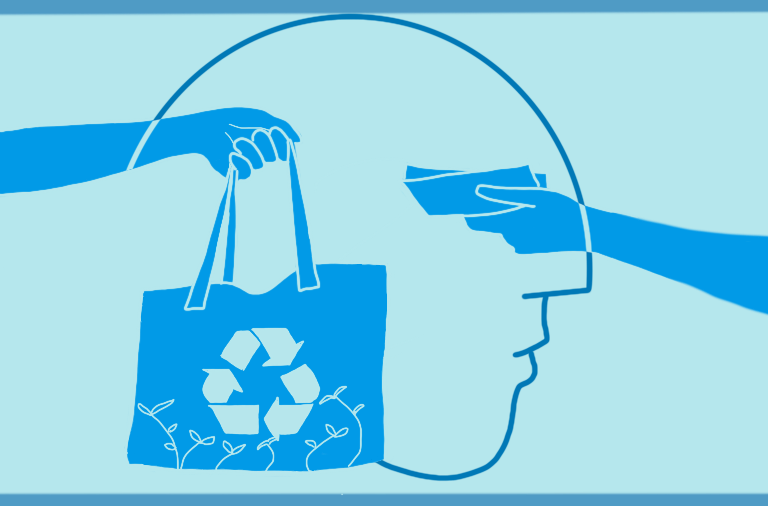
Most homeowners in the U.S. would come out ahead if they invested in energy efficiency improvements — new insulation, sealed windows, more efficient boilers, and the like. So why don’t they do it? Simple: the upfront costs are steep and the paybacks can take a long time. Many homeowners don’t have access to the capital to cover the costs, or they worry that they will move before the the costs are repaid, thus leaving subsequent owners to reap gains they didn’t pay for.
Given the substantial public good served by having these retrofits done — they save consumers money, create jobs, and reduce carbon pollution — how can public policy encourage them?
If you can come up with half the upfront cost, you can use the “Cash for Caulkers” (i.e., Home Star) program that’s going to be passed into law soon. Or if you live in a town or city that can afford one, you can take advantage of a PACE program, which offers loans that cover the initial costs and are paid back over time from energy savings.
Who does that leave out? Who doesn’t have upfront capital and doesn’t live in a city with money to spend on PACE? You guessed it: rural homeowners.
This matters for several reasons. First off, rural homes — over 20 percent of which are manufactured homes — are substantially less efficient than their urban and suburban counterparts. That’s why, even though their homes are generally smaller and their electricity is generally cheaper, the average rural household pays $200-$400 more a year on energy bills than comparable urban households. And given that they make roughly $10,000 less per year, that’s not chump change.
Second, rural Americans are precisely the ones most politically hostile to climate action, which they see as a liberal political program that primarily benefits cities and coastal elites. Direct energy benefits to rural homeowners could help change the political landscape and ease further action.
Enter Third Way, which today released a fantastically clever idea for addressing this problem. You can read the details here, but in brief, it would effectively extend a PACE-like program to rural homeowners. Rather than being administered by cities, though, it would be run by utilities, specifically the customer-owned utility co-ops that serve rural areas. The co-ops would borrow money from the USDA’s Rural Utilities Service and then offer customers the option of having a qualified contractor come out, do an energy assessment, and install efficiency improvements. This would be paid for by a low-interest (no more than 3 percent) loan, paid back over ten years by a small surcharge on utility bills. The loan is attached to property taxes, so it would transfer with ownership. It’s painless, risk-free, and accessible to all homeowners, just like PACE in cities.
The cost?
According to USDA, the total program cost will be $995 million to issue $4.9 billion in zero-interest loans. That includes $755 million in loan subsidy costs, $200 million for a start-up grant fund, and $40 million for program overhead.
That’s beans!
The benefits?
A loan volume of $5.6 billion dollars at these rates would spur the weatherization of up to 1.6 million rural homes in 47 states over the next ten years, eliminating the need for new generating capacity to power 625,000 homes in coal-dependent areas and creating 34,000 new jobs by 2020, including 20,000 new jobs created by the end of 2011.
Jobs, consumer relief, and carbon pollution reduction — win win win. Not too shabby.
The idea was introduced as legislation today, as the Rural Energy Savings Program. In the Senate the bill is co-sponsored by Sens Jeff Merkley (D-OR), Lindsey Graham (R-S.C.), Richard Lugar (R-Ind.), Jeanne Shaheen (D-N.H.), Tim Johnson (D-S.D), and Michael Bennett (D-Colo.). A counterpart was introduced in the House by Reps James Clyburn (D-S.C), Tom Perriello (D-Va.), Ed Whitfield (R-Ky.), and John Spratt (D-S.C.).
Bipartisan and bicameral! How many legislative ideas can boast those qualities these days? Again: not too shabby.
Said Graham: “I just thought it was a marvelous idea. This is great policy when you can take a relatively small amount of federal dollars, invest it in the economy and empower people to help themselves.” More on the politics of this in a subsequent post.



Comments
We changed commenting systems on September 10, 2026 as part of a site-wide functionality and security upgrade. Your past comments have not disappeared, and you can still log in with your old Disqus account credentials if you wish. Contact us with any questions.