Click on the headline (link) for the full text.
Many more articles are available through the Energy Bulletin homepage
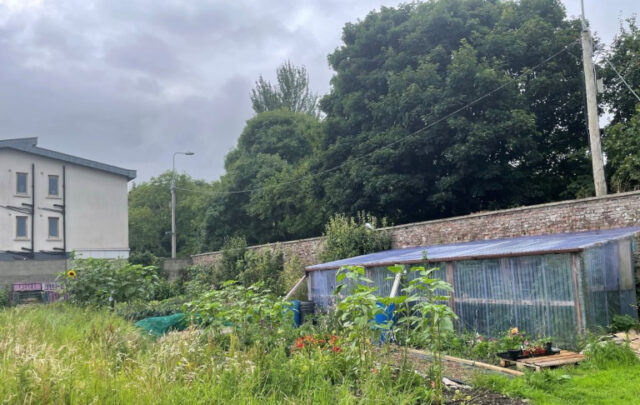
Empty car parks to sprout vegetable plots
Miranda Bryant, London Evening Standard
Hundreds of unused and abandoned spaces in Enfield are to be converted into fruit and vegetable plots in the hope of the area becoming “London’s breadbasket”.
Informal growing spaces around the borough, such as car parks, disused garages and empty spaces around blocks of flats, are to be converted into vegetable plots, while two of its rundown parks will become community orchards. The scheme is part of a borough-wide strategy announced today with the aim of reinvigorating food networks and improving sustainability.
“The potential Enfield has for helping to feed itself and London is huge,” said council leader Mike Rye. “We have a great agricultural and market garden heritage to build on – in years to come Enfield could become known as the capital’s breadbasket.”
As part of the £50,000 council-funded scheme, up to 120 trees – including apple, pear, plum and hazelnut – will be planted across two sites.
Community groups will decide what they want to plant and whether they want to sell the produce or eat it themselves.
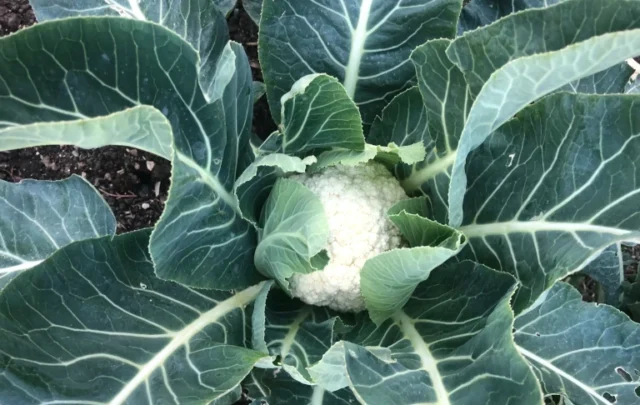
…Also as part of the scheme, pupils at Houndsfield Primary School are growing their own potatoes, cherry tomatoes, cabbages and corn in converted flower beds in Jubilee Park in Edmonton.
They are working with an allotment officer and will eat what they grow as part of their school meals. If the project is a success, it will be extended to other schools in the borough in the lead-up to a Food Legacy Day in 2011, on which every school in Enfield will eat locally-grown food…
(13 August 2009)
The Omnivore’s Delusion: Against the Agri-intellectuals
Blake Hurst, The American
Critics of “industrial farming” spend most of their time concerned with the processes by which food is raised. This is because the results of organic production are so, well, troublesome. With the subtraction of every “unnatural” additive, molds, fungus, and bugs increase. Since it is difficult to sell a religion with so many readily quantifiable bad results, the trusty family farmer has to be thrown into the breach, saving the whole organic movement by his saintly presence, chewing on his straw, plodding along, at one with his environment, his community, his neighborhood. Except that some of the largest farms in the country are organic—and are giant organizations dependent upon lots of hired stoop labor doing the most backbreaking of tasks in order to save the sensitive conscience of my fellow passenger the merest whiff of pesticide contamination. They do not spend much time talking about that at the Whole Foods store.
The most delicious irony is this: the parts of farming that are the most “industrial” are the most likely to be owned by the kind of family farmers that elicit such a positive response from the consumer. Corn farms are almost all owned and managed by small family farmers. But corn farmers salivate at the thought of one more biotech breakthrough, use vast amounts of energy to increase production, and raise large quantities of an indistinguishable commodity to sell to huge corporations that turn that corn into thousands of industrial products.
The biggest environmental harm I’ve done as a farmer is the topsoil (and nutrients) I used to send down the Missouri River to the Gulf of Mexico before we began to practice no-till farming, made possible only by the use of herbicides.
…Finally, consumers benefit from cheap food. If you think they don’t, just remember the headlines after food prices began increasing in 2007 and 2008, including the study by the Food and Agriculture Organization of the United Nations announcing that 50 million additional people are now hungry because of increasing food prices. Only “industrial farming” can possibly meet the demands of an increasing population and increased demand for food as a result of growing incomes.
…I warned you that farming is still dirty and bloody, and I wasn’t kidding. So let’s talk about manure. It is an article of faith amongst the agri-intellectuals that we no longer use manure as fertilizer. To quote Dr. Michael Fox in his book Eating with a Conscience, “The animal waste is not going back to the land from which he animal feed originated.” Or Bill McKibben, in his book Deep Economy, writing about modern livestock production: “But this concentrates the waste in one place, where instead of being useful fertilizer to spread on crop fields it becomes a toxic threat.”
In my inbox is an email from our farm’s neighbor, who raises thousands of hogs in close proximity to our farm, and several of my family member’s houses as well. The email outlines the amount and chemical analysis of the manure that will be spread on our fields this fall, manure that will replace dozens of tons of commercial fertilizer. The manure is captured underneath the hog houses in cement pits, and is knifed into the soil after the crops are harvested. At no time is it exposed to erosion, and it is an extremely valuable resource, one which farmers use to its fullest extent, just as they have since agriculture began.
…Pollan thinks farmers use commercial fertilizer because it is easier, and because it is cheap. Pollan is right. But those are perfectly defensible reasons. Nitrogen quadrupled in price over the last several years, and farmers are still using it, albeit more cautiously. We are using GPS monitors on all of our equipment to ensure that we do not use too much, and our production of corn per pound of nitrogen is rapidly increasing. On our farm, we have increased yields about 50 percent during my career, while applying about the same amount of nitrogen we did when I began farming. That fortunate trend will increase even faster with the advent of new GMO hybrids. But as much as Pollan might desire it, even President Obama cannot reshuffle the chemical deck that nature has dealt. Energy may well get much more expensive, and peak oil production may have been reached. But food production will have a claim on fossil fuels long after we have learned how to use renewables and nuclear power to handle many of our other energy needs…
(30 July 2009)
And Tom Philpott again below in answer. I could be accused of overdoing Tom this week, but these debates are too important to what is going on around our food system today to overlook, I believe. And to emphasise Tom’s point below about “titantic corn harvests,” Hurst’s throwaway comment about “…large quantities of an indistinguishable commodity to sell to huge corporations that turn that corn into thousands of industrial products,” needs to be actually taken quite seriously in conjunction with his statement that industrial farming systems are a necessity for “feeding the world.” Is the food that this corn is made into actually feeding the world, and can the world be helped to feed itself better than that? -KS
An ‘agri-intellectual’ talks back
Tom Philpott, Grist
My first reaction is that I’m thrilled this debate is taking place. The sustainable-food movement needs to step up and start grappling with big questions. I’ve said for a while that I see three big challenges for the sustainable-food movement as it scales up: 1) soil fertility—in the absence of synthesized nitrogen and mined phosphorous and potassium, how are we to build soil fertility on a larger scale?; 2) labor—sustainable farming requires more hands on the ground; who’s going to work our farm fields, and at what wages?; and 3) access—in an economy built on long-term wage stagnation, how can we make sustainably grown food accessible to everyone?
Hurst’s essay begins to engage these questions—sort of. I don’t have the time or energy right now to take it on point by point. But I will say that the discussion would be much richer if he acknowledged a few serious questions about the industrial-farming model he champions.
For example, he barely acknowledges climate change. The EPA reckons [PDF] that half of U.S. greenhouse-gas emissions from agriculture come from fertilizer-related nitrous oxide—a greenhouse gas some 300 times more potent than carbon. The Nobel laureate Paul Crutzen, an atmospheric chemist, has concluded [PDF] that the EPA is dramatically underestimating the amount of nitrous oxide produced by industrial farming. Given that reality and the looming climate emergency, how long can U.S. farmers keep churning out titanic corn harvests? Hurst never goes there. Of course, he’s vice president of his state’s branch of the American Farm Bureau Federation, which has both been vigorously fighting climate legislation (on the grounds that climate change is a myth) [PDF] and campaigning to make sure that any bill that gets though Congress has plenty of goodies for agribusiness. So maybe be doesn’t consider nitrous oxide emissions a problem?
Another limiting factor is petroleum scarcity. According to Hurst’s byline at the bottom of the article, “In a few days he will spend the next six weeks on a combine.” A combine is a massive, diesel-sucking machine. How long does Hurst expect to be able to casually spend six weeks burning gallon after gallon of diesel amid limited global petroleum supplies (not to mention climate impacts)? Again, no mention of energy scarcity. (Cue “drill, baby, drill” plea from the Farm Bureau?)
Then there’s the whole problem of ecological blowback. Hurst venerates large-scale confinement livestock operations—but he doesn’t mention that these facilities rely on a prodigious cocktail of antibiotics to keep animals alive and growing. Now we’re getting outbreaks of antibiotic-resistant salmonella and staph (MRSA) directly linked to factory animal farms. There’s the distinct possibility that the latest novel swine flu strain emerged from the fecal mire of a vast hog operation. How long does Hurst think we can control these potentially deadly diseases? Also on the topic of ecological pushback, Hurst champions the practice known as chemical no-till—planting herbicide-tolerant GM seeds and then dousing the field with weed killer. There’s little evidence that this practice sequesters carbon in the soil (see here and here)—but plenty of evidence that it’s generating herbicide-resistant “superweeds.” Again, what’s the plan—just a steady rollout of new poison-tolerant seed combos to clean up the messes of the previous ones?
Finally—and this may be the most egregious omission, given that he’s writing for a Cheneyite rag—Hurst fails to acknowledge that his farming style depends on a steady stream of government aid. I personally believe that our society should support farmers, and that our commodity-subsidy system could be re-jiggered to support sustainable farming. Indeed, for the reasons given above, I believe sustainable farming will remain forever a niche unless that happens. Yet if I were writing for a think tank that’s devoted itself for decades to dismantling state spending (except for on military adventures and hardware), I might feel obliged to defend or at least acknowledge this position. Yet Hurst is silent…
(14 August 2009)
Comments follow as always. A couple of points I thought were important:
from Lotti Ariane:
…The “how do we feed the world” without conventional ag always misses many points that have been discussed here and elsewhere — issues of food security and infrastructure, conventional ag hasn’t fed the world, biotech has failed to yield, if the same amount of money dumped into conventional research were dumped into organic/sust ag research…. etc etc. We have not effectively countered that message, but the writing on the wall is clear that conventional hasn’t fed the world.
from Saticoyroots:
…It is my belief that we are in a period of convergence between the two. In Omnivore’s Dilemma, the book at the center of this particular exchange, Michael Pollan examines one transitional model: the so called “Industrial Organic.” I think that this a good example of the blurring of the line between the two camps. I also believe that there is another possibility… Let’s call it “Artisanal Conventional.” What of a farm that sells produce both into mainstream channels as well as to local consumers and food artisans, yet will still use a little conventional fertilizer when called for? (Disclosure to those who may not know me: this is my model…)
More “food for thought.” We need to reframe this debate. Swiping at the twin strawmen of organic farmers as some return to the caveman primitivists and conventional farmers as greedy right-wing stooges for Monsanto living on fat government subsidies is all too easy. The hard part is talking to each other about how we can grow healthful food that will actually feed more people with more expensive fuel, less water, and a climate-changed planet. -KS