Click on the headline (link) for the full text.
Many more articles are available through the Energy Bulletin homepage
Barrister to barista: The rise of part-time Britain
Sean O’Grady, Economics editor, The Independent
Britain’s army of unemployed number almost 2.5 million, the highest in almost 15 years, with almost one million younger people out of work.
While shocking by many standards, the figures released by the official statisticians yesterday were, if anything, slightly better than had been expected. The unemployment rate stands at 7.8 per cent, up from 5.4 per cent this time last year, or around 750,000 more out of work.
A more worrying trend is the emergence of an increasingly large group of the hidden unemployed – totalling more than 1.6 million – who are being pushed into taking shorter hours, temping or going into part-time work in an attempt to avoid the dole queues.
Data released by the Office for National Statistics yesterday showed that another 220,000 joined the ranks of the unemployed in the three months to June 2009, taking the total to 2.4 million. However, the number of people claiming unemployment benefits, the “claimant count” has shown a moderating trend; still upwards, but at a slower pace than in recent months, suggesting that the rate of growth in joblessness is moderating, at least for now. An extra 25,000 people claimed job seeker’s allowance in June, taking the total claimant count to 1.6 million.
The news came as the Governor of the Bank of England, Mervyn King, indicated that the economic recovery, which may already be under way, will be so feeble that few people will notice the difference between the coming upturn and the previous recession. He said the challenge of fixing the “fragile” banking system meant that Britain is condemned to a “slow and protracted recovery” he said.
There are now 928,000 jobless young people, and 472,100 18 to 24-year-olds claiming jobseeker’s allowance. Martina Milburn, chief executive of The Prince’s Trust, commented: “Youth unemployment now costs the state £3.4m per day in jobseeker’s allowance. But this is just the start of a long and downward spiral, which all too often leads to crime, homelessness or worse.” Millions of school leavers and graduates will inflate the total still further over the summer.
Most economists expect the unemployment total to rise to over three million by the time of the next election.
…Susan Yallop, a director of Adecco, the employment agency, explained: “As the job market continues to alter, so too must candidates, their expectations and their approach to seeking employment; the key is flexibility. This means that candidates might need to be willing to broaden their horizons and consider jobs that may fall outside of their original target.”…
(13 August 2009)
Ellie and Gordon set a good example: voluntary service trumps compulsion
Libby Brooks, The Guardian
Suffice to say that 16-year-old Ellie hadn’t envisaged she’d be rocking out this summer in a disused cemetery at nine o’clock in the morning. Glastonbury it wasn’t. But the extemporised DJ booth helped hurry up the weeding, she says, and the prospect of a free ticket to see the likes of Lady Gaga and Busta Rhymes at the Royal Albert Hall in September spurs you on. The Facebook photos she posted next day of the gang pulling down a tree got all her friends enlisting. Evidently, this was far from another hormone-driven, cider-fuelled exemplar of wanton adolescent desecration. Because Ellie is that apparently rare and politically potent creature – the young volunteer.
Those who spend more time than is seemly for a grown-up watching E4 may have clocked the latest advertising campaign for Orange Rockcorps. Its tagline “give, get given” can also be found across bus shelters, commercial radio networks and most places on the internet that don’t match with a Boden search. Rockcorps originated in San Francisco and landed in Britain last year. Its reach is aged 16 to around 24, and the idea is straightforward enough: sign yourself up, be allocated a local project, volunteer there for four hours, get a ticket to a great gig gratis.
The new enthusiasm for volunteering goes all the way to the top. It emerged this week that Gordon Brown will dedicate part of his summer holiday to volunteering in his Fife constituency. His foray follows the announcement earlier in the year of plans to formalise civic service, compelling every young person in Britain to carry out 50 hours of community work by the time they reached the age of 19. It’s a notion not without popular traction. When Labour MP Frank Field and Prospect magazine’s James Crabtree set out their proposal for a mandatory citizenship service programme in February, suggesting that those aged 16 to 25 be paid roughly the minimum wage to spend at least six months working on community projects, it polled 64% approval. Barack Obama himself has mooted a Youth Corps in the US, while a number of European countries already offer civilian service as an alternative to military service.
…But the objections on principle are far more revealing. While it may not suit politicians, volunteering almost inevitably has a political dimension. It has become a truism that young people these days are disconnected from the parliamentary discourse. But as Tim Loughton, the shadow minister for children, notes: “[That] means that they don’t know who Alistair Darling is. Young people are actually political animals – just not in the conventional sense.” This focus on compulsion (which the Tories do not support, although David Cameron has been talking about a non-mandatory civic youth service since 2007) fundamentally misunderstands the reality of young people’s engagement with the voluntary sector. And it makes the government sound as though it hasn’t been near the internet in a decade.
Over the last year, the under-25s, as well as the over-65s, scored the highest levels in volunteering across Britain. (Which raises the question why the relentless focus on adolescents – what about the 40-year-olds who forget to mentor?) Significantly, the majority of the younger cohort were organising themselves online. While Catholic archbishops may prefer to dismiss social networking as a suicide risk, sites like Bebo allow their users to connect with those they can help as well as those who can help them…
(6 August 2009)
Organic producers suffer as green fingered customers go it alone
Lisa Bachelor, The Guardian
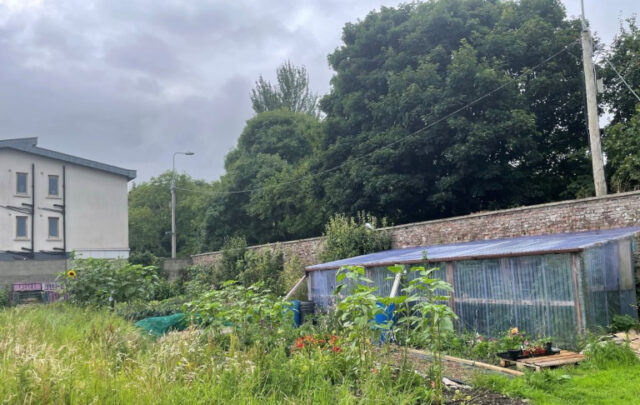
An increase in amateur gardeners keen to grow their own food is taking its toll on organic farms and shops that deliver vegetable boxes.
Hundreds of health food shops and farms around the country now offer a vegetable box scheme whereby they deliver seasonal produce to their customers each week. But in the last year they have had to compete with an increasing army of credit-crunched householders who have decided to give vegetable growing a go.
A spokeswoman for Abel & Cole, one of the biggest box scheme providers, said: “Trading has been difficult this year. It was tough in the spring and this summer we have been affected more than usual because more people are growing their own seasonal produce.”
At the beginning of the year Abel & Cole started selling household items such as toilet paper, recycled bin bags and eco cleaning cloths alongside its organic fruit and vegetable range.
“People will still come to us for the vegetables they are not growing, but the boxes now represent a smaller percentage of our sales,” she added.
…A recent report from the Soil Association into the organic market suggested 2009 would be a “challenging year” for many box scheme operators. It predicted that the medium-sized schemes would suffer most because proportionally they have a smaller core of fiercely committed customers than the smallest schemes but lack the marketing resources that the bigger players have.
…An increased interest in grow your own and a general downturn in consumer spending might have hit sales, but a recent negative report on organic food has not, box scheme providers up and down the country insist.
The report from the Food Standards Agency, written by a nutritionist at the London School of Hygiene and Tropical Medicine, caused a furore when it concluded that customers were being misled over the health benefits of organic food which, it said, is no healthier than conventional produce.
“Contrary to losing sales, we have had a lot of customers contact us saying they simply don’t agree with the report,” the Abel & Cole spokeswoman said.
Other suppliers also cite a loyal band of customers who will not be swayed from organic. Suzanne Bristow of Down to Earth, a box scheme provider in Coventry, said: “I think perhaps the report will affect the supermarkets, but not suppliers like us.”
(8 August 2009)