


Click on the headline (link) for the full text.
Many more articles are available through the Energy Bulletin homepage
Time to go against the grain
Graham Harvey, The Guardian
As Gordon Brown’s war cabinet struggles to keep the economy afloat, ministers will be relieved to see that food price inflation appears to be on its way down.
On commodity markets, the price of wheat is barely half what it was a year ago. And as it falls, more food prices look set to tumble. But before cracking open the Bollinger, the Brown cabinet would do well to ponder the implications of having food prices so closely bound up with commodity movements.
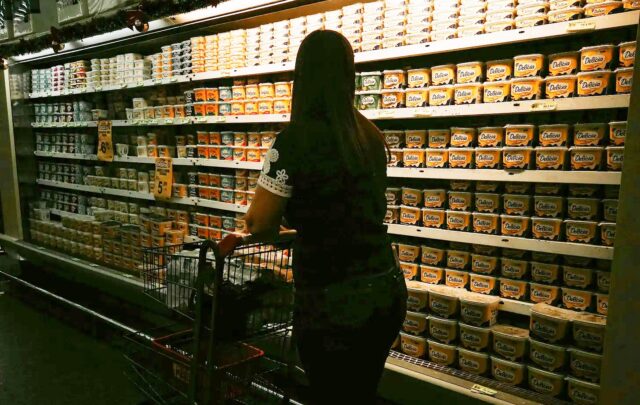
Our food supply is now more dependent on globally traded grains than at any time in our history. This makes it inherently unstable and vulnerable to the kind of catastrophic meltdown that threatened the banking industry. First, there’s the danger of extreme weather events, worsening as a result of climate change. Grains are at risk both from heavy rainfall and from drought, and this year’s rain-drenched harvest was saved only by a fine spell in September.
Then there’s the reliance of wheat farmers on oil. To grow the crop, they need diesel to power their giant machines, whose very manufacture requires barrels of the stuff. Then there’s the oil contained in the chemical fertilisers and pesticides, without which their over-worked soils would scarcely grow a thing. Little wonder, then, that wheat price movements reflect almost exactly the rollercoaster fluctuations of the oil market. Finally, our grain-based food supply is largely controlled by commodity traders and brokers – speculators now dictate the price and availability of many foods on our supermarket shelves…
(5 November 2008)
Boris Johnson unveils plan to create 2,012 new vegetable gardens in London
Hélène Mulholland , the Guardian
Londoners will be encouraged to turn flat roofs into vegetable plots as part of a scheme to grow food on 2012 patches of land across the capital by 2012, Boris Johnson said today.
The “Capital Growth” project is the first initiative delivered by Rosie Boycott since she was appointed chair of London Food by the London mayor over the summer.
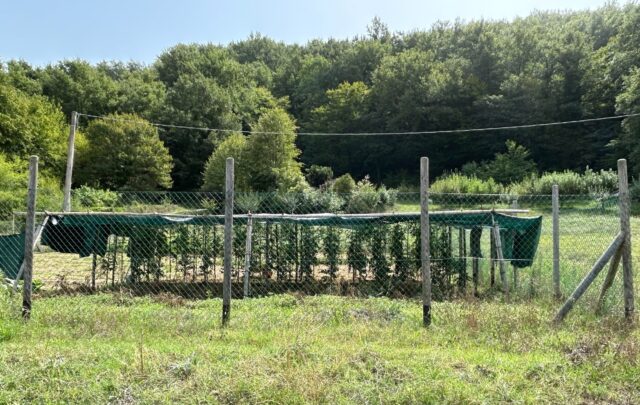
The former newspaper editor wants councils, schools, hospitals, housing estates, and utility companies to identify derelict land that can be turned into vegetable gardens by green-fingered Londoners keen to grow their own spuds rather than buy transported produce from the supermarket.
Boycott also envisages that spare pieces of land can be found on canal banks, banks of reservoirs, and disused railway yards.
Boycott said: “London has a good deal of green spaces – some derelict or underused – but not being used as well as they could be. We also have a veritable host of enthusiastic gardeners who are well equipped to turning derelict or underused spaces into thriving oases offering healthy food and a fantastic focus for the community…
(4 November 2008)
Beekeepers protest over hive deaths
Michael McCarthy, The Independent
In top-to-toe white outfits with distinctive veiled hoods, they do not look like the usual kind of protesters to march on Downing Street.
But today Britain’s beekeepers will stride down Whitehall to demand government action to halt the alarming decline in honey bee numbers seen over the last year.
Two billion bees – one in three of Britain’s honey bee colonies – have been lost over the past 12 months, in the worst losses ever seen in the UK. Yet the causes are unclear, and the apiarists fear there is nothing to prevent a similar devastation this winter – but the Government, they say, is letting it happen…
(5 November 2008)


Comments
We changed commenting systems on September 10, 2026 as part of a site-wide functionality and security upgrade. Your past comments have not disappeared, and you can still log in with your old Disqus account credentials if you wish. Contact us with any questions.