

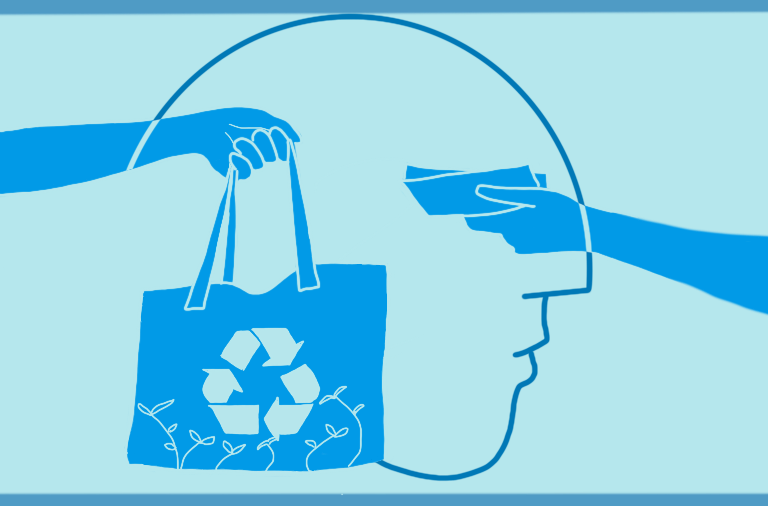
The principal factors affecting climate change are the growth of human population and consumption, according to research by WSU sociologist Eugene A. Rosa and his colleagues Richard York, of the University of Oregon, and Thomas Dietz, of Michigan State University.
— Energy Bulletin
July 7, 2007
Recently I have begun more than ten books dealing with subjects of sustainability, peak oil, Natural Step principles, and other subjects of the day. Yet I can’t seem to get more than a third of the way through any of them without throwing the book down with disgust. None seem to be cognizant of the complexity of our cultural predicament. Each offers a seemingly simple recipe for better living through simplification or organics or pedestrian power. Who couldn’t support such high-minded principles? But these prescriptions ignore the balances and vacuums that naturally evolve in response to our actions.
As a first example, we generally are aware that our corporate consumer-based economy needs citizens to buy things. We mostly buy tangible objects with a physical presence as they become added to the collection of possessions that make up our wealth and sense or worth. Any responsible corporation (responsible to shareholders) is finely attuned to the winds of cultural direction related to their fine products. Any possibility that the PDA or phone or plastic piece of shit currently on top of global sales will be growing stale or the commodity that keeps their board members fat and happy is being conserved or avoided causes stirrings of discontent. New wants and “needs” must be manufactured to replace these current wants growing stale or the petroleum being conserved. Why are plastics and corn sweeteners so ubiquitous in our lives? Not only because they are versatile and cheap, but also because the producers of petroleum and maize wanted to expand their markets. These new wants and “needs” will use, in general, the same feedstock of commodities that manufactured the prior models. If conservation leads to less petroleum or coal consumption, other markets will be devised for these commodities. It is the very responsibility of the corporate entity to ensure that the product that the company is based on and that pays out dividends to shareholders finds a market for its product. At least until it can acquire or develop another product to replace the current primary product. How many times in history has that happened where a corporation founded on one profitable product replaced that product and was later focused on another? Not many. Oldsmobile? Where are they now?
Thus, your individual efforts at conservation will likely fail….at least in the short run. If you don’t consume the oil or natural gas, your counterpart in China or India or Russia surely will. If it can’t be sold as fuel, it can be manufactured into a sofa or basketball or above ground swimming pool that someone will buy. Certainly a complete societal collapse will preclude these substitutions but any less rapid descent will always give companies a chance to anticipate and adjust.
A second example relates to population and consumption. I’m certain that an economist has a more formal term and set of principles for the following, but this will have to suffice. It seems intuitive that conservation behaviors lead to an increase in supply of any commodity, all other things being equal (the number of consumers, etc). As supply grows, price declines, commodity or product becomes more attractive to consumers generally, and is in demand again (I am filling my gas tank again these past few weeks). These fluctuations delay and sometimes prevent the type of quick and decisive action necessary to shift from a fossil fuel based system to something less damaging. But as many now suggest, even the most rapid shift will not be enough to prevent some form of collapse. There are just too many of us to be able to collectively move to a sustainable society without some serious interim pain.
The continual growth in population, exponential with a huge lag or bubble, is generally imperceptible unless we take stock of our present circumstances and compare them with years past. Then of course we revert to that tried and true old crank who is often quoted as saying “Things just aren’t the same as when I was young.” Any behavioral changes, technological fixes, and policy adaptations or global treaties will most likely be overwhelmed by the sheer momentum of the demographic tidal wave.
The stark fact in regard to our current economic system is that it pits each of us against each other as consumers (rather than against the company which makes the product). Adam Smith’s rational self-interest may work well with the population of his day but it creates huge tensions of the type and degree that he could have never foreseen. We do not often see our power as consumers and revert to the most basic competitive behaviors to obtain what we need and want. Just observe what we purchase for confirmation of this claim (e.g. items that satiate primal urges for food, sex, etc).
As the population continues to grow, behaviors that at one population level were benign (consumption and settlement at specific rates) are toxic at higher levels. What are considered green behaviors now will be considered criminally immoral levels of consumption at a higher population level (say 12 billion). So where do we stop? Without a global, regional, and local population policy, our targets for green living will be ever elusive and our quality of life will continue to erode. The odd consolation is that human beings are amazingly adaptable and will find a way to adapt to the effects of climate change, aquifer depletion and contamination, crowding, loss of wild nature, etc. and consider tomorrow’s degraded landscapes to be “normal” and fail to recall what we even have today. Add to that the lead and mercury we’re all accumulating in our bodies, and maybe we all won’t even remember these problems and certainly will no longer have the ability to address them.
Christopher J. Ryan, AICP currently teaches Land Use and Community Planning at Antioch University New England. He is also the Director of Planning & Development for Ayer, Massachusetts. He received his AB degree at Miami University in Oxford, Ohio and his MCP at the Georgia Institute of Technology. He is currently ABD at Antioch University seeking a doctorate in Environmental Studies. He lives in Concord, Massachusetts.




Comments
We changed commenting systems on September 10, 2026 as part of a site-wide functionality and security upgrade. Your past comments have not disappeared, and you can still log in with your old Disqus account credentials if you wish. Contact us with any questions.