In Vermont, we’re by disposition ready to be prepared neighbors to others and have prepared neighbors. As Joseph Gainza commented at a recent Forum on the Future of Vermont in Barre, “The state motto to me has always meant a great deal: ‘Freedom and Unity.’ There is this sense of the personal and individual, and that’s important, but it also recognizes that we are in community, and that we care about our neighbors and we care about our community and we’re willing to work for the betterment of the community.”
I’ve been fortunate to work with people in Washington County who are organizing around the food, fuel and transportation crises that likely are to face us this winter. They represent nonprofits such as the Central Vermont Community Action Council, the United Way and others, plus the City of Montpelier and the state Agency of Human Services.
We’ve discussed how to be and cultivate good neighbors.
Here are some of the ideas we’re kicking around:
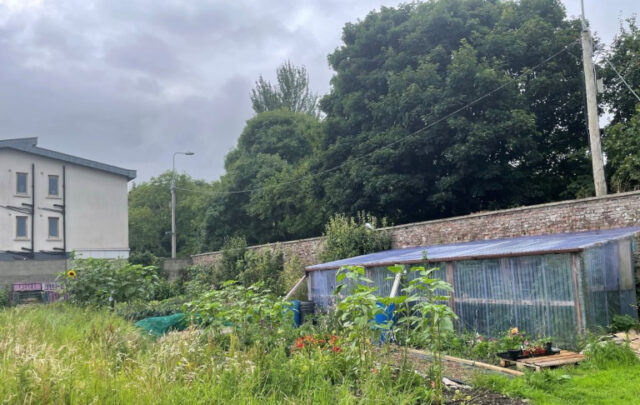
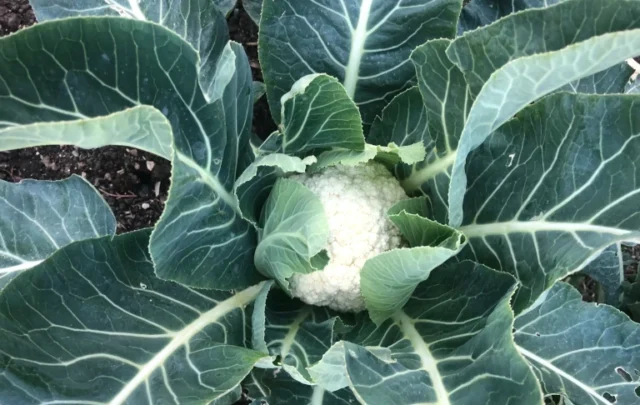
For food, share the harvest. Gardeners are being asked to donate their extra zucchini and pumpkins to a food shelf, and to grow an extra row for the food shelves. Food Works in Montpelier has volunteered to coordinate food preservation “bees” at area institutional kitchens, so some of the harvest can be put by for winter.
For heating fuel, get firewood out to those who need it. Firewood bees, where people spend a day helping their neighbors buck and split wood, can help warm some houses. People have already offered their woodlots for harvesting. And weatherize homes — perhaps the 100 or so weatherization workshops that the state is sponsoring can be used to train teams of weatherizers who can serve people who are shut in and others who cannot attend the workshops or do the work themselves.
For transportation, encourage people to ride together, through carpools, formalized hitchhiking (called “slugging” in Baltimore and other areas), and making it easy to get a taxi license, so people can charge passengers.
All of this costs money, so we’ve talked about how to make it easy to donate both goods (like non-perishable food) and money, and how to use the funds most effectively. We’re looking at a model where there would be many opportunities to donate, from grocery store check-out lines to churches to utility bills, and maybe one organization that administers the funds.
Organizing people to work together is the key to making all of this happen. The scope of hardship this winter likely is to overwhelm resources of both governmental and nonprofit agencies, leaving a gap to fill with neighbors helping neighbors.
From all the buzz about how to prepare for the high costs of this winter, I get the idea that there are a lot of neighbors who want to get active but aren’t quite sure what to do. Here are some specific ideas for organizing at the level of towns, community organizations and individuals.
Towns
A town, acting through its energy committee, planning commission, another organization, or staff can map what neighborhood groups already exist. These groups can organize to check in on all the members regularly and make sure the most vulnerable have enough to eat and heat.
In my town of East Montpelier, for example, there are at least three neighborhood potluck groups and at least a couple Neighborhood Watch groups.
In Montpelier, neighbors on one street hold a common yard sale each year; maybe that’s the group to cover that part of the city. If the town maps these and similar groups, we could see where the town is covered and where it needs more organization.
Since fire departments are generally organized by town or city, the town may be the right level to organize inspections for and education about any new wood stoves, electric heaters, etc. that people install for this winter.
First responders are worried that people using a heating system that is new to them are more likely to start accidental fires.
I checked with East Montpelier Fire Chief John Audy about the department’s capacity to inspect new heating systems and educate the users. Audy told me, “We don’t inspect buildings; we’re not trained to do that. And as a chief of a volunteer fire department, I don’t have the resources time-wise to inspect buildings.”
East Montpelier has one of the premiere fire departments in central Vermont (OK, my opinion may be influenced by my wife being a lieutenant on the department), so if they don’t have the training or resources, probably few departments do.
Perhaps the town, with the help of fire department officers, can figure out a way to “deputize” people to carry out the inspections and education without burdening the fire departments. State fire officials can maybe help towns find a way to encourage inspections that don’t leave individual volunteers legally liable if a fire breaks out in a home they’ve visited.
Towns also can require their buildings be kept at 68 degrees or less during the winter, and encourage owners of all commercial buildings to keep the temperature down.
When I visited the U-32 school last February and found boys in T-shirts and girls in camisoles, I was offended that my tax dollars were going to heat the school to that temperature.
Reasonably low temperatures not only save money for taxpayers and other building owners, they also encourage people to keep their homes cooler.
If all the buildings I visit during the day maintain the same, narrow temperature range, I can comfortably wear the same clothes all day.
I remember keeping the thermostat down in college and wearing long underwear at home, which felt great on the legs for the walk to school, too. But once inside my school’s overheated buildings, I would desperately look around for a place to change out of the things, and wishing the temperature was more reasonable.
Community organizations
In addition to neighborhood groups, the work of being our brothers’ and sisters’ keepers can be taken on by churches, service clubs, high school organizations, and others. There are so many organizations in Vermont that can coordinate neighborly help, there is probably a good deal of overlap in the people they connect with. Redundancy is fine; maybe that means that no one will be left unconnected.
In fact, long-term preparations for a transition to an energy-poor future involve building more resilient communities, and redundancy is one of the hallmarks of resilient systems. If we organize well for this winter, multiple groups will contact you about similar issues. Please take that as a sign the system is working, not something to become impatient about.
Remember, when Jesus of Nazareth introduced the image of the left hand not knowing what the right hand was doing, he meant it was a good thing.
A good place for each group to start is an inventory of the people the group is connected with. Who lives where? What are their ages? Are there any especially vulnerable people there, or people with special needs?
The inventory can continue by asking how the residence will be heated. What is each household’s plan for heating this winter, at present fuel prices? How will that change if fuel prices double again by winter? (Fuel oil prices have doubled in a little more than a year.) What is the contingency plan, if the household can’t afford to heat or if there is an oil supply disruption? For example, will they heat with wood, move in with someone else, or close off parts of the house?
Other good questions identify what useful skills each household has. Who can run a chainsaw, or preserve food, or identify and use wild edible plants?
And what about physical resources? Who has a wood stove, a root cellar, a garden plot, a wood lot, bicycles, or other fuel-efficient vehicles?
The local organization should also plan how to keep in touch with its members, especially the most vulnerable. It might develop a buddy system. A neighborhood group might encourage dog walkers to keep an eye out for houses where no one is shoveling, even though someone is expected to be home.
Checklists for individuals will also be useful. They can include things like weatherize your home, if it’s not already Energy Star five-star compliant.
Plant some food. (It’s still not too late for beans, snap peas, fall spinach and other crops).
Install a seven-day programmable thermostat and set it to drop the house temperature a lot when you’re asleep or gone for the day, and warm the house before you wake up or return home. (Ours lets the house go to 52 degrees while we sleep before kicking on the boiler.)
As I pointed out in my previous column, the United States imports two thirds of the oil we use, even though the country is the third-largest oil producer in the world. In the coming decades, economics and world energy supply shortfalls are likely to force us to live within our means energetically, on our domestic energy production.
The preparations we make now for this winter can be a good base for starting to address longer-term energy descent.
Carl Etnier, director of Peak Oil Awareness, blogs at vtcommons.org/blog and hosts radio shows on WGDR, 91.1 FM Plainfield and WDEV 96.1 FM/550 AM, Waterbury. He can be reached at EnergyMatters Vermont @yahoo.com.