


Click on the headline (link) for the full text.
Many more articles are available through the Energy Bulletin homepage
Myanmar Farmers May Miss Harvest
New York Times
Normally, at this time of year, Burmese farmers in the southern delta of Myanmar would be draining their rice paddies, plowing their fields with their water buffaloes and preparing to plant new seeds for an autumn harvest.
But two weeks ago, Cyclone Nargis did away with all that. The storm’s timing could not have been worse. Tens of thousands of farm families lost their draft animals, their rice stocks and their planting seeds. Now the harvest is in doubt as well.
“I think we’re going to miss it, we’re going to miss the harvest,” said Hakan Tongul, deputy country director for the World Food Program in Myanmar. “Time is short.”
Mr. Tongul and other international aid experts with long experience in Myanmar fear that the cyclone has disrupted the seasonal cycle of life in the Irrawaddy Delta, once one of the world’s most fertile and important rice-growing regions.
(16 May 2008)
‘The Saudi Arabia of fertilizer’
Tom Philpott, Gristmill
One big corpration dominates the soon-to-be-prized potash market
—
Industrial agriculture currently stands as humanity’s big plan for “feeding the world” as global population moves toward 10 billion and the earth warms. Increasingly, as oil supplies tighten and prices rise, we’re looking to industrial ag to fill our gas tanks, too.
Unhappily, this relatively new form of farming relies utterly on three elements — two mined (potassium and phosphorus) and one synthesized from natural gas (nitrogen) — to maintain the productivity of soil.
In other words, unless we quickly move toward other agriculture models, we’re likely to see increased geopolitical competition for these fertilizer resources, outsized power for the entities that control them — and diminishing efforts to control the ecological effects of extracting them.
I’ve written before about Mosaic, the world’s largest phosphorus supplier, and the devastations of its Florida mining operations. Two-thirds owned by agribusiness conglomerate Cargill, Mosaic has seen its share price rise seven-fold since the fall of 2006 (roughly when corn prices began to jump).
Now let’s look at Canada’s Potash Corporation of Saskatchewan, whose shareholders, like Mosaic’s, have enjoyed an ecstatic run of late. The company so dominates potash (potassium) production that one stock analyst has hailed it as “the Saudi Arabia of Fertilizer.”
(15 May 2008)
What Michael Pollan Hasn’t Told You About Food
Onnesha Roychoudhuri, AlterNet
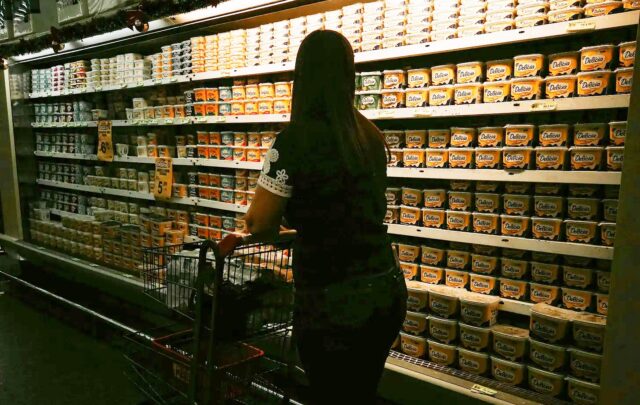
As both obesity and hunger are on the rise, a new book shows why we shouldn’t feel guilty about our food choices but angry with a corrupt food system.
TV dinners were launched at a time when only a small percentage of Americans actually owned TVs. Thus, the meals, writes Raj Patel, “were what people ate while they dreamed of affording one.” In the American dream, we imagine a bucolic Midwest, a place of bounty, yet the reality is that the breadbasket of America is rife with poverty and a declining life expectancy. The idyllic vision of quaint American farmland doesn’t work like that “except in fiction,” says Patel, and there is perhaps no greater fiction than the comforting hand of the free market — particularly as it pertains to food.
Patel’s new book Stuffed and Starved: The Hidden Battle for the World Food System makes visible the people behind the abstraction and reveals a global food system that, with our complicity, continues to alienate farmers and consumers alike, all while fattening the pocketbooks of a few middlemen.
To read Patel is to understand the logic behind the sweets company, Nestle, acquiring the weight loss magnate Jenny Craig or why WalMart is free to raise prices in areas where they have already killed off the competition. In the language of markets, these problems are not “self-correcting.”
(15 May 2008)
Manufacturing a Food Crisis
Walden Bello, The Nation
When tens of thousands of people staged demonstrations in Mexico last year to protest a 60 percent increase in the price of tortillas, many analysts pointed to biofuel as the culprit. Because of US government subsidies, American farmers were devoting more and more acreage to corn for ethanol than for food, which sparked a steep rise in corn prices. The diversion of corn from tortillas to biofuel was certainly one cause of skyrocketing prices, though speculation on biofuel demand by transnational middlemen may have played a bigger role. However, an intriguing question escaped many observers: how on earth did Mexicans, who live in the land where corn was domesticated, become dependent on US imports in the first place?
The Mexican food crisis cannot be fully understood without taking into account the fact that in the years preceding the tortilla crisis, the homeland of corn had been converted to a corn-importing economy by “free market” policies promoted by the International Monetary Fund (IMF), the World Bank and Washington.
Walden Bello is senior analyst at and former executive director of Focus on the Global South, a research and advocacy institute based at Chulalongkorn University in Bangkok. He is the author or co-author of many books on politics and economic issues in the Philippines and Asia, including, most recently, Deglobalization (Zed), and recipient of the 2003 Right Livelihood Award, also known as the “Alternative Nobel Prize.”
(15 May 2008)


Comments
We changed commenting systems on September 10, 2026 as part of a site-wide functionality and security upgrade. Your past comments have not disappeared, and you can still log in with your old Disqus account credentials if you wish. Contact us with any questions.