Click on the headline (link) for the full text.
Many more articles are available through the Energy Bulletin homepage
UN chief warns of civil unrest amid world food shortage
Rafael Epstein, ABC News (Australia)
United Nations secretary-general Ban Ki-moon is concerned about the threat of a world food shortage, saying action must be taken quickly, otherwise there will be unrest on an unprecedented scale.
The UN wants extra money to buy food for the needy and it is setting up a special food crisis task force to tackle the problem.
With the head of the World Bank and the World Food Program by his side in Geneva in Switzerland, Mr Ban said his new task force has a simple task – to feed the hungry.
And he warned that if nations don’t give the money they have already committed, the world will face a crisis unlike anything it has previously seen.
(29 April 2008)
Growth factors
Robert Watson, Guardian
It is the poorest people who are most in danger from increasing food prices, says chief scientist Robert Watson. Yet, with our knowledge and technology, we can drive the agricultural revolution needed to end world hunger
—
Recent food price increases are a major cause for concern around the world – particularly in developing countries, where they are undermining attempts to reduce hunger and pushing some of the world’s poorest people into abject poverty.
The underlying causes are complex and include factors such as increased demand from rapidly growing economies, poor harvests due to an increasingly variable climate, the use of food crops for biofuels, higher energy prices, export bans on agricultural products from a number of significant exporters, and speculation on the commodity futures market. But are these price increases a momentary blip – the result of an unfortunate series of events – or are they a harbinger of the future? And if they are more than a blip, what else do we need to know if we are to provide sustainable and nutritious food for the world?
I was one of more than 400 experts from around the world who recently considered these questions as part of the International Assessment of Agricultural Knowledge, Science and Technology for Development (IAASTD).
… Meeting the goal of affordable nutritious food for all in an environmentally sustainable manner is achievable, we concluded, but it cannot be achieved by current agricultural “business as usual”.
… In coming decades, we need to double food production, meet food safety standards, enhance rural livelihoods, and stimulate economic growth in an environmentally and socially sustainable manner. All of this must be done at a time when there will be less labour in many developing countries as a result of HIV/Aids and other endemic diseases, when competition from other sectors will make water even more scarce, when we will have less arable land due to soil degradation and competition from biofuels, and when our climate will be changing, giving us higher temperatures, changing rainfall and more frequent floods and droughts.
… Thankfully, many of the technologies and practices we need to meet the challenge of sustainable agriculture already exist. For instance, we know how to manage soil and water more effectively to increase water retention and decrease erosion; we already have access to microbiological techniques to suppress diseases in soils; and conventional biotechnology (plant breeding) can help us produce improved crop varieties.
But climate change and new and emerging animal diseases are providing problems we haven’t considered before, and which will need advances in agricultural knowledge, science and technology to address.
Robert Watson is chief scientific adviser to the Department for Environment, Food and Rural Affairs and director of IAASTD.
(30 April 2008)
Suburbanites Turn Green Yards Into Cash With Minifarms
Berman, Hoffman and Petyerak; ABC News (USA)
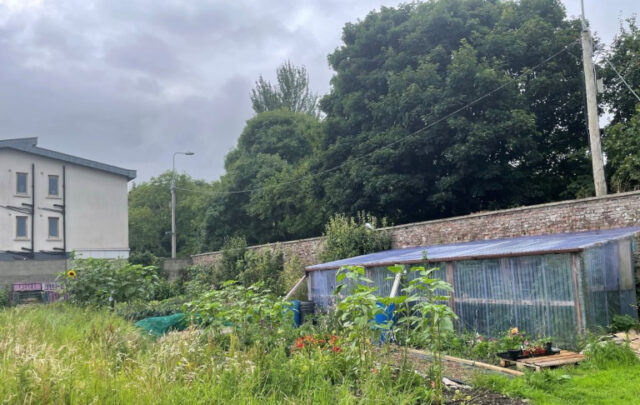
Rising food prices have yielded a throwback to a more agrarianlike lifestyle in suburbs throughout the nation.
People like Norfolk, Va., resident Sue VanHecke are turning their green gardens into green cash by turning their homes into profitable farms.
During the summer VanHecke made $100 per week from her minifarm.
“We’d like to double that [this summer],” said VanHecke, who plants, tills and waters her garden no more than 10 hours a week.
It’s only the beginning of the growing season, but VanHecke already has tomatoes, beets, chard, radishes and lettuce in every spare nook and cranny of her yard, which she sells to a local restaurant.
…You don’t even need your own yard. When Boulder, Colo., resident Kipp Nash finishes gardening his yard, which is filled with bok choy and beets, he farms his neighbor’s. People even can rent unused yards online on places like Craigslist.
(29 April 2008)
Video at original.
Independence Days: My First Challenge
Sharon Astyk, Casaubon’s Book
… I challenge myself and all of you to work on creating food Independence Days this year – that all of us try to do one thing every day to create Food Independence. That means in each day or week, we would try to:
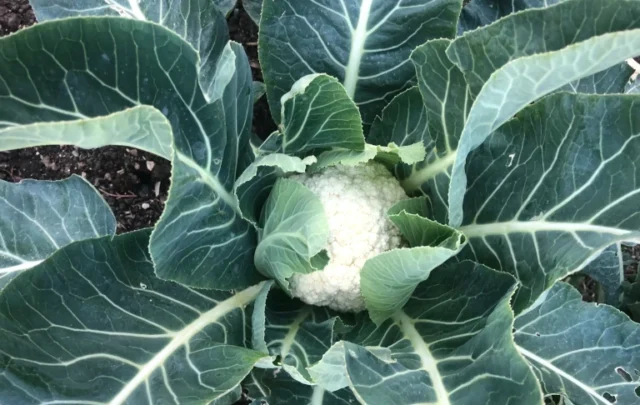
1. Plant something. Obviously, those of us who live in the Northern Hemisphere and having spring are doing this anyway. But the idea that you should plant all week and all year is a good reminder to those of us who sometimes don’t get our fall gardens or our succession plantings done regularly. Remember, that beet you harvested left a space – maybe for the next one to get bigger, but maybe for a bit of arugula or a fall crop of peas, or a cover crop to enrich the soil. Independence is the bounty of a single seed that creates an abundance of zucchini, and enough seeds to plant your own garden and your neighbor’s.
2. Harvest something. From the very first nettles and dandelions to the last leeks and parsnips I drag out of the frozen ground, harvest something from the garden or the wild every day you can. I can’t think of a better way to be aware of the bounty around you to realize that there’s something – even if it is dandelions for tea or wild garlic for a salad – to be had every single day. Independence is really appreciating and using the bounty that we have.
3. Preserve something. Sometimes this will be a big project, but it doesn’t have to be. It doesn’t take long to slice a couple of tomatoes and set them on a screen in the sun, or to hang up a bunch of sage for winter. And it adds up fast. The time you spend now is time you don’t have to spend hauling to the store and cooking later. Independence is eating our own, and cutting the ties we have to agribusiness. …
(29 April 2008)
Afghanistan famine
Sarah Meyer, Index Research
There was a terrible winter disaster in Afghanistan. NATO paid little heed. The lives of Afghan people are untenable. Afghanistan is one of the 11 hunger-prone countries heading towards a “food emergency.”
The world food crisis has been caused by the World Bank, the IMF, the WTO, The Pentagon, PNACers and corporate sharks.
Free Trade” is a misnomer and ‘globalisation’ does not work. Wheat and rice are becoming as precious and sought-after as oil. (cont. below)
The famine in Afghanistan is mirrored by the famine within the US-NATO mindset. The White House and US-NATO suffer from a poverty of imagination. The recent NATO conference was a disaster for Afghanistan’s needs. Did any NATO members read the 17 reports on Afghanistan? NATO faffed around with money-making missile shield discussions and memberships. They passed a “three fold” “Strategic Vision:”
• through leadership of the UN-mandated International Security Assistance Force (ISAF), an international force of some 47,000 troops (including National Support Elements) that assists the Afghan authorities in extending and exercising its authority and influence across the country, creating the conditions for stabilisation and reconstruction;
… Contents
1. Preface: Famine in Afghanistan
2. Afghanistan: Man-Made Famine; Water; Women and Children; Refugees; Slide Toward Mayhem, Taliban, Karzai
3. Opium …
(30 April 2008)
Huge document with links and excerpts on the issue.