Click on the headline (link) for the full text.
Many more articles are available through the Energy Bulletin homepage
Ban Ki-Moon to Chair UN Task Force on Food Crisis
Marc Wolfensberger, Bloomberg
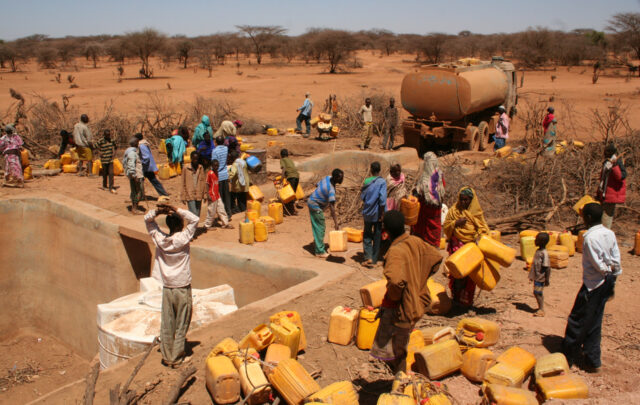
United Nations Secretary-General Ban Ki-moon said he will chair a new UN task force to tackle the crisis provoked by soaring food prices.
The food crisis is an “unprecedented challenge” that has “multiple effects on the most vulnerable,” Ban told a press conference in the Swiss capital Bern today. “We must feed the hungry,” and “full funding” is needed, he said.
… Rising food prices are creating the biggest challenge the UN World Food Program has faced in its 45-year history, “threatening to plunge more than 100 million people on every continent into hunger,” the agency said on April 22. Global food prices surged 57 percent last month from a year earlier, according to the UN, and the World Bank warns civil disturbances may be triggered by rising food prices in 33 countries.
(29 April 2008)
Recession Diet Just One Way to Tighten Belt
Michael Barbaro and Eric Dash
Stung by rising gasoline and food prices, Americans are finding creative ways to cut costs on routine items like groceries and clothing, forcing retailers, restaurants and manufacturers to decode the tastes of a suddenly thrifty public.
Spending data and interviews around the country show that middle- and working-class consumers are starting to switch from name brands to cheaper alternatives, to eat in instead of dining out and to fly at unusual hours to shave dollars off airfares.
… Behind the belt-tightening – and brand-swapping – is the collision of several economic forces that are pinching people’s budgets or, at least, leaving them in little mood to splurge.
The price of household necessities has surged, with milk topping $4 a gallon in many stores and regular gasoline closing in on $3.60 a gallon nationwide.
Home prices are sliding, wages are stagnant, job losses are growing and the Standard & Poor’s 500-stock index, a broad measure of stock performance, is down 6 percent in the last year. So consumers are going on a recession diet.
(27 April 2008)
Mentioned by Sharon Astyk, who starts a discussion: What’s it like at your place?.
The future of dirt
Drake Bennett, Boston Globe
Better soil could accomplish some surprising things, researchers find, but improving it is no small task.
—
THE EARTH’S UNCERTAIN oil reserves and dwindling freshwater supply may get all the attention, but modern society is also overtaxing the ground itself.
At the same time that a growing population and the newfound appetites of the global middle class are straining our food supply, governments all over the world are also pushing for more ethanol-generating energy crops. To support all that production on a limited amount of arable land, scientists and farmers have long focused on technical improvements such as plant breeding, bioengineering, and creating new fertilizers and pesticides.
But some are now asking a different question: What if we could create better dirt?
An increasing number of scientists are starting to emphasize the extent to which soil – even more than petroleum or water or air – is a limited and fragile resource. Managing it better, and even improving it, will be vital to any equation that allows the earth to support the more than 9 billion people the UN estimates will live on the planet by midcentury.
The most dramatic research is still in the early stages, but soil specialists already have developed farming techniques that maintain and temporarily enhance the nutrient content of soil.
(27 April 2008)