Click on the headline (link) for the full text.
Many more articles are available through the Energy Bulletin homepage
Stand by your beds
Richard Reynolds, The Guardian
Around the world, a shadowy army of plant lovers is on a mission: to make their dull, grey neighbourhoods more beautiful places to live. Armed with seedbombs and spades, these green-fingered outlaws are stealthily filling neglected public land with flowers and shrubs. Richard Reynolds explains how he joined their ranks and became a guerrilla gardener
—
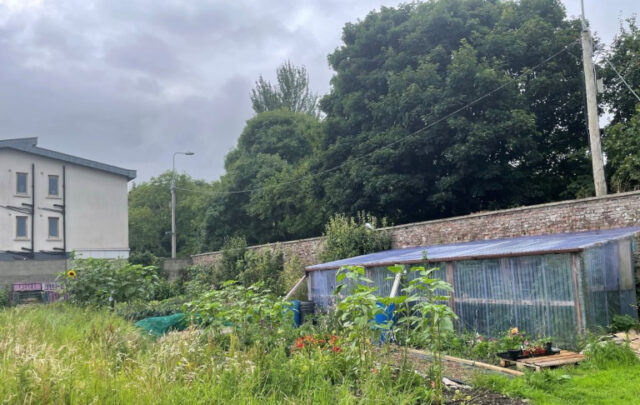
… some people have a different definition of gardening. I am one of them. I do not wait for permission to become a gardener but dig wherever I see horticultural potential. I do not just tend existing gardens but create them from neglected space. I, and thousands of people like me, step out from home to garden land we do not own. We see opportunities all around us. Vacant lots flourish as urban oases, roadside verges dazzle with flowers and crops are harvested from land that was assumed to be fruitless. The attacks are happening all around us and on every scale – from surreptitious solo missions to spectacular campaigns by organised and politically charged cells.
This is guerrilla gardening.
(25 April 2008)
Warming shifts gardeners’ maps
Elizabeth Weise, USA Today
Every gardener is familiar with the multicolor U.S. map of climate zones on the back of seed packets. It’s the Department of Agriculture’s indicator of whether a flower, bush or tree will survive the winters in a given region.
It’s also 18 years old. A growing number of meteorologists and horticulturists say that because of the warming climate, the 1990 map doesn’t reflect a trend that home gardeners have noticed for more than a decade: a gradual shift northward of growing zones for many plants.
The map doesn’t show, for example, that the Southern magnolia, once limited largely to growing zones ranging from Florida to Virginia, now can thrive as far north as Pennsylvania. Or that kiwis, long hardy only as far north as Oklahoma, now might give fruit in St. Louis.
Such shifts have put the USDA’s map at the center of a new chapter in the debate over how government should respond to climate changes that were described in a report last year by a United Nations-backed panel of scientists. The panel said there was “unequivocal” evidence of global warming fueled by carbon dioxide emissions, which have created an excess of the greenhouse gases that warm the Earth.
Climate change is reshaping how people garden. Across the agricultural industry, the issue is driving a dispute over climate maps that involves economics, politics and meteorological standards.
(24 April 2008)
Really green living
A Pasadena family finds change can start in your own backyard
April Caires, Pasadena Weekly
Melting ice caps, unchecked global oil consumption, mind-boggling volumes of trash accumulating in landfills – the problems facing our planet are so overwhelming, it’s tempting to tune them out. They’re just so big.
But when you talk to the Dervaes family, the founders of a home-based sustainable living resource center in Pasadena called Path to Freedom, it’s the smallness of things you walk away thinking about.
There’s the smallness of their land, for starters: one-fifth of an acre on an unassuming city block just north of the Foothill (210) Freeway. A football field would hold their entire property – house, backyard, driveway and all – about seven times over. Yet on this relatively tiny patch of earth in the middle of the vast urban sprawl, the Dervaeses are quietly staging an ecological revolution.
They call it an urban homestead – and if you haven’t heard the word “homestead” since “Little House on the Prairie” was on prime time, you’re not alone. The allusion is apt, but only to an extent. Like the Ingalls family, the Dervaeses grow their own food and preserve their own jam come canning season.
Unlike the Ingalls, they’ve got 12 solar panels on the roof, a biodiesel filling station in the garage and a solar oven in the backyard.
(24 April 2008)
A video of the Dervaes project was featured on last week’s New York Time Magazine website: Life (Mostly) Off the Grid
The family documents their sustainable journey on their extensive website at www.urbanhomestead.org/journal