


Click on the headline (link) for the full text.
Many more articles are available through the Energy Bulletin homepage
Wall Street and Washington Are Failing Spectacularly — Where Do We Go?
Joe Costello, AlterNet
[The first half of this long essay reviews American politics from the fall of the New Deal coalition in 1979, up to the present time, when he suspects neoliberalism to be a “politically spent force.” The second part of the essay takes a look at the future. -BA]
… we may very well be at a point of fundamental questions neither the New Deal or Neoliberalism care to ask. For in the end, New Deal and Neoliberal political economy are simply two sides of the same coin. They are a political and cultural school of thought that seeks one end, economic growth. Both ultimately depend on growth in the creation of jobs, growth in the production of goods and growth in consumption each year. They are a school of thought that depends on infinite resources from what every year becomes increasingly clear to the collective mind of humanity is a very finite planet.
… The question becomes, is the world entering a new era, one where the doctrine of unlimited growth has met its limits? The questioning of unlimited growth is not new to political economy; it has been around since almost the inception, beginning most famously, or as most of economic proselytizers of unlimited growth would say most infamously with the thinking of Thomas Malthus.
… If we are to alter and reform the two centuries old patterns of industrial society, we must also completely re-evaluate our understanding of economics. We can begin to do this quite easily by first rejecting the notion of economics as a science and understand that economics is at its foundation a cultural system. In order to change our industrial society, we will need to change our culture, and we can begin by putting the political back into the economy.
There are several fundamental pillars in reforming political economy:
1. Ending the idea of infinite linear production and consumption in the closed system that is the earth.
2. Moving away from a fossil fuel based energy system.
3. Corporate and government reform. Concentrating on these three interlinking subjects will allow a comprehensive, though in no way exhaustive, look at evolving political economy.
… For breaking out of the linear production and consumption model, the robust evolution of information technologies is going to play a critical role. To this point, information technologies have simply been used to enhance the linear production and consumption model, that is to simply produce more stuff. However, the real value of information technology lies in design, that is, eventually creating more livable societies that use less stuff. Most of our economic institutions will need to be retooled so their most important element is not production, but design. We need to figure out how to design our economy to not produce the most stuff, but more elegantly produce enough. Design is measured not by quantity, but by quality.
The most important element of the modern economy that will need to be redesigned is energy. If there is one thing that can be said that separates the industrial age from all preceding it, it is the exponential rise in energy consumption. Fossil fuels — oil, coal and natural gas — have provided industrial society with incredibly cheap and portable sources of energy. Modern society is founded on this simple fact. Yet, we are fast reaching the limits of oil availability and the environmental problems of burning fossil fuels in a closed system like the earth are growing, including the increasing inevitability of altering millenia-old weather patterns.
… So much of the change we face is cultural, a revaluation of value, and history shows this is never easy. In many ways, the era we live in is most analogous to Europe right before the Reformation, where one doctrine held almost complete sway over life and was reinforced by centralized institutions speaking a vocabulary the vast majority couldn’t understand. Yet the rot and insufficiencies became so great, the old doctrine proved untenable for a new era. If we are to provide change that is now so obviously necessary, we’ll have to have the fortitude of that little Augustinian monk and state, “Here I stand, I can do no other.”
Joe Costello is a communications and energy consultant. He served as communications director for Jerry Brown’s 1992 presidential campaign and senior advisor on Howard Dean’s 2004 campaign.
(15 April 2008)
Recommended by EB contributor Dan Bednarz.
The Commons revisited: The tragedy continues (PDF)
Bob Lloyd; Physics Department, Otago University
Article Outline
1. The Commons revisited
2. Corporations in the Commons
3. Conspiracy in the Commons
4. Affluence in the Commons
5. Conscience in the Commons
6. Coercion in the Commons
7. Global warming and peak oil
8. Solutions
9. Carbon tax
10. The Kyoto Protocol
11. The Rimini Protocol
12. A high oil price
13. Thinking outside the square: a new carbon indexed, energy taxation structure
14. Unitax
15. Energy, resources and wealth
16. Conclusions
… In a nutshell the diagnosis of the ultimate problem is simple, cheap oil and personal greed has enabled corporations to afflict people with affluenza, and affluenza together with population growth is causing resource depletion and anthropogenic global warming. Solutions relying on mutually acceptable coercion suffer from the difficulty of obtaining any form of mutual acceptance by the people of the world in a situation where world governments are becoming subservient to the free market paradigm and specifically to large corporations.
… [A major problem] is how to put in place mutually accepted coercion that might actually work.
One such solution to the latter may be a complete change to our labour/income based taxation system, a single taxation system based on a consensus estimate on the amount of the fuel left for extraction and indexed to the carbon content of the fuel. Such a tax would work as a carbon tax, but not just a carbon tax (one among many taxes), the carbon indexed energy tax, as the primary revenue earning mechanism for all governments.
Unitax:
The idea of moving to taxation based primarily on energy is not new; it was acclaimed as the social invention of the year in 1990 (in the UK) as Unitax (Bradbury 1994) and has been strongly promoted more recently by energy policy experts Malcolm Slesser and Jane King. Unitax is a single form of energy taxation that has been promulgated by its supporters to be the only form of taxation needed; obviating the need for any other taxes on labour and goods (Slesser and King 2002). The rationale for this revolutionary change is that it is energy that is in short supply in the contemporary world and not labour.
… Taxing energy is attractive, it will bring the importance of energy in the economy to the forefront where it needs to be, it will fix anomalies in our existing tax on fuels, particularly in terms of international air transport being tax free. It will fix the disorder which exists in our existing food transport system, making it cheaper to buy milk in Europe shipped from NZ. It will automatically account for the energy efficiency differences in various countries by making product cost higher if energy efficiency is lower. It will incur the appropriate costs for fertilisers in agriculture making organic composts more attractive and thus restoring soils to greater long term productivity. It will make waste less attractive as the energy content of the waste will be costly and finally it will bring some relief to that pervasive affliction affluenza.
… There are some problems with Unitax, however, that will need to be attended to. Probably the greatest long term difficulty would be that as the tax works its way into the economy, fossil fuelled energy consumption will drop, thus reducing the tax intake and meaning even higher rates will have to be imposed to keep governments solvent. Eventually as renewable energy sources take over completely, the tax would have to be phased out to be replaced by an alternate consumption tax based on whatever happens to be the most severely threatened resource at the time (e.g. water, soils, and or specific minerals). But by then it will be a happy difficulty to have to solve, as the two problems of fossil fuel depletion and global warming will have been mitigated. In the shorter term there may be some problems with income distribution, especially tax relief for the poor and providing sufficient tax on the very wealthy.
(23 Aug 2007 )
Long article (22-page PDF). Contributor Jay Hanson writes:
Bob Loyd is the first author to put “peak oil” in a realistic social context. Peak oil is a “commons” problem which has NO solution under current political and economic arrangements. Systems-wide discussion about the causes and reasons that it can’t be solved at tech.groups.yahoo.com/group/the_dieoff_QA
Our New Energy Crisis
Monika Bauerlein and Clara Jeffery (editors), Mother Jones
Almost four years ago, when oil was trading at around $40 a barrel, Paul Roberts wrote a story for Mother Jones on a bleak scenario gaining currency among energy insiders, but not yet in the mainstream consciousness: peak oil, basically the notion that the world’s petroleum resources are nearing exhaustion. If the theory held true, Roberts warned, oil prices could soon leap to “perhaps as high as $100 per barrel-a disaster if we don’t have a cost-effective alternative fuel or technology in place.”
Welcome to the disaster: $100-a-barrel oil is in the rearview mirror, and no cost-effective (or even cost-prohibitive) alternative has emerged.
… It’s easy enough to blame Dick Cheney, Big Oil, Detroit-all of whom have done their part in obstructing progress. But their chicanery distracts us from the far greater problem, one that, unfortunately, comes down to Organic Chemistry 101. Every technological advance of the last 150 years has been powered by a unique, extremely energy-dense, but finite-and, as it turns out, planet-killing-source of fuel. Switching away from fossil energy requires an economic and social transformation at least as great as the Industrial Revolution. And we have to build this new economy on the fumes of the old, hoping that we don’t run out of gas, or ice caps, before we get there. As Roberts points out in this special issue on energy, if we sit on our hands or let the process be hijacked by vested interests, “there may not be enough crude left in the ground to fuel a second try.”
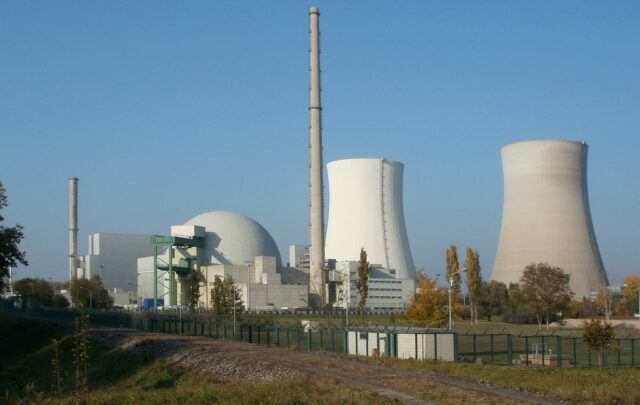
… What we can’t bank on is that some geek in Silicon Valley will, on her own, come up with the perfect solution. Nor will the treasured fixes of the left-solar panels on every roof, banning Hummers, forgoing imported tomatoes-be sufficient. The questions we face are on the order of: Are you willing to consider a nuclear plant in your back yard? If not your yard, whose? And if not a reactor, how about damming a bucolic river, or windmills that ruin a cherished view? What new regulations and taxes do we need to kick-start the transformation?
Forcing the nation to confront such questions is the most critical task our next president faces-more important than resolving the war, bolstering the economy, or fixing health care.
(May/June 2008 issue)
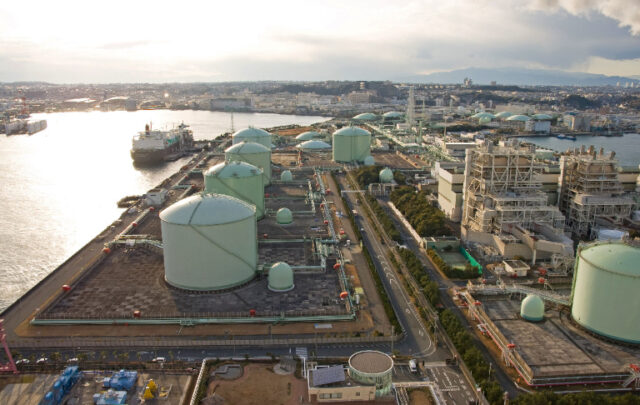
This is the lead editorial for an issue of the liberal-left Mother Jones that is devoted to “The Future of Energy.” About two dozen articles are online (see buttons at top of the original article). The general tenor seems to be: renewable energy, Lovins-style high-tech efficiency, and a cautious look at nuclear and LNG. Not much different from what mainstream Democrats are talking about.
What’s curious is that Mother Jones seems to have missed the grassroots movements of relocalization, food security and anti-consumerism. One would have thought that with a namesake like Mother Jones, the magazine would have made an effort to see what’s happening in the neighborhoods and among the activists. I hope I’m wrong, but the magazine seems to have missed a great opportunity.
Nevertheless the editorial mentions peak oil and is much more serious than in the past. A welcome first step. -BA



Comments
We changed commenting systems on September 10, 2026 as part of a site-wide functionality and security upgrade. Your past comments have not disappeared, and you can still log in with your old Disqus account credentials if you wish. Contact us with any questions.