Click on the headline (link) for the full text.
Many more articles are available through the Energy Bulletin homepage
Change in farming can feed world – report
John Vidal, Guardian
· Ample resources wasted, global study warns
· Biofuels exacerbating shortage of food crops
—
Sixty countries backed by the World Bank and most UN bodies yesterday called for radical changes in world farming to avert increasing regional food shortages, escalating prices and growing environmental problems.
But in a move that has led to the US, UK, Australia and Canada not yet endorsing the report, the authors said GM technology was not a quick fix to feed the world’s poor and argued that growing biofuel crops for automobiles threatened to increase worldwide malnutrition.
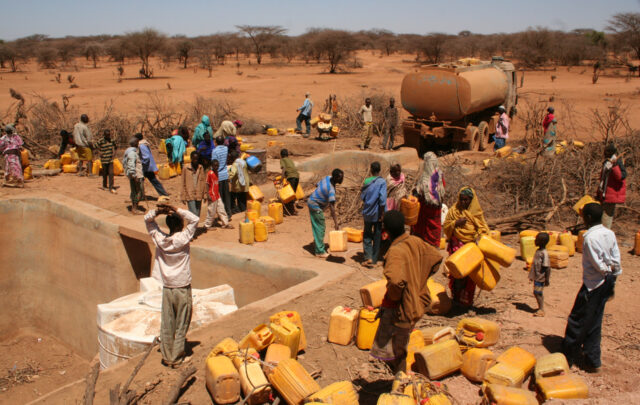
The report was issued as the UN’s World Food Programme called for rich countries to contribute $500m (£255m) to immediately address a growing global food crisis which has seen staple food price rises of up to 80% in some countries, and food riots in many cities. According to the World Bank, 33 countries are now in danger of political destabilisation and internal conflict following food price inflation.
The authors of the 2,500-page International Assessment of Agricultural Science and Technology for Development [IAASTD] say the world produces enough food for everyone, yet more than 800 million people go hungry. “Food is cheaper and diets are better than 40 years ago, but malnutrition and food insecurity threaten millions,” they write. “Rising populations and incomes will intensify food demand, especially for meat and milk which will compete for land with crops, as will biofuels. The unequal distribution of food and conflict over control of the world’s dwindling natural resources presents a major political and social challenge to governments, likely to reach crisis status as climate change advances and world population expands from 6.7 billion to 9.2 billion by 2050.”
(16 April 2008)
IAASTD Brochure (PDF) – good
YouTube presentation – good
IAASTD website – a little hard to figure out
Farming report released amid food shortage riots
Jamey Keaten, Associated Press
UNESCO calls for a ‘paradigm change’ to move away from fossil fuels in agriculture
—
As riots erupt over food shortages in the Caribbean and Africa and hunger approaches crisis stage in parts of Asia, an international report said farmers worldwide must reduce dependency on fossil fuels and better protect the environment.
The report, three years in the making, was released Tuesday at UNESCO headquarters in Paris as surging food prices fanned violence and exposed serious concerns about the global food supply in coming decades.
The report, known as the International Assessment of Agricultural Science and Technology for Development, takes a broad look at farming in relation to hunger, poverty, the environment and social equity.
“The IAASTD encourages us to take up what can be called a paradigm change. The status quo today is no longer an option,” said Guilhem Calvo, an adviser with UNESCO’s ecological and earth sciences division.
(15 April 2008)
“Increase Agricultural Productivity While Reducing the Environmental Footprint”
Interview with Robert Watson
Stephen Leahy, IPS
Over the past few years, Robert Watson has had what must qualify as one of the world’s tougher assignments: heading an initiative to help agriculture cope with the substantial challenges it faces presently, and the even bigger hurdles ahead.
The three-year International Assessment of Agricultural Science and Technology for Development (IAASTD) has sought to evaluate agricultural knowledge across the spectrum, with the help of governments, civil society, the private sector, and hundreds of experts.
Watson initiated the project while chief scientist at the World Bank; he currently serves as director of the IAASTD — also as chief scientist at the British environment and agriculture department.
The findings of the assessment are being formally presented Tuesday, this after they were reviewed at an intergovernmental plenary held in Johannesburg, South Africa, from Apr. 7-12. IPS environment correspondent Stephen Leahy chatted to Watson at this meeting about the landmark IAASTD.
IPS: What is the significance of the IAASTD findings for global food security?
Robert Watson (RW): The significance of the IAASTD is that for the first time governments from the developed and developing countries, civil society, scientific authors from natural and social sciences all worked together to address the critical issue of how to get affordable and nutritious food in way that is environmentally and socially sustainable.
(15 April 2008)