Click on the headline (link) for the full text.
Many more articles are available through the Energy Bulletin homepage
Pakistan: Why not ban wedding meals, lighting?
Sabahat Hussain, The Post
Large-scale waste at marriage feasts continues as country faces worst food and power shortage
—
Lahore: The IMF had warned that continued food shortage and soaring prices could ultimately result in civil wars in underdeveloped countries. According to the IMF Managing Director Dominque Struass-Kahn, the rising prices of edible commodities have now become the most prominent threat, being faced by Pakistan at large.
… However, the problem just not ends there for Pakistanis are not only subjected to stomach pangs, but have to bear severe energy crisis. Power outages have become a routine. There have been demonstrations against such acts in Peshawar and Karachi while angry demonstrators in Multan had on Monday ransacked Mepco offices in protest against prolonged power cuts.
However, in the face of all this, our people and the government continue to express their characteristic apathy. The worst and most insensitive manifestation of our unresponsiveness is witnessed at local wedding ceremonies wherein all halls, enclosures and houses at the eve of marriage ceremonies are lighted up, irrespective of how much electricity is being wasted. Interestingly, even the authorities concerned fail to act in the matter. The blatant waste of power continues, unrepentantly.
Likewise, wedding tables are laden with food that most often than not goes to waste. Pakistanis not only eat to their hearts content, but at times over-indulge themselves. Still, almost half of the food served is dumped later.
(16 April 2008)
Bread expert explains why we need to get back to baking our own
Andrew Whitley, Guardian
Thousands have abandoned bread altogether, troubled by bloating, irritable bowels or some apparent intolerance for wheat. Coeliac disease – for which the only cure is complete avoidance of the gluten in wheat, rye, barley and oats – now affects at least one person in 100, but sensitivity to wheat is detectable in as many as one in five.
Bread has changed. One disturbing possibility is that modern farming and industrial baking produce bread that more and more people cannot and should not eat. The “green revolution” spawned new high-yielding varieties of wheat designed to work with the artificial fertilisers and pesticides used in intensive farming. But recent research suggests that these new wheats have fewer minerals and vitamins than traditional varieties and more of the proteins that cause “leaky gut” type conditions.
(16 April 2008)
Out of the Yard and Onto the Fork
Anne Raver, New York Times
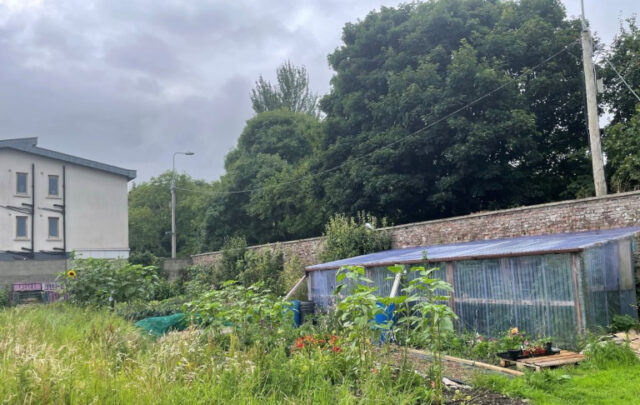
… Kitchen gardens are as old as the first hunter-gatherers who decided to settle down and watch the seeds grow. Walled medieval gardens protected carefully tended herbs, greens and fruit trees from marauders, both human and animal. The American colonists planted gardens as soon as they could, sowing seeds brought from Europe.
Call them survivor gardens.
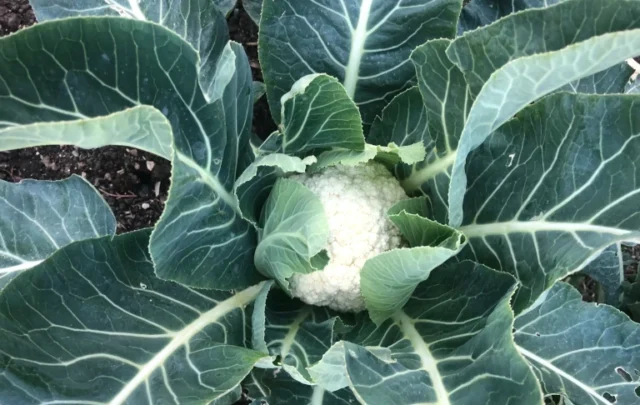
Now, they are being discovered by a new generation of people who worry about just what is in that bag of spinach and how much fuel was consumed to grow it and to fly it a thousand miles.
… Kitchen Gardeners International (www.kitchengardeners.org), a nonprofit organization Mr. Doiron founded in 2003, is a virtual community of 5,200 gardeners from 96 countries. On the Web site, where you can learn how to compost or grow garlic, a YouTube video shows the Doirons in their front yard. Swiss chard and cukes have replaced grass, and a sign poking out of the pumpkin patch reads “1,500 Miles/400 Gallons/Say What?” (The miles refer to the average distance food travels “from field to fork,” Mr. Doiron said; 400 gallons to the amount of oil used to make pesticides, fertilizer and animal feed, and to transport cattle and the like, to feed one person for one year.)
“We’re trying to reframe the backyard in terms of global sustainability, without losing any of the fun,” said Mr. Doiron, who manages to make a living from donations to his nonprofit and a fellowship from the Thomas Jefferson Agricultural Institute. He sees his audience as “people out there who are concerned about peak oil, or the gardening gastronomes who want the freshest food possible,” he said.
(17 April 2008)
Peak oil is now on the gardening pages in the NY Times (it made the fashion pages a little over a week ago). From the NYT business and energy journalists, there is still a deafening silence. If they wait much longer, it will be grounds for journalistic malpractice. -BA
Is changing our diet the key to resolving the global food crisis?
Jeremy Laurance, Independent
… Are we growing too little food to feed the world?
Bizarrely, no. There was a record global grain harvest last year. It topped 2.1 billion tons, up 5 per cent on the previous year. The problem is that a diminishing proportion of it is being turned into food. This year less than half the total grown – 1.01 billion tons – will find its way on to people’s plates, according to the United Nations Food and Agriculture Organisation. And this crisis is hitting before world food supplies are further damaged by climate change.
So where is the grain going?
There are two reasons why the record amount of grain is proving insufficient to feed the world. First, a large amount is being diverted to make biofuels. From yesterday, all transport fuel sold in the UK must be mixed with at least 2.5 per cent biofuel made from crops. As our front page explained yesterday, the Government’s idea is that this will make Britain’s 33 million cars greener.
But the consequence is that there is less grain available for food.
… Would cutting car use solve the food crisis?
Not on its own. Of course we should be reducing our reliance on the car, and on jet travel and other profligate uses of energy, for environmental reasons. Cutting car use, and reducing energy demands overall, would cut demand for biofuels, leaving more grain available for food. But while 100 million tons of grain are being diverted to make fuel this year, over seven times as much (760 million tons) will be used to feed animals. The world’s passion for meat is a much bigger cause of global hunger than its passion for the car.
How does eating meat cause hunger?
Because it is a very inefficient way of producing food. It takes 8kg of grain to produce 1kg of beef, and large tracts of forest have been cleared for grazing land that might have been used to grow crops. Chicken is more efficient to produce – it takes 2kg of feed to produce 1kg of meat. To maximise food production it is best to be vegan. According to Simon Fairlie, in his magazine The Land, it would take just 3 million hectares of arable land to meet Britain’s food needs, half the current total, if the population were vegan.
Isn’t it completely unrealistic for Britain to go vegan?
Of course. Vegans number 0.4 per cent of the population, vegetarians 3 per cent, and most people will not take readily to a diet of green leaves, pulses, fruit and nuts. This is about the direction we should be moving in, not the ultimate destination. We should be aiming to reduce our meat and dairy consumption, and increase consumption of fruit and vegetables.
(16 April 2008)