


Click on the headline (link) for the full text.
Many more articles are available through the Energy Bulletin homepage
Scientists warn of soot effect on climate
James Randerson, Guardian
Soot produced by burning coal, diesel, wood and dung causes significantly more damage to the environment than previously thought, according to research published today. So-called “black carbon” could cause up to 60% of the current warming effect of carbon dioxide, according to the US researchers, making it an important target for efforts to slow global warming.
Around 400,000 people are estimated to die each year due to inhaling soot particles, particularly because of indoor cooking on wood and dung stoves in developing countries. These deaths are mainly among women and children. Professor Greg Carmichael, of the University of Iowa, one of the authors of the study, published in Nature Geoscience, said: “Trying to develop strategies that really go after black carbon is really a very good short-term strategy and a win-win strategy for both climate and air pollution perspectives.”
(24 March 2008)
The big picture – world’s worst environmental black spots? (photo gallery)
Guardian
Rivers of dead fish, 100-acre rubbish dumps, smog-filled skies – are these the world’s worst environmental black spots?
Photo 1:
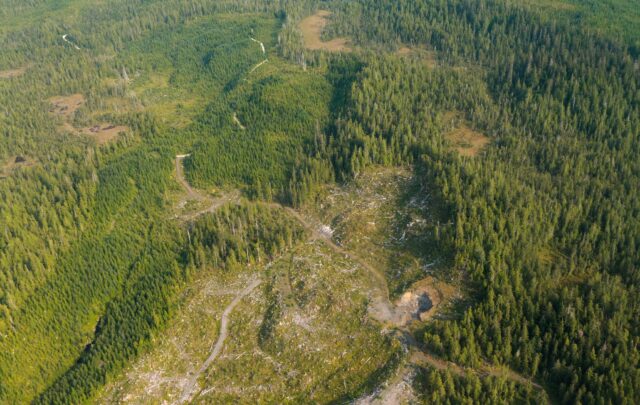
Cattle wander around their still-smouldering pastureland in Rondonia, Brazil, one of the many huge tracts of the Amazon rainforest which are being torched to make way for agriculture. In the first five years of this century alone, Brazil burnt an area the size of England and Wales. Deforestation is responsible for 17% of human greenhouse gas emissions [GHGE], mainly through the burning of wood, which results in even fewer trees to absorb CO2
(22 March 2008)
Poor are sidelined on climate change solutions
Elisabeth Rosenthal, International Herald Tribune
… wind turbines, hybrid cars and carbon markets are solutions by and for the developed world. They ignore another huge piece of the climate change puzzle: how to best help the people in the developing world who are already feeling the effects of global warming.
“There is a trend to try to find solutions through technological interventions and high-investment solutions, which is tricky because that won’t always work for poor countries,” said Gonzalo Oviedo, author of a powerful report on the effect of climate change on poor people in the developing world, released this week by the International Union for the Conservation of Nature. “What we are saying is that in many poor countries there is a high level of vulnerability, and that needs other kinds of solutions.”
The world is moving fast to figure out how to reduce emissions with the help of technology. It has done far less to help poor people adapt. The report, “Indigenous and Traditional Peoples and Climate Change,” includes a kind of catalog of climate-related suffering already occurring among the poorest people of the earth.
(18 March 2008)
Indonesia warned of looming water crisis
Lilian Budianto, The Jakarta Post
Ratna, a resident of a slum in Cilincing, North Jakarta, has struggled for years to cope with chronic water shortages.
The mother of three young children says her only water source is a well located at the back of her depleted hut, which runs out of water during the dry season.
To provide her family with adequate clean water, she has to buy it from a vendor for Rp 3,000 (US$0.30) per jerry can. Her family needs at least three jerry cans a day.
Without access to tap water, Ratna has to spend more than a quarter of her husband’s salary on clean water.
To have clean water, she has had to slash her children’s food budget, she said.
“I have no choice. I can’t do household chores without clean water,” she said. “My kids are used to eating rice with just soy sauce. They have never complained about it.”
Hanung Santono, an activist with the People’s Coalition for the Right to Water, said water shortages would affect even more people in the future if the government failed to handle the matter seriously.
A 2003 study by the Indonesian Forum for the Environment (Walhi) found densely populated Java, Bali and Nusa Tenggara to be the three areas most vulnerable to water shortages.
In 2003, water demand in Java and Bali reached 38.4 billion cubic meters while tap water production only stood at 25.3 billion cubic meters. People without access to tap water have to rely on underground water or resort to rivers, even though many of them are polluted.
(24 March 2008)
Contributor Steve Voetsch writes:
Regarding ongoing water shortage in Indonesia.


Comments