The second part of an interview with Dan Armstrong, writer, activist, and owner of MUD CITY PRESS. Dan lives in Eugene, Oregon. (Continued from Part 1).
Carolyn Baker: Thank you Dan for that fascinating and comprehensive analysis. Now bringing all of this closer to home, what kinds of preparations have you personally been making in recent years for Peak Oil, climate change, and economic chaos?
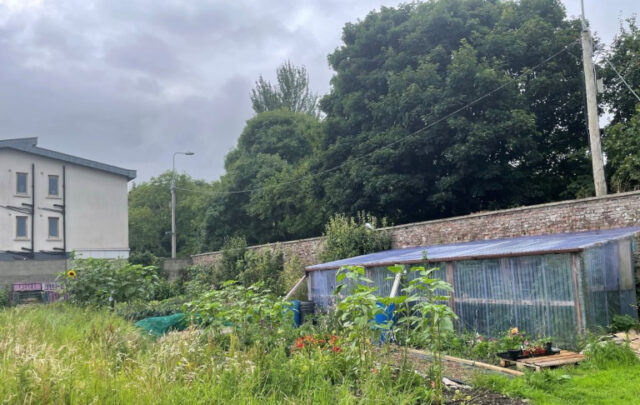
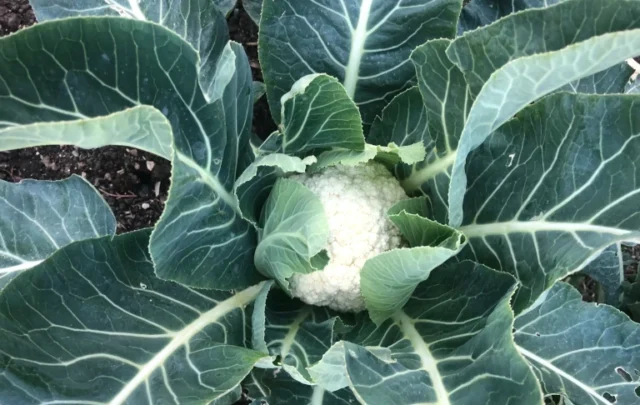
Dan Armstrong: I’m very fortunate. My wife and I live on three acres with a vernal creek in a semi-rural neighborhood on the edge of Eugene. Over the last five years, we’ve worked steadily on the little things to build more self-reliance into our land, centered on a very productive, nearly year-around, organic garden and a collection of fruit trees. With canning, a root cellar, and plans for grain storage in the winter to come, we’re aimed at the possibility of feeding ourselves through a year, but we are certainly not there yet.
 Food self-reliance is a tenuous thing. Alone, as a couple both nearly sixty years old, my wife and I would struggle through any kind of crisis. Make no mistake about that! The next level of security is provided by our relationship with our neighbors. Little by little, a consensus is building in our small valley neighborhood that when things get tight, we must work together. This is a work in progress that I apply myself to on a regular basis. For example, I will be showing What a Way to Go to a neighborhood gathering this week to prompt discussion and connection. To me this is an important aspect of facing any crisis, financial or otherwise; it’s more feasible to build a lifeboat out of the neighborhood I currently live in than trying to move off the grid to build a lifeboat from the ground up.
CB: When our readers visit the Truth To Power website, they are likely to see a banner ad for your book, “Prairie Fire”, at the top of the site. What is the book about? What inspired you to write it? What has been the response to the book?
DA: Prairie Fire is essentially a game plan for American family farmers as they confront Peak Oil and climate change. It’s a “what if” story of an agricultural revolution in the United States told like a Tom Clancy thriller-in this case, however, global tensions arise from grain shortages, not from weapons of mass destruction.
Imagine if the drought that took place in Australia this past year and caused wheat prices to break ten dollars a bushel had occurred in China, the world’s largest grain producer. And what if someone knew there would be a grain shortage two months before it happened and bought heavily in wheat and corn futures? This is the backdrop of Prairie Fire, a financial market pump and dump scheme applied to the commodities market.
Two things inspired the novel. The first was my concern that environmental non-fiction spoke only to the choir. If you read enough environmental books, they become repetitive and a little dry. I wanted to write an environmental book that was dramatically engaging and in that way might reach an audience that was more than those already aware of environmental problems. That is, use all the hooks of an ordinary novel, adventure, romance, and personal conflict, to tell the story of the American family farmer and the literal and figurative erosion of America’s Heartland.
The second source of inspiration was a little book written in 1995 by Lester R. Brown of the Earth Policy Institute Who Will Feed China? In his book, Brown suggests that the weakest point in the world food supply system is China’s grain harvest. Near the end of the book, he hypothesizes that we are but one catastrophic weather event, one major drought in China away from a worldwide grain crisis. This is the premise of Prairie Fire. A seemingly harmless warm winter in South East Asia diminishes the Himalayan snowpack by thirty percent. A dry spring follows. Water shortages cut China’s grain harvest by a quarter. Grain prices around the world triple. Prairie Fire addresses what these dynamics could mean to family farmers in the United States and commodities markets around the world.
The response to the book has been very strong. Because I’m a self-published writer with no source of advertising other than my website and my website networking (thank you, Carolyn!), selling the book has been slow. I sell at book fairs, over the internet, and in two local book stores. I have heard from about 30 enthusiastic readers, and as the reviews at Amazon.com.Prairie Fire tells an engaging, relevant, and thought provoking story. The book does contain some scenes of sex and violence (I rate it R), and three readers (one of whom was 98 years old and enjoyed the book) have said it is too racy for a book with an environmental message. In response to this, I would say that as a novel, Prairie Fire mirrors life. What we see in life-in all its diversity, good and bad, beautiful and ugly-should be reflected in a novel.
CB: When you observe what’s happening now with incredible upheaval and transition occurring in our world, what kinds of emotions are evoked for you? What feels most important-top priority, for you personally in these daunting times? What kinds of changes within yourself and your immediate circle of connections have you experienced?
DA: As stated earlier, I became aware of global warming 37 years ago. At that time, it seemed like science fiction, and I wondered if I would live long enough to see the climate actually change. I have, and in a much more rapid manner than I could ever have guessed in 1971. Throw in Peak Oil and the manipulation of the financial markets, and I’m overcome with sadness and a disappointment for who and what we are. Why must we humans, with all our knowledge, technology, and potential for good, be so incapable of managing our planet home? Why must our capacity for greed so dominate our capacity for intelligence and altruism? I feel as though we are a sadly flawed species living out a Greek tragedy, the unfinished parable of planet earth.
In a sense, the human species has always lived on the edge. As H.G. Wells once wrote, “history is a race between education and catastrophe.” Whether the fascist war machine of Adolph Hitler, the threat of nuclear holocaust during the Cold War, or the vast and complex implications of climate change, humans seem bent on courting crisis. What’s different about today’s situation is the speed at which the drama now takes place and the size of the crisis we face. We’ve been accelerated through time and space by the power of our technology, a critical piece of which is the worldwide web you are using now.
The threat of collapse or mass destruction has not really changed in any basic way as a human tension; it has simply become sharper and more visible with each passing day because we have more ways to measure and chart it. In effect, the same choices that have always existed for humans confront us now but with more on the line. We either learn to live together or we live amid deepening crisis. We either live as an implicate part in the entire web of life on this planet, or we try to continue to live in denial of this overwhelming truth. One way is sustainable; one is not.
It’s my sense that it’s as difficult to anticipate and fully prepare for catastrophic change as it is to prepare for one’s death. Abstract intellectual ratiocination and common sense material preparation for the end is never more than a dress rehearsal-until that moment when the store shelves are empty or the hurricane has leveled your home. That said as a qualifier, I still believe all begins with self awareness.
My top priority is to keep my mind open. And not to lose my sense of humor-in the grand sense. Our number one responsibility, I believe, is to come to grips with our psychological self, to take a good long look inside and find out who we really are, learn how to rid ourselves of greed, learn to how bridle ego and petty desire, learn how to share and to give and to live with less and more simply. At bottom, we must learn how to cooperate. To be member of a group or a team with no motivation other than enabling the whole. This is good advice regardless of the global situation.
Should the economy collapse or a catastrophic weather event decimate the region where you live, the coming out of it will occur through the spontaneous forming of community, either as an emergency enterprise or a long-term way of living. And this is best done when an individual has given up selfishness, shed vain materialism, and embraced the interconnectedness of all life and each other. I work on my attitude and humor more than anything else because it is my being and my mental health that will make me the most helpful to others if conditions are reduced to basic survival. In this, I am no better than a work in progress.
The most important change in my life is that I have become active in the Eugene community. I am not fond of speaking in public. I have never been an activist except during my time in college. I am not outgoing at all. But I am out there now. And though real relocalization at the city-wide level often seems unlikely or impossible without the impetus of immediate emergency, personal action is empowering.
Among my friends, even those engaged in community action, with some exceptions, I still see either unchanged cynicism, denial, or a paralysis caused by the day to day squirrel cage demands of a stressful and pressure filled life. I am not sure how to answer to this. I write to help inform.
CB: What is your vision of the kind of world we might create before, during, and after the collapse of empire?
In general, I see many possible scenarios for the future. Some are bad, some are difficult. In any case, culture change is inevitable. For me, with the single caveat that global warming) has the potential to make everything else moot; the most likely short-term scenario is a steady and heavy crush upon the poor and the middle class of this nation. The rising price of petroleum alone virtually guarantees some kind of extended economic recession or depression.
As most of this interview suggests, I believe a relocalized society and economy is a pragmatic way to prepare for, to survive from, or to rebuild after whatever comes down. Relocalization is not religion. It’s a management plan designed to counteract the rising price of energy and to help diminish carbon emissions. It will not stop what is already unfolding, but it may alleviate the worst of it-again with the caveat that climate change could be full of unwelcome and unanswerable surprises.
I am part of what I will tentatively call a sustainable development think tank here in Eugene. We are working on what we call “a blueprint for a sustainable south Willamette Valley.” One of the members of the group, Ravi Logan, is the Associate Director of the Global PROUT Institute Network. PROUT or the Progressive Utilization Theory is post-capitalist economic paradigm, created by the now deceased Indian Philosopher P. R. Sarkar, based on a cooperative-based, decentralized socio-economic model, a kind of relocalized, bottom up alternative to the systems of capitalism and communism.
Ravi Logan was invited to the Russian province of Khabarovski Krai in 1992, in the aftermath of the Soviet Union’s collapse, to teach and assist in the implementation of the PROUT economic model as a substitute for the communist command economy and an alternative to market capitalism and the incursion of economic globalism. Though this effort was eventually undermined, Ravi Logan is a wise and intelligent man who has first-hand experience in post-collapse rebuilding.
While I am not a PROUTist, the PROUT model is a useful one, and I have had many long and rich conversations with Ravi about what we might anticipate in a collapse and what we might create out of it. A significant part of our discussion has been the role played by cooperatives in rebuilding. When we are left with the shell of a society, we can not rebuild alone. We will have to come together to form and create all the basic elements of society again, beginning with food, water, and energy systems. Essential to doing this is learning how to work together and share the results. This is the basic premise of a cooperative.
If I were to envision something to replace the capitalist megalith, it would begin with a decentralized economy with many parallels to the PROUT economic system. It would be a localized society that emphasized balance, diversity, and the interconnectedness of all life. The basic working element would not be corporations or other large profit motivated entities; it would be a mix of small entrepreneurial businesses to stimulate creativity and non-government owned, cooperatives to ensure social stability, all guided by the principles of sustainability, equality, and individual self-realization.
CB: What suggestions would you give our readers regarding relocalization and collapse preparation?
First, know who you are. Know your strengths, know your weakness. Verify your real needs and adjust your mind and your emotions to embrace change. If peak oil or financial crisis will do anything good, it will be teaching Americans to live with less and to waste nothing. Learn to welcome this like a drink of cool spring water.
Then take a good long look at where you live. Does the bioregion you live in have the capacity to feed itself? Does it have a secure water system? Is there a high potential for drought? What will it look like if civil order is lost? These are basics. Figure them out.
If you are satisfied with where you live, work on personal and community self-reliance. If there is a crash of any kind and you have three months worth of food and water, you will not have to take part in the first stages of crisis and the violence of cleaning out food stores shelves. Know your neighbors. Be prepared to rebuild with the people that live around you. Prepare to work cooperatively. Even plan large cooperative neighborhood meals to practice working together.
Should the global economy collapse and business as usual come to stop, the hard shell of infrastructure will remain. In a way, much like William H. Kötke describes in his article The Revolution that is Arising from the Earth, workers from closed manufacturing plants can return without management and form a work cooperative to get the up plant producing again. This is what we’ll need once the smoke has cleared: cooperation.
CB: Please add anything else you’d like to talk about, expound upon, or any rants that occur to you. Feel free to put yourself in the shoes of our readers and just let your thoughts and feelings flow.
Life, it seems, is at least psychological. We have consciousness and we have the abstract tools to understand that consciousness. Awareness for our psychological being is where everything starts. Be here now, as Richard Alpert, aka Ram Dass, might say. This is sound advice. Be fully mindful of the moment. The realization of community on this planet, either as a whole or in localized parts, begins with clear-seeing individuals.
DAN ARMSTRONG is the editor and owner of Mud City Press, a small publishing company and online magazine operating out of Eugene, Oregon. He has written extensively in both fiction and non-fiction. For access to his books and short stories, political commentary, humor, and environmental studies CLICK HERE. To order his novel “Prairie Fire”, click on the banner at the top of this site.