


Click on the headline (link) for the full text.
Many more articles are available through the Energy Bulletin homepage
BC’s Carbon Tax Shell Game
William E. Rees, The Tyee
Economist who invented ‘eco-footprint’ analysis is not impressed.
—
There are plenty of things society could do to avert a full-blown ecological crisis but we don’t do them and what we do do doesn’t work. It seems that the ecologically necessary is politically unfeasible but the politically feasible is ecologically irrelevant.
Nobody doubts what got us into this mess: in the 20th century alone the human population quadrupled to over six billion, energy use (mostly fossil fuel) increased by a factor of 16, fish catches (but not fish) increased 35-fold, industrial production expanded 40-fold, agricultural output exploded, etc., and all corresponding waste streams ballooned by equivalent multiples. Result? Soils erode 10 to hundreds of times faster than they develop, the oceans are emptying and acidifying, biodiversity is imploding, natural gas and petroleum are being depleted, atmospheric carbon dioxide levels are a third higher than in pre-industrial times and the climate is going into convulsions.
We also know at least the crude dimensions of the solution: for example, our best science tells us that to avoid a potentially catastrophic 2 C increase in mean global temperature, the world community needs to reduce carbon dioxide emissions 80 to 90 per cent by mid-century. Our ecological footprint studies similarly show that for sustainability we should be taking steps to reduce the North American per capita eco-footprint by 80 per cent, from 9 global average hectares to 1.8 hectares (the amount of biocapacity presently available per capita on Earth).
All of which brings us to contemplating British Columbia’s newly announced carbon tax.
Reason to cheer?
First, let’s acknowledge what Sightline Institute’s Alan Durning has already emphasized: B.C.’s Campbell government has introduced what is “by far the most aggressive carbon pricing regime in North America. In fact, it’s one of the more aggressive regimes in the world.” Strong praise, indeed. But the whole purpose of this “most aggressive of carbon pricing regimes” is to reduce the province’s carbon-dioxide emissions, so the test of its effectiveness is its likely effect compared to the required 90 per cent reduction. Here we find many reasons to hold the applause.
(26 February 2008)
Related: Liberals’ climate guru got his start as an NDP appointee in the 1990s.
Next President Better Than Bush on Climate – Barroso
Alister Doyle and Wojciech Moskwa, Reuters via Planet Ark
Any of the top three US presidential hopefuls would be better than President George W. Bush at combating climate change, European Commission President Jose Manuel Barroso said on Monday.
“The trend is on the right side, but there is a lot of work to do,” Barroso said of the outlook for US policy on fighting global warming during a seminar on climate change and energy security in the Norwegian capital.
(26 February 2008)
Sumatran deforestation driving climate change and species extinction, report warns
Jessica Aldred, Guardian
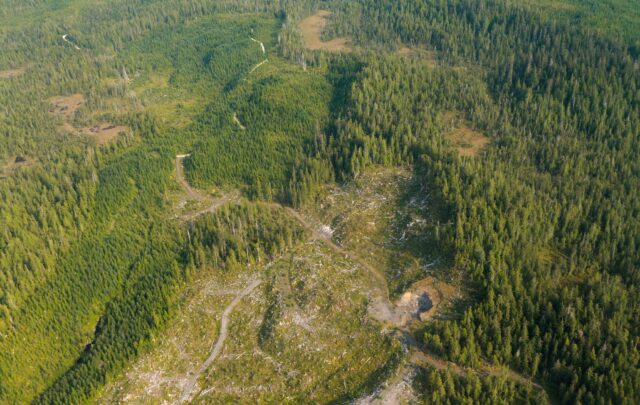
The destruction of Sumatra’s natural forests is accelerating global climate change and pushing endangered species closer to extinction, a new report warned today.
A study from WWF claims that converting the forests and peat swamps of just one Sumatran province into plantations for pulpwood and palm oil is generating more annual greenhouse gas emissions than the Netherlands, and is endangering local elephant and tiger populations.
(27 February 2008)



Comments
We changed commenting systems on September 10, 2026 as part of a site-wide functionality and security upgrade. Your past comments have not disappeared, and you can still log in with your old Disqus account credentials if you wish. Contact us with any questions.