Click on the headline (link) for the full text.
Many more articles are available through the Energy Bulletin homepage
Abu Dhabi’s zero-carbon ‘ecotopia’
John Vidal, The Guardian
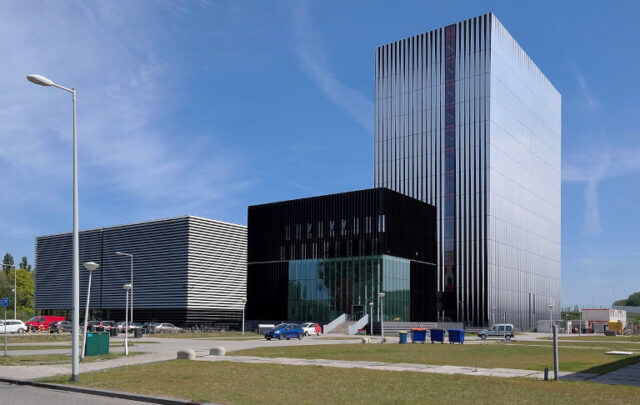
Abu Dhabi’s zero-carbon ‘ecotopia’ is a world away from the skyscrapers that dominate the region, and its architects, led by Lord Foster, say the readymade city can be adapted to anywhere in the world.
—
Nayla (not her real name) lives on the edge of a small township way beyond the skyscrapers and palaces of Abu Dhabi’s city centre. She and her husband are both professionals who, in most societies, could expect to afford decent housing, but they live with their two children in a small two-bedroom flat “in the desert”. The air conditioning breaks down frequently, the rubbish piles up, the summer heat is unbearable at over 50C, and the rent, she says, is astronomical. The Gulf emirate may be the richest state in the world, sitting on 100bn barrels of oil and enjoying an investment fund of $1 trillion, but the benefits have not reached Nayla.
The family wants to move, and where better than to Masdar, the new $15bn zero-carbon, zero-waste city designed by Lord [Norman] Foster and his team of architects for Sheikh Mohammed bin Zayed al-Nahyan, Abu Dhabi’s crown prince ruler. Work on the city – less than a mile from where Nayla and her family live – will start next month. It will house 40,000 people and promises a clean, attractive and ecologically responsible way of life.
The compact, low-rise city promises to use less than half the energy of one the same size; it will be run almost entirely by solar electricity generated on site, have a light rail system, and have driverless “pods” on magnetic tracks to move people around. Every surface will collect energy, homes will respond to the seasons with opening or closing roofs, and it will desalinate and recycle its own water.
(30 January 2008)
Berkeley envisions ambitious energy plan
Charles Burress, San Francisco Chronicle
Homes and businesses in Berkeley would be required to produce as much energy as they use by 2050 under an ambitious city plan that aims to combat climate change.
The plan released Monday also envisions a city where residents and workers rely on public transit, walking and biking. Cars would run on alternative fuels and electricity. No waste would be sent to landfills. And most of the food eaten in Berkeley would be produced within a few hundred miles.
These measures and goals, which would be realized in stages over the next four decades, are part of the blueprint proposed by city staff members to meet a voter-approved mandate to reduce Berkeley’s greenhouse gases 80 percent by 2050. The measure passed in November 2006 with 81 percent of the vote.
…The Bay Conservation and Development Commission estimates, for example, that San Francisco Bay has risen 7 inches in the past 150 years and agrees with scientific projections that sea levels will rise between 1 and 3 feet by 2100. Although Berkeley wouldn’t be flooded under such a rise, its vast sewer system would back up, DeVries said.
(29 January 2008)
Address climate change through land use
Hing Wong, San Francisco Chronicle
…Achieving these goals will require state and local governments to do more than tighten emission standards for cars and trucks. It will require an integrated effort from state, regional and local governments that considers how community and land-use planning policy decisions can help.
To guide local government agencies in planning-related decisions that respond to reducing greenhouse-gas emissions, the American Planning Association’s California chapter has published its recommended policy principles for climate change response.
City and county governments have the ability and opportunity to help California achieve these goals because they are the agencies responsible for creating local community land planning policy. Many cities and counties in Northern California have already done so with impressive results, and even more are following their lead.
For example, Marin County’s Sustainability Program has become a national model demonstrating how planners can reduce greenhouse-gas emissions. The results earned Marin County the 2008 National Planning Excellence Award for Implementation from the American Planning Association. Through the program, greenhouse-gas emissions in public buildings were reduced by 100 tons during a five-year period. Energy-efficiency measures in the program resulted in nearly 2 million kilowatt hours of energy being saved between 2006 and 2007, and energy conservation measures prevented 1,000 tons of carbon dioxide from being generated.
North Beach in San Francisco is another award-winning example. With the help of planning and zoning tools as well as citizen participation, North Beach remains a favorite among both residents and tourists, who enjoy the compact layout that encourages walking. North Beach’s walk-ability also discourages automobile use and helps reduce greenhouse-gas emissions. In 2007, North Beach was selected as one of 10 great neighborhoods through the American Planning Association’s “Great Places in America” program.
Hing Wong is the vice president of administration for the American Planning Association, California chapter, senior regional planner with the Association of Bay Area Governments, and treasurer of the California Planning Foundation.
(29 January 2008)
Making the transition (PDF)
Henry Widdicombe, Resource Magazine
In the Environment Agency’s recently published 50 Things That Will Save the
Planet, Transition Initiatives is listed in the top 10. Co-founder Rob Hopkins
talks to Henry Widdicombe about how the initiative to make us become less
dependent on peak oil started and what the future holds
From Transition Culture:
The latest issue of Resource Magazine (”a new perspective on waste”) features Transition Initiative on the front cover. Transition stuff appears twice inside, once in a 2 page article about Transition Initiatives which was rather good, and secondly in The Hot 100, which it somewhat alarmingly introduced as “the definitive list of 2007’s red hot, sizzling chillies”. There, sitting resplendent at Number 6, you’ll find Ben Brangwyn and Rob Hopkins of the Transition Network”. Apparently we got there due to “revolutionising the future of our communities and their resource use”. Not quite sure we can in any way claim any credit for doing anything like that, but it is nice to appear there among many other luminaries. Thanks to Resource Magazine for thinking of us.
(28 January 2008)
Also online, the January Transition Network newsletter.