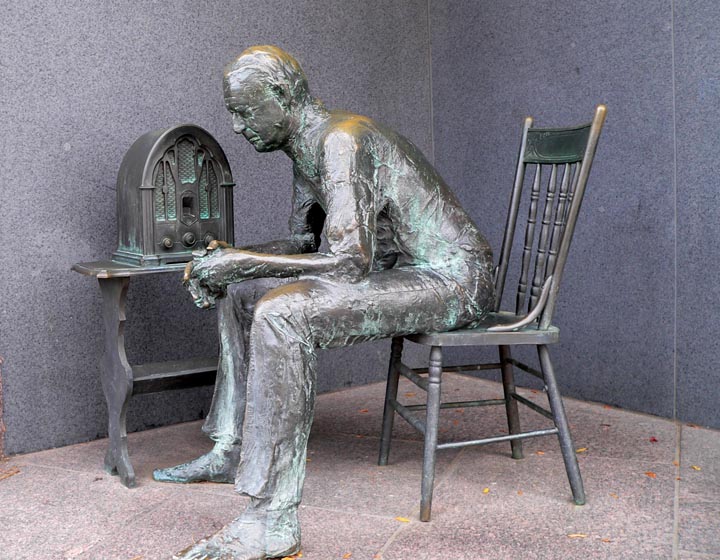
Click on the headline (link) for the full text.
Many more articles are available through the Energy Bulletin homepage
U.S. Warning Signs Point Toward a Deep Recession
Justin Lahart, Wall Street Journal
The U.S. has suffered recessions only twice in the past quarter century and both were short and mild. There are good reasons to fear that the looming recession, if it arrives, could be worse.
Housing is in the midst of its worst downturn since at least the 1970s. That has led to a meltdown in the mortgage market; with financial firms struggling to make sense of their losses, they are making it harder for even credit-worthy borrowers to get loans. The combination of heavy debt loads, still-high energy and food prices and a weakening job market has households tightening their belts. Consumer spending, long a bulwark of the economy, is faltering.
(21 January 2008)
Stocks Plummet in Germany, Hong Kong, India, Brazil in Rout
Sarah Thompson, Bloomberg
Stocks plunged in Germany, Hong Kong, India and Brazil, and U.S. index futures dropped on mounting speculation that the global economy is slowing and company defaults will rise.
Europe’s Dow Jones Stoxx 600 Index fell the most since the Sept. 11 terrorist attacks and sank into a bear market…
(21 January 2008)
London shares in biggest fall since 9/11
Graeme Wearden and Justin McCurry, Guardian
Shares in London plunged today following heavy losses in Asia overnight, as intensifying fears over the state of the US economy triggered a wave of selling and talk of market meltdown.
The FTSE 100 index of leading shares was a sea of red, opening nearly 3% lower this morning and steadily ploughing new depths.
It closed at 5578.2 points, down 323.5 points or 5.48% on the day. That is the biggest percentage fall since September 11 2001, and the largest fall in points terms ever, wiping tens of billions of pounds off the value of Britain’s biggest companies.
Miners and financial institutions were among the biggest fallers, as investors were unimpressed by a stimulus package for the ailing US economy announced by George Bush on Friday.
(21 January 2008)
Stocks Plunge Worldwide on Fears of a U.S. Recession
Mark Landler and Heather Timmons, New York Times
Fears that the United States is in a recession reverberated around the world on Monday, sending stock markets from Frankfurt to Bombay into a tailspin and puncturing the hopes of many investors that Europe and Asia will be able to sidestep an American downturn.
On a day when United States markets were closed in observance of Martin Luther King’s Birthday, the world’s eyes were trained nervously on the United States. Investors reacted with what many analysts described as panic to the multiplying signs of weakness in the American economy.
Shares of banks led the decline in many countries, underscoring that the subprime crisis continues to hobble the global financial system.
(21 January 2008)
Financial Crash: the Next Domino
Jerome a Paris, European Tribune
European markets are down sharply this morning, after a similarly dismal day in Asia, reflecting worries about the now-acknowledged-as-inevitable US recession, and more specific fears about the banking sector.
In particular, the dire situation of the monoline insurers is a particular worry. Monoline insurers are specialised insurers which focus on narrow sectors of the financial world: initially created to carry the residual risk on US municipal bonds (debt raised by local public authorities), they have extended that same function to a few other markets, including asset-backed securities.
Yes, the infamous asset-backed securities.
The very ones at the center of the storm in the financial markets. The category includes in particular the now infamous mortgage-backed securities, which are now understood to be backed to a surprisingly large extent by impossible-to-repay “toxic sludge” – subprime and other mortgages provided to borrowers who could never afford them, used to buy houses at inflated prices that are now collapsing.
Unsurprisingly, the monolines are now in trouble.
(21 January 2008)
Also at Daily Kos
Fullblown Panic
James Howard Kunstler, Blog
Knees knocked last week from sea to shining sea as the shape-shifting monster of economic reality cut a swathe of destruction through the markets and financial ranks. The exact nature of this giant beast still remained largely concealed in a fog of accounting gambits, policy blusters, and reporting dodges, but a few intrepid scouts who glimpsed the behemoth up close said it looked like Godzilla with Herbert Hoover’s face.
George W. Bush, tried to appease the beast by offering each American adult the dollar equivalent of half a month’s mortgage payment — with the exhortation to drive forthwith to the nearest WalMart and blow it on salad shooters and plasma TV’s — but Hooverzilla just laughed at the offering and pounded the equity markets further into the dust of loss, while the “bank-like” guardians of wealth lay in the drainage ditches bleeding from their ears and eyes.
My favorite moment was seeing Treasury Secretary Paulson and one of his fellow shaved-head deputies at a press conference rostrum frantically trying to calm the news media rabble like a couple of extraplanetary high priests from a Star Trek episode — the batteries having run down in their laser wands, and their incantations (“liquidity! liquidity!) veering into mystifying glossolalia.
I resort to such admitted extreme hyperbole because it may be the only language that an infotainment-drunk society can still process in the face of an epochal calamity that will transform the lush terms of everyday life as we’ve known it into something like a bleak surrealist landscape in the manner of Tanguy.
(21 January 2008)