


Click on the headline (link) for the full text.
Many more articles are available through the Energy Bulletin homepage
The Amazon burns once again
Tom Phillips, The Guardian
The restraint of the last few years is brought to an end by rising demand for crops the land could bear
—
Veteran Amazon pilots such as Fernando Galvao Bezerra are hard men to shock. During 20 years in aviation Mr Bezerra, 45, has ferried prostitutes and wildcat miners to remote, lawless goldmines. He has taxied wealthy loggers between ranches, lost countless colleagues to malaria and once survived when his plane plummeted out of the sky.
But as his 10-seater Cessna banked over a vast expanse of burning rainforest in the state of Mato Grosso, the pilot, who now works for the environmental group Greenpeace, was virtually speechless. “Holy shit,” he blurted over the plane’s PA system, as the plane swung sharply to the right towards an image of destruction which owed more to a scene from Apocalypse Now than the Amazon rainforest. “Just look at the size of what this guy is burning.”
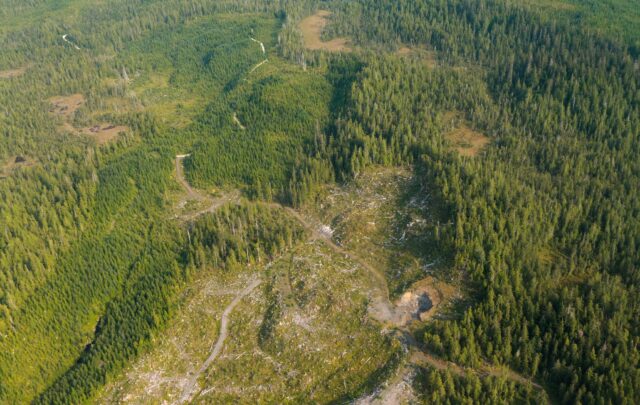
It is burning season in Brazil, and across the Amazon region, where illegal loggers, cattle ranchers and a growing number of soy producers continue their advance into their world’s largest tropical forest, similar scenes are taking place. In August government satellites registered 16,592 fires across Brazil, the overwhelming majority in the Amazon.
For environmentalists the fires are one of the first indications that deforestation is once again on the rise.
(16 October 2007)
The Fight to Save Congo’s Forests
Christian Parenti & Laura Hanna , The Nation
…In a strange twist, this general dilapidation–the result of Congo’s traumatic history–has inadvertently preserved Congo’s massive tropical forests. First, Mobutu Sese Seko’s thirty-two-year kleptocracy destroyed what infrastructure the Belgians had built. Then years of civil war and invasion by Uganda and Rwanda took an estimated 4 million lives, through violence and the attendant ravages of disease. All this chaos warded off the great timber interests. As a result the Congo Basin’s massive forests–most of which lie within the DRC–are the world’s healthiest and most intact.
An estimated 40 million people depend on these woodlands, surviving on traditional livelihoods. At a global level, Congo’s forests act as the planet’s second lung, counterpart to the rapidly dwindling Amazon. They are a huge “carbon sink,” trapping carbon that could otherwise become carbon dioxide, the main cause of global warming. The Congo Basin holds roughly 8 percent of the world’s forest-based carbon. These jungles also affect rainfall across the North Atlantic. In other words, these distant forests are crucial to the future of climate stability, a bulwark against runaway climate change.
But the isolation of the DRC’s woodlands is ending. Since 2003 a massive United Nations mission has helped create relative stability, though several vicious and overlapping wars continue to gnaw at the country’s eastern regions. Now most of the DRC is safe for logging. Over the past four years timber firms have set upon the forest in search of high-priced hardwoods. They control about one-quarter of Congo’s forests, an area the size of California.
(4 October 2007)
Quote of the Day: Callum Roberts on the Future of the Sea
Jasmin Malik Chua, Treehugger
The oceans of today are filled with ghost habitats, stripped of their larger inhabitants. A few people might share the views of the early twentieth-century game fisherman Mitchell Hedges that ridding the seas of fierce carnivores is no bad thing. But our dismantling of marine ecosystems is having destructive and unpredictable consequences.
With species loss and food web collapse comes dangerous instability. The seas are undergoing ecological meltdown. Fishing is undermining itself by purging the oceans of species on which it depends. But its influences is far more menacing than simply the regrettable self-destruction of an industry. The wholesale removal of marine life and obliteration of their habitats is stripping resilience from ocean ecosystems. Moreover, it is undermining the ability of the oceans to support human needs.
Overfishing is destabilizing the marine environment, contributing to the spread of anoxic dead zones and the increasing prevalence of toxic algal blooms, for example. Nature’s power to bounce back after catastrophes or absorb the battery of stresses humanity is subjecting it to is being eroded, collapsed fishery after collapsed fishery, species by species, place by place.
It is easy to point fingers and say this is the fault of greedy corporations with their factory ships, or faint-hearted politicians overeager to please the fishing industry, or the great masses of poor people reduced to bombing and poisoning their seas to extract the last few fish. But blaming others is unhelpful. Every fish and meat eater shares responsibility for the losses, and only by working together can we restore the seas’ bounty.”
-Callum Roberts in The Unnatural History of the Sea (2007, Island Press)
(13 October 2007)
Many links at original. Recommended by Big Gav.



Comments
We changed commenting systems on September 10, 2026 as part of a site-wide functionality and security upgrade. Your past comments have not disappeared, and you can still log in with your old Disqus account credentials if you wish. Contact us with any questions.