A story in the Irish Independent last week “Ireland on the verge of an oil and gas bonanza” referred to claims by the Petroleum Affairs Division of the Department of Communications, Marine and Natural Resources, that “there is at least 10 billion barrels of oil lying off the west coast Ireland – which has a current value of €450bn (€50 a barrel)…
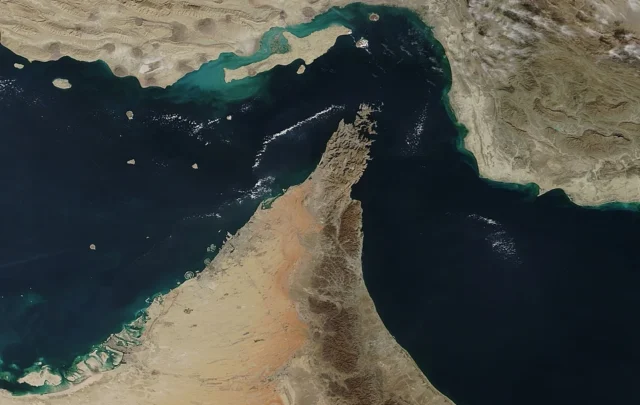
…Added to gas supplies, energy exports have the potential to transform Ireland into a new Middle East. “
Great! We can all breathe a sigh of relief and look forward to a future where all 4 million of us will have Rolls Royce’s and be living like kings; or at least the expectations of the new Fianna Fail Government that we can look forward to 4-5% annual growth might not seem so unlikely.
(Incidentally, Trevor Sergeant of the Greens, in a pre-election panel discussion in Kinsale a few weeks ago claimed that Ireland has so much unexploited off-shore wind potential that we could be the “Saudi-Arabia” of wind. Question: if Ireland were to fully exploit this wind potential in a best-case scenario, how much energy would this actually yield in comparison to the vast oil supplies of that desert nation in the Middle East?).
Where is all this fossil energy actually to come from and why have we not been aware of it until now? I asked oil geologist Colin Campbell, founder of ASPO, for his comments on the geological likelihood of such discoveries. He kindly sent the following response:
“It seems that the Petroleum Affairs Department (PAD) has made an assessment of Ireland’s oil and gas potential. I stress the word – potential. Most of these claimed reserves reflect simply the size of the untested prospects, which may or may not contain oil or gas. The report is couched in terms of so-called Probability, similar to that of the US Geological Survey.
For example in the case of un-drilled East Greenland, the USGS estimates that there is a 95% Probability of more than zero (namely at least one barrel) ; and a 5% Probability of more than 111.815 billion barrels (quoted to 3 decimal places !!). From this range a Mean Probability of 47.148 billion is computed. The Mean value is supposed to be the best but I think the High Probability case is the only one to be taken seriously.
The Atlantic Margin, of which the report speaks, has been subject to large vertical movements of the crust, which tend to destroy the petroleum systems, and also largely lacks the critical Upper Jurassic source rocks which provide most of the oil in the North Sea. It has been drilled off Norway, the Faroes, Iceland and Scotland, as well as Ireland, without notable success. It has however yielded a couple of fields west of the Shetlands under almost freak conditions whereby some oil was generated and collected in a late Cretaceous structure but later re-migrated under new structural conditions to collect in an adjoining structure. The chances for gas are however somewhat better.
The PAD is quite rightly encouraging exploration, especially by foreign companies, as until these prospects are actually tested by a borehole (costing $10-20 million each ) no one can be sure of the outcome. So far about 160 such boreholes have been drilled off Ireland over the past 30 years, each one aimed at the biggest and best prospect perceived at the time, but without notable positive result. This record delivers a stronger message than the current “Probability” study.
The two very worst things the Government could do would be to risk State funds in these exploration ventures and to assume a positive outcome. It may be possible to lure some foreign companies in to a politically stable environment offered by Ireland but they themselves risk little as they can take the costs of exploration as a charge against taxable income in their home country, so that in fact the foreign taxpayer funds the venture. If indeed gas should be found and developed, obviously it would be delivered to the Irish market : it would make sense to produce it at a level sufficient only to meet local needs in order to make the supply last as long as possible in the national interest.
I suspect that the PAD study itself is perfectly reasonable and sound : but it is unfortunate that the casual reader is misled into thinking that discoveries have been made and thereby fail to plan and prepare for the reality.”
So it seems our energy supplies may not be quite as secure as the report may make out, and we should be more circumspect and cautious in our projections of future economic growth, dependent as this is entirely on increasing fossil fuel supplies.
Far from being on the verge of an oil-and-gas bonanza, I’m afraid the country is more likely to be on the verge of a nervous breakdown as its increasing dependency on imported fuels, with new motorways and expanding airports in the pipeline, leave Ireland ever-more vulnerable to Peak Oil when it comes.
Any new discoveries of oil should be used to carefully develop genuinely low-impact, sustainable infrastructure and localized economies, not to increase GDP.