


With short-term oil prices currently above $50 per barrel and the futures markets predicting long-term prices of around $34 on five-year contracts, signs of a rebound in exploration efforts are suddenly popping up everywhere.
In its latest report, Baker Hughes found that rig counts were up in September in all major categories – internationally, in North America and overall – compared to a year ago. Internationally, the count is up 9% from this same time last year. When North American rigs are added to the totals, the worldwide count is up 7% from a year ago.
Workover rig counts also are up in North America, climbing from 1,187 in the United States and 348 in Canada a year ago to 1,293 in the United States and 621 in Canada today.
HYD Resources Corporation, a new subsidiary drilling operation formed in April by Hyperdynamics Corporation of Houston, is seeing the trend in its own business. Spurred by client demand, HYD has shifted its primary focus from workover services to drilling new wells. The company put its first rig into operation in July. Its second refurbished rig began drilling operations this week, and the company expects to have two more deployed by the end of the year.
“During my 30-plus years in the oil patch, our opportunities have never been greater,” HYD President Sam Spears said this week. “We already have a 60-day backlog of jobs for our workover rig and jobs are lining up for our other rigs as they come online. Our timing appears to be very good. It’s good to be a driller when everybody wants to drill.”
In London, meanwhile, WesternGeco, a joint venture of Schlumberger and Baker Hughes, has announced the addition of a fifth vessel to its Q-Technology seismic vessel fleet, reflecting renewed interest in identifying new deepwater drilling prospects. All four of the company’s existing Q-Marine vehicles are working under exclusive client contracts, including a three-year commitment offshore Mexico, two surveys offshore India, and an agreement to acquire and process seismic data over the massive Marlim complex offshore Brazil.
The recent upsurge in activity reflects the profound change in the economics of exploration and production with oil at $50+ per barrel, rather than the low $20s, where prices had previously hovered. At current prices, John S. Herold Inc., an oil analyst company based in Norwalk, Conn., is predicting the oil industry will reap an estimated net income of $137 billion this year, triple the $46 billion it earned five years ago.
Even after spending $80 billion on stockholder dividends and share buybacks, Herold estimates the industry will be able to afford to invest $180 billion each of the next two years on capital projects. That compares to the $47 billion per year the Big Five were spending on E&P before the spike in oil prices.
“There’s plenty of oil, but the costs of developing major new reserves in hard-to-get-to places are 100 percent higher than a decade ago,” analyst George Gaspar of Robert W. Baird recently told Forbes magazine. “High price is the incentive for these guys to step up to the plate.”
One reason for the spike in prices is that growth in demand has far outstripped growth in supply. Global demand has been growing at about 1.5 percent annually for the past five years, but production capacity has grown just 0.2 percent annually. The squeeze has wiped out the industry’s spare capacity, and demand growth is expected to continue or accelerate as areas like China continue to industrialize.
China’s demand for imported oil was up 20 percent last year alone. China’s oil demand is currently 6.3 million barrels per day, second only to the United States, and its consumption is expected to double by 2020. Global energy demand is expected to grow 40 percent in the same period.
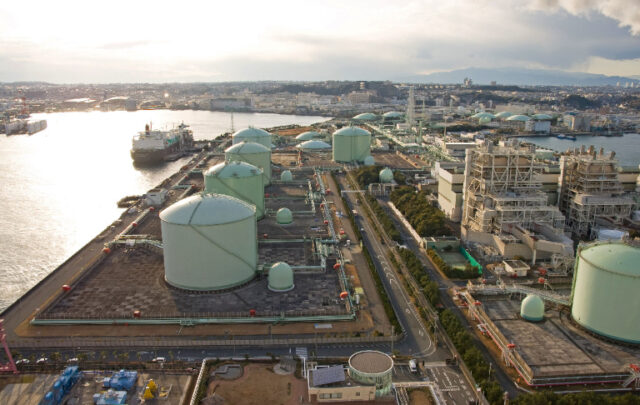
Over the past two years, 65 percent of all new reserves worldwide were found in water 1,200 feet deep or deeper, explaining the spike in demand for seismic ships. Other hot prospects for new sources of supply: politically risky Russia and the former Soviet republics, with 77 billion barrels of proven reserves and a vast unexplored land mass; Canada’s oil sands and the heavy oil fields of Venezuela, which ChevronTexaco estimates have combined unconventional reserves of 2 trillion barrels, more than the world’s estimated remaining reserves of conventional crude; and LNG (liquefied natural gas) as an oil alternative.
This article courtsey of Eye For Energy.



Comments
We changed commenting systems on September 10, 2026 as part of a site-wide functionality and security upgrade. Your past comments have not disappeared, and you can still log in with your old Disqus account credentials if you wish. Contact us with any questions.