


“A recent survey in New Zealand showing that 82 percent of respondents approve of wind power as a solution for our energy needs is good news for future electricity generation in this country” the Convenor of the Sustainable Energy Forum, John Blakeley, said today. “This contrasts with only 24 percent of respondents who approve of coal-fired electricity generation. The challenge now is to support power developments that meet our desires for a cleaner energy future.”
“In order for wind power to now rapidly expand in this country, the Sustainable Energy Forum believes that we have to find a way of connecting wind turbines to our electricity network which will encourage smaller operators to become involved in wind power projects” Mr Blakeley said. “Some form of wind power purchasing agency may be required”.
“In some parts of Europe, it is easy for individual farmers to invest in wind turbines on their own farms. The farmers are supported by a simple guaranteed price for all wind generated electricity. This price is not subject to fluctuations in electricity price experienced in a spot market”.
“Established power companies want to install bigger wind turbines of individual capacity of 1,500 to 2,000 kilowatts (kW) or more in large wind farms of around 50 turbines. They will tend to be located on ridges and may not be very well tolerated by some people when located near urban areas” Mr Blakeley said.
“On the other hand, dispersed smaller wind turbines of around 500 to 750kW capacity may be an ideal size for places such as the windy Manawatu plains, where some small farmers are struggling to make a living. Hosting wind turbines could give a substantial boost to their farm income” Mr Blakeley said. “Other suitable areas for such developments in New Zealand can readily be identified”.
“In fact, there may be a number of areas in New Zealand where favourable wind conditions mean that farmers who are struggling financially could significantly boost their income by becoming involved in such projects (as is now the case in Europe), even if only as the ‘host’ for the wind turbines” Mr Blakeley said.
“As an indication of size, the Brooklyn wind turbine in Wellington is 225kW capacity, the Gebbies Pass (Banks Peninsula) turbine is 500kW capacity and the Tararua Wind Farm turbines (near Ashhurst) are 660kW capacity”. “In the countryside, relatively few people will be affected by the noise or visual impact of these turbines and if built in considerable numbers over quite a wide area, the output from the turbines would be less affected overall by wind fluctuations than a smaller number of large turbines concentrated in a particular wind farm” Mr Blakeley said.
“Smaller wind turbine size will give greater scope for private or community ownership and would be more suited for individual connection (as distributed generation) to local electricity supply networks than are large wind farms, which are more likely to be connected to the national grid”.
“Recent amendments to the Resource Management Act to encourage renewable energy should facilitate development of more wind turbine projects, and Regional Plans could do more to encourage local energy initiatives” Mr Blakeley said. “I am very encouraged by the efforts of Wellington City Council in this regard.”
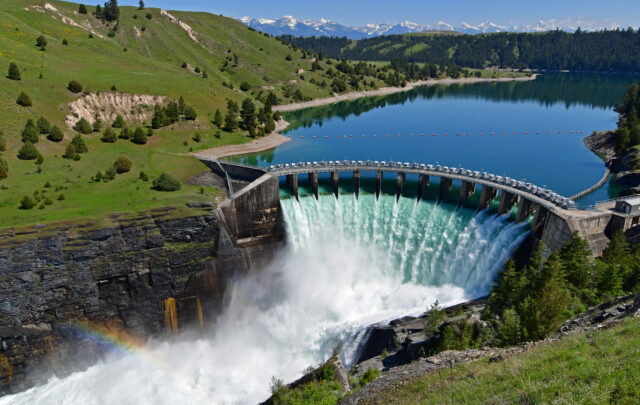
“Hydro and wind are ideal complementary renewable power sources because when the wind blows, this will effectively add storage to the hydro lakes. New Zealand has an abundant wind resource capable of producing up to 20 percent of our electricity needs” Mr Blakeley said.



Comments
We changed commenting systems on September 10, 2026 as part of a site-wide functionality and security upgrade. Your past comments have not disappeared, and you can still log in with your old Disqus account credentials if you wish. Contact us with any questions.