

Iran to Trump: If you destroy us, you destroy yourself
We are now witnessing a game a civilization-widethe other to blink. The longer this goes on, the worse the damage for the entirety of global society. My post for this week: chicken in the Persian Gulf region.
March 29, 2026

Our Civilization’s Disease Has a Name: Windigo
The Windigo diagnosis reveals that the threat we face is not only ecological or political. It is civilizational. It is rooted in a system whose deepest logic is to convert the living world into fuel for its own endless expansion.
March 26, 2026

Entropia and the Disintegration of Empire
As the current situation (March 2026) around the Strait of Hormuz continues to destabilise the global economy, it is timely to return to Alexander’s analysis outlining ‘the Disintegration of Empire’ (being Chapter Two of Entropia).
March 23, 2026
Is the complacency in global financial markets warranted?
Financial markets so far have reflected the belief that the Iran war will be over soon and that commerce will return to normal. I explain why I think this belief is unwarranted and why President Trump’s latest announcement regarding bombing Iran’s power plants is economic suicide.
March 22, 2026

Worse than 2008?
Several commentators have remarked that the United States’ war on Iran carries echoes of 2008. A potential financial crash this year could actually be much worse.
March 20, 2026

Notes on Being a Man: Review
The challenge before us is therefore larger than “teaching men how to succeed”. It is to teach them how to succeed without destroying the world that makes success meaningful and, when necessary, how to transform the systems that place those goals in conflict.
March 17, 2026
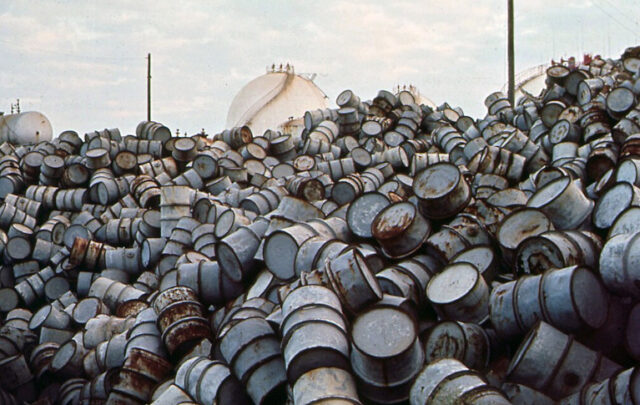
Oil price manipulation, an unrecognized stratagem and an unhinged plan
Oil price manipulation is taking many forms after the closure of one of the world’s major choke points for oil transport sent oil prices higher.
March 15, 2026

Nourishing a Bioregional Economy
In the globalized economy, money is the shaper of outcomes, including whose work is valued, how the natural world gets used (and abused), and even who gets into political office. If bioregioning is critical to achieving a prosocial and environmentally sound society, the economy needs to go bioregional too.

