

Freelance science journalist, 2016 Alicia Patterson Foundation fellow
'SELECT SQL_CALC_FOUND_ROWS wp_posts.ID
FROM wp_posts INNER JOIN wp_postmeta ON ( wp_posts.ID = wp_postmeta.post_id )
WHERE 1=1 AND (
wp_posts.ID NOT IN (
SELECT object_id
FROM wp_term_relationships
WHERE term_taxonomy_id IN (47485,47486)
)
) AND (
(
( wp_postmeta.meta_key = \'the_author\' AND wp_postmeta.meta_value = \'3473821\' )
OR
( wp_postmeta.meta_key = \'secondary_author\' AND wp_postmeta.meta_value LIKE \'{3e5467e1e7702e2c92212cb02f73b16a0efe59218d52f767b86f5ce8e2db8813}\\"3473821\\"{3e5467e1e7702e2c92212cb02f73b16a0efe59218d52f767b86f5ce8e2db8813}\' )
)
) AND wp_posts.post_type = \'post\' AND ((wp_posts.post_status = \'publish\'))
GROUP BY wp_posts.ID
ORDER BY wp_posts.post_date DESC
LIMIT 0, 6'
Perennial Versions of Conventional Crops Offer Benefits to the Environment — But Are they Ready for Prime Time?
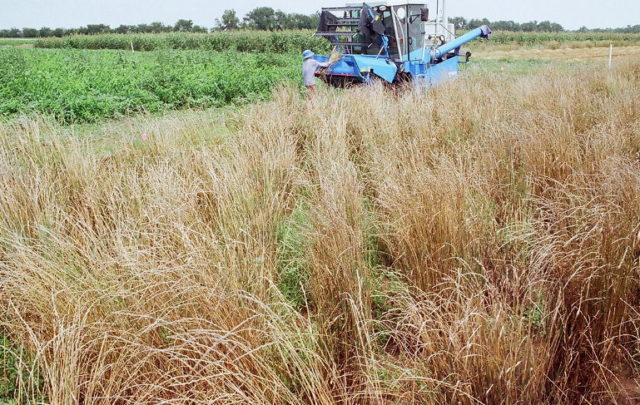
The Land Institute, based in Salina, Kansas, remains the only U.S.-based research institute devoted to developing perennial grains and multi-species farming systems — but institutions around the world have now joined the effort.
September 28, 2018



