

El Habib Ben Amara is an architect and urban designer from a tribal ksar (fortified oasis) in Algeria. He’s an activist against desertification and one of the foremost authorities on sustainable water management in the Sahara, and has written for major Algerian newspapers.
'SELECT SQL_CALC_FOUND_ROWS wp_posts.ID
FROM wp_posts INNER JOIN wp_postmeta ON ( wp_posts.ID = wp_postmeta.post_id )
WHERE 1=1 AND (
wp_posts.ID NOT IN (
SELECT object_id
FROM wp_term_relationships
WHERE term_taxonomy_id IN (47485,47486)
)
) AND (
(
( wp_postmeta.meta_key = \'the_author\' AND wp_postmeta.meta_value = \'3499957\' )
OR
( wp_postmeta.meta_key = \'secondary_author\' AND wp_postmeta.meta_value LIKE \'%\\"3499957\\"%\' )
)
) AND wp_posts.post_type = \'post\' AND ((wp_posts.post_status = \'publish\'))
GROUP BY wp_posts.ID
ORDER BY wp_posts.post_date DESC
LIMIT 0, 6'
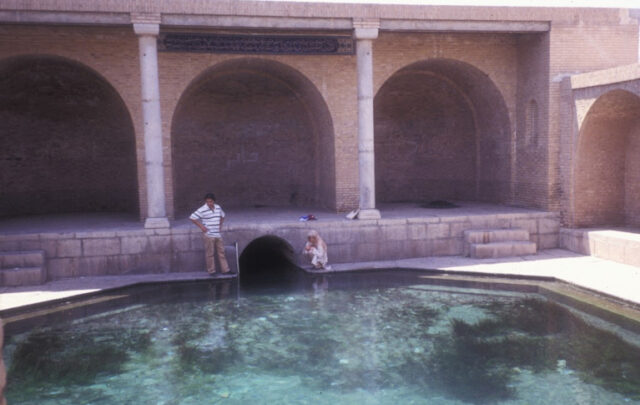
Water and Security in the Middle East: Lessons from the Iranian Crisis
Water, through its progressive scarcity, is redrawing the map of vulnerabilities and powers. Countries that make its management a factor of internal cohesion and regional cooperation will be better equipped for the decades to come.
March 5, 2026
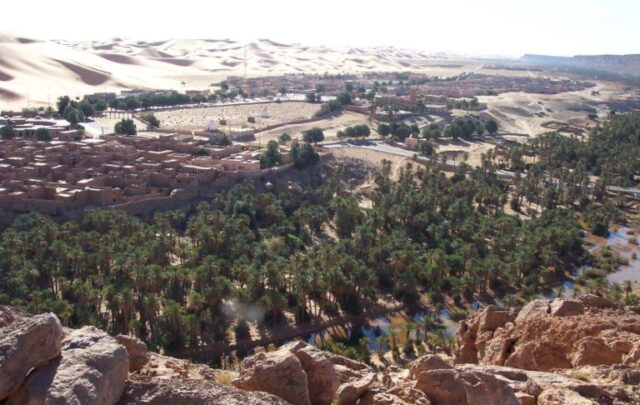
Building a Climate-Resilient MENA: Integrating Natural Cycles for Strategic Stability
A climate doctrine must integrate resource mobilization, agricultural modernization, energy diversification, and territorial planning within a coherent framework—one that anticipates rather than reacts, protects rather than repairs, and organizes rather than fragments.
February 20, 2026
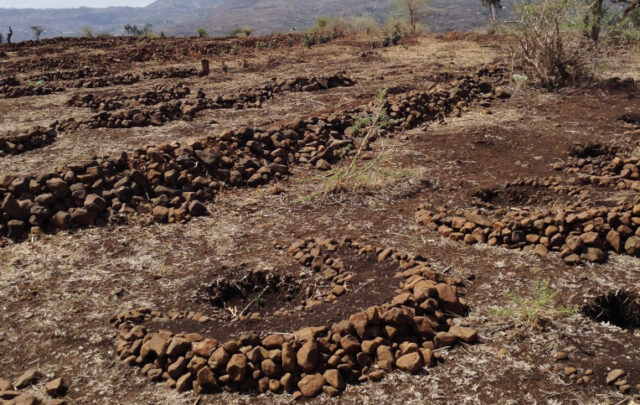
Restoring Water to Arid Lands: Rethinking Dams and Soil in the MENA and Global South
Why water scarcity is not a climatic inevitability, and how nature-based solutions can rebuild life in landscapes under stress.
February 12, 2026
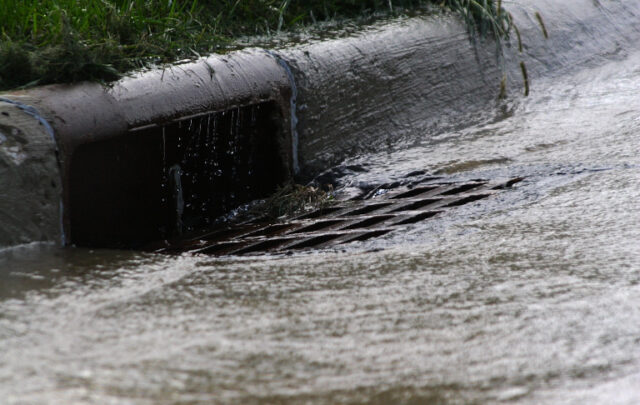
Restoring Hydrological Cycles as a Foundation for Water Resilience
By rebuilding functional hydrological cycles, societies can enhance the effectiveness of existing infrastructure, reduce vulnerability to climatic extremes, and regenerate the ecological foundations upon which water security ultimately depends.
February 5, 2026

When Water Decides: Securing National Ambitions through the Hydrological Cycle
As long as water is treated as a problem to be drained rather than an ally to be welcomed, it will abandon us when we need it most and strike when we are least prepared.
January 27, 2026

How Breaking — and Repairing — the Water Cycle Shapes Our Climate Future
In arid and semi-arid regions, retaining rainfall where it falls is not an ecological luxury. It is a prerequisite for long-term water security, climate stability, and social resilience.
January 13, 2026

