'SELECT SQL_CALC_FOUND_ROWS wp_posts.ID
FROM wp_posts INNER JOIN wp_postmeta ON ( wp_posts.ID = wp_postmeta.post_id )
WHERE 1=1 AND (
wp_posts.ID NOT IN (
SELECT object_id
FROM wp_term_relationships
WHERE term_taxonomy_id IN (47485,47486)
)
) AND (
(
( wp_postmeta.meta_key = \'the_author\' AND wp_postmeta.meta_value = \'3502523\' )
OR
( wp_postmeta.meta_key = \'secondary_author\' AND wp_postmeta.meta_value LIKE \'{4b019fb417fa26d7a4adcfd2c79fb57876a2d14a087418fa658826df6dcf1915}\\"3502523\\"{4b019fb417fa26d7a4adcfd2c79fb57876a2d14a087418fa658826df6dcf1915}\' )
)
) AND wp_posts.post_type = \'post\' AND ((wp_posts.post_status = \'publish\'))
GROUP BY wp_posts.ID
ORDER BY wp_posts.post_date DESC
LIMIT 0, 6'
Christopher Haines, Resilience.org
The easiest and cheapest means of reducing warming is increasing vegetation in rural areas; eliminating bare soil, especially the millions of acres produced by industrial agriculture, addressing erosion and aridification, and restoring forests, which will also increase fire-resistance, reducing the need for the far-more complex and expensive changes required in suburban and urban areas.
April 2, 2026
Christopher Haines, Resilience.org
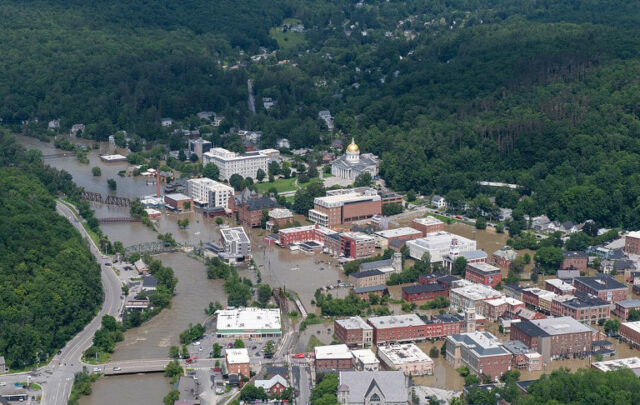
Drainage systems have depleted Vermont’s small water cycles for decades, providing openings for large water-cycle storms, and leaving the region increasingly vulnerable.
September 3, 2024
Christopher Haines, Resilience.org
Thus, the conversion of sunlight into heat is the source that creates heat islands, and increasingly warms the atmosphere. Greenhouse gases, trap that heat like a pot lid, exacerbating warming. But to reduce the elevated temperatures we are experiencing, we need to address the source of the heat generation, akin to turning down the stove.
July 19, 2024