

Ben is a climate change researcher studying conflict, geopolitics, and cascading risk in the new era of climate breakdown. He is a co-author of the recent report ‘Derailment risk: Why climate strategies might fail — and how to fix them’ and co-creator of the podcast documentary Overshoot: Navigating a world beyond 1.5C.
'SELECT SQL_CALC_FOUND_ROWS wp_posts.ID
FROM wp_posts INNER JOIN wp_postmeta ON ( wp_posts.ID = wp_postmeta.post_id )
WHERE 1=1 AND (
wp_posts.ID NOT IN (
SELECT object_id
FROM wp_term_relationships
WHERE term_taxonomy_id IN (47485,47486)
)
) AND (
(
( wp_postmeta.meta_key = \'the_author\' AND wp_postmeta.meta_value = \'3486122\' )
OR
( wp_postmeta.meta_key = \'secondary_author\' AND wp_postmeta.meta_value LIKE \'{ef0d3a6b426c9dfb1bfe97f468d001af17783ada36df1f36003f3e65719dd459}\\"3486122\\"{ef0d3a6b426c9dfb1bfe97f468d001af17783ada36df1f36003f3e65719dd459}\' )
)
) AND wp_posts.post_type = \'post\' AND ((wp_posts.post_status = \'publish\'))
GROUP BY wp_posts.ID
ORDER BY wp_posts.post_date DESC
LIMIT 0, 6'
The Petrostate Proxy War
This is the paradox both Saudi Arabia and the UAE are now navigating. The grey war they are waging — economically, culturally, through regional proxies — is a race to secure the post-oil future before the other does.
March 12, 2026
Weak signals of the Venezuela war
Like Russia’s frontline blood banks, the Venezuelan bond trade signalled that the preceding furore was headed in a specific direction. And in the increasingly chaotic, ill-defined mess of multipolar politics and climate chaos, reliably finding which ‘weak signals’ matter—and which signals are just noise—will be vital for navigating what comes next.
January 5, 2026
The Tehran snapshot
Climate abandonment can be avoided, or put off, in only so many cases. The culprits of this crisis may be water barons, but it is just one early punctuation point on a much longer, much steeper trendline.
December 18, 2025
Oil, AI, Electrification and the Next Big Crash
So, what have we got? A global economy staggering amongst geopolitical tension, a bubble to beat all bubbles, and the twin shocks of a (potentially permanent) oil price crash and the EV subsidies ending — and all with the backdrop of worsening climate change driving up inflation and inflicting constant disasters.
November 26, 2025
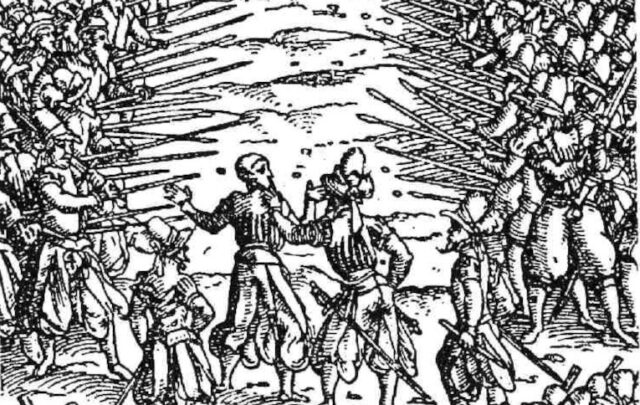
The Gauntlet. Where is Thrutopia?
One conceptualisation of this new narrative is as a ‘Thrutopia’. This is the middle passage between utopia and dystopia. The hour is too late to avoid reaping the destruction we have sown, but neither is complex human civilisation beyond hope.
February 25, 2025

Working from First Principles: ‘Parable of the Sower’ (Octavia E. Butler, 1993)
But I think what makes Parable so popular and intellectually stimulating (aside from the fact that it’s a very exciting book!) is that it takes first principles—effectively social emotions—and develops them into a new politics for the challenges of the world the novel presents.
January 8, 2025

