


Political polarization is on the rise around the world — and worsening environmental and social crises can make the stakes a life or death proposition. Why do societies become polarized? What can be done to reverse it and create opportunities for meaningful dialogue and collaboration instead?
Description
Nearly half of the world’s human population has the right to vote in 2024 – a testament to the spread of democracies in just the last couple of centuries and the progress marginalized groups within democratic nations have made in just the last couple of centuries. And yet surveys across many countries show that political polarization – the divergence of political attitudes away from the center and toward ideological extremes – is on the rise.
When polarization becomes toxic it often leads to political violence and greatly hampers the ability of societies to address critical issues. Worsening environmental and social crises like climate change, resource constraints, and economic inequality can both exacerbate political polarization and literally make the stakes a life or death proposition.
This Deep Dive will:
- Explore why societies become polarized, unpack the dangers of polarization and the ways it tears societies apart, and trace the causes and history of polarization in the U.S.
- Address common drivers and dynamics of polarization across the globe, and ways that “political entrepreneurs” feed or combat toxic polarization.
- Highlight concrete examples of community and society-wide approaches to reverse the spread of polarization and create meaningful dialogue, engagement, and collaboration across differences.
- Provide opportunities to share and learn from peers also concerned with how to survive, if not reverse, polarization in our own communities
- Share a set of curated resources for further study and to take meaningful action in your own life.
Image via Unsplash
Event Recordings
Discussion: How to Overcome Polarization in Your Own Community
Othering and Political Conflict in the Great Unraveling
Associated Posts

Surviving Political Polarization: Curated List of Resources
This list of resources is meant to give Resilience+ members a collection of ideas, tools, and organizations that can help them better understand and respond to political polarization.
September 5, 2024

One Community’s Inspired Response to Toxic Polarization: An Interview with Nichole Argo
Journalist and podcaster Rachel Donald interviews Nichole Argo, co-director of the Needham Resilience Network, a coalition of community leaders working together to establish relationships across silos, support belonging (rather than othering), and co-create solutions to community problems. Rachel and Johanna discuss toxic polarization, why people get stuck in absolutism, and how to encourage belonging to achieve wellbeing for all. A mini-documentary on the Needham Resilience Network follows the interview.
September 5, 2024
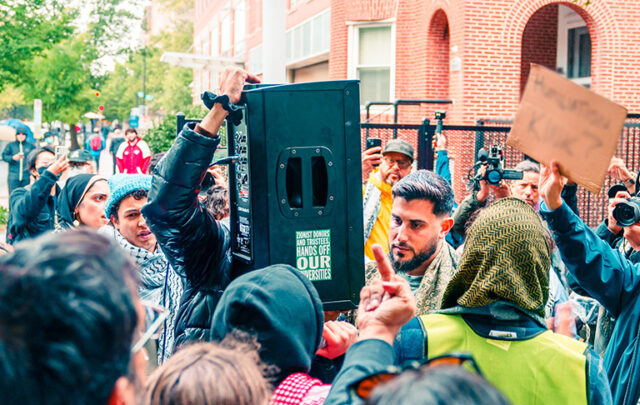
Us vs. them: Understanding the roots of political polarization and what you can do about it
Richard Heinberg explores why societies become polarized and traces the causes and history of polarization in the U.S. He unpacks the dangers of polarization and the ways it tears societies apart, before seeing what can be done to reverse polarization.
September 5, 2024
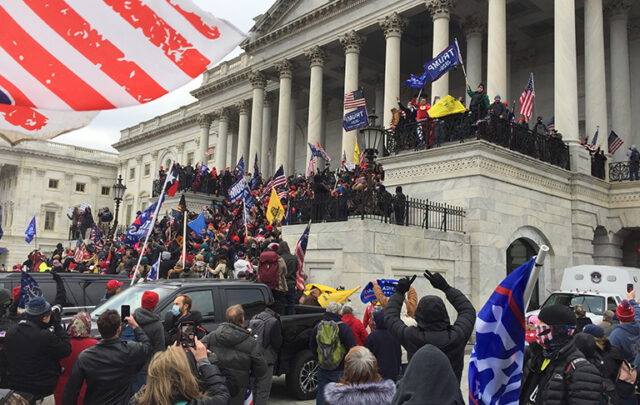
Global trends are polarizing us: Can democracy handle it?
Richard Heinberg explores questions about democracy and political polarization in the context of profound changes in environmental, economic, and technological conditions, including whether democracies or autocracies are better able to respond to crises.
September 5, 2024

“Healing A Polarized World”: Jennifer McCoy On Creating Unity From Division
Jennifer McCoy, professor of political science at Georgia State University and nonresident scholar at the Carnegie Endowment for International Peace, discusses the influence of “political entrepreneurs” and the implications of a world facing increasing resource constraints, which can exacerbate polarization and conflict within and between nations. Professor McCoy offers examples of nations that overcame pernicious polarization and points to “win-win” strategies for navigating the 21st century’s challenges.
September 11, 2024

Democracy at the Crossroads: An Interview with David Stasavage on Polarization
Post Carbon Institute Senior Fellow and author Richard Heinberg interviews David Stasavage, author of The Decline and Rise of Democracy: A Global History from Antiquity to Today. David summarizes polarization and capacity to deal with crises in democracies and autocracies, discusses the challenge of scale in modern democracies, and shares how past democracies like Athens and the Iroquois Confederacy dealt with polarization.
September 17, 2024

Breaking the Two-Party Doom Loop
Political polarization, particularly in the United States, is being inflamed by structural forces, including the dominance of two parties and winner-take-all representation. Lee Drutman, senior fellow in the Political Reform program at New America, speaks on reforms like proportional representation and multi-member districts, and why we should view democracy more like a living, evolving ecosystem than a problem to fix.
September 26, 2024

By Design, not Disaster: Gaya Herrington on Business and the Limits to Growth
Environmental journalist/podcaster Rachel Donald interviews Gaya Herrington, an internationally recognized sustainability researcher and economist, about the limits to growth and the role of businesses in making a global transformation to a wellbeing economy.
October 31, 2024
Call for Submissions
Have you written or recorded something that addresses this topic? Please send us your submissions. If it’s a good fit we’ll include it here.
Featured image via Unsplash (https://unsplash.com/es/fotos/textil-de-rayas-azules-rojas-y-blancas-ygPp6noGQiA)

