

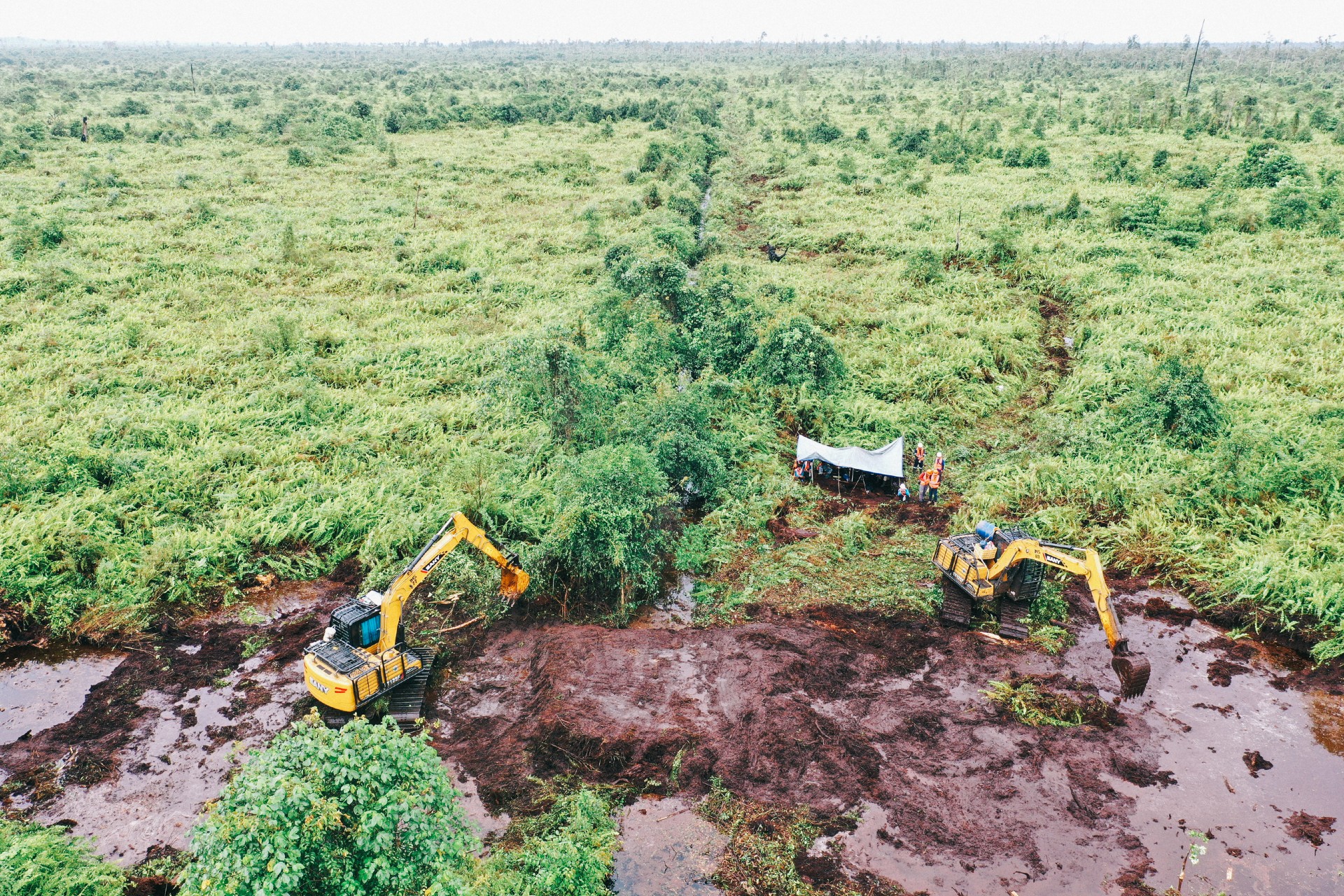
In 2024, scientists discovered that Myanmar holds more than 200,000 hectares of peatlands — 1,718% more than previous estimates. It was a major ecological discovery. It was also under immediate threat. Myanmar’s civil war, now entering its fifth year, has made it nearly impossible to map, protect, or even monitor these newly found carbon stores — and the window to act may already be closing.
International funders had proposed projects to protect these peatlands, but withdrew them citing political instability — the same instability that makes independent conservation support most needed. Without international backing, plans for protection have stalled, and officials warn the resulting delay could carry irreversible consequences.
Myanmar’s civil strife has killed more than 80,000 people, displaced 3.5 million, and cost the country $93.9 billion in economic damages. The Tatmadaw — Myanmar’s military and de facto government — controls the nation’s Bamar heartland, but has lost nearly half of the country to the insurgent People’s Defence Forces (PDF) and ethnic militias, with fierce fighting continuing across vast swathes of territory.
Alongside the human tragedy, the conflict has accelerated environmental destruction. Uncontrolled teak deforestation thrives as corruption has proliferated across the fragile state. Environmental enforcement has been all but impossible across huge areas of the country. In the far north, ethnic militias fund their operations by mining rare earth metals — the toxic tailings from these unregulated mines poisoning entire river systems, with the fallout reaching as far as Thailand.
The Hidden Toll
This conflict overshadowed the discovery of Myanmar’s vast and previously unknown peatlands.
In 2024, a consortium including Global Forest Watch and the Global and Peatland Database conducted new satellite assessments of Southeast Asia’s peatlands. In some of the countries surveyed, the extent of peatland had hardly changed. The peatland extent estimate in Malaysia, for example, was revised down by just 6.18%.
But Myanmar was different. This new assessment found 205,400 hectares — up from just 11,299.
Peatlands, which are wetland ecosystems rich in organic matter, play a crucial role in carbon storage, water regulation, and biodiversity. Globally, despite covering only 3% of the planet, peatlands store 30% of the world’s terrestrial carbon. Additionally, they provide local communities with clean water and essential resources for their livelihoods.
Myanmar was not alone in seeing significant revisions to its peatland estimates; Laos, for example, saw a 728% increase. What is unique about the Burmese peatlands, however, is their vulnerability. Whilst only just discovered, these peatlands are already under threat.
Blind Spots in the Data
The surveys which discovered the extent of Myanmar’s peatlands were conducted by satellite, and these lack the clarity needed to tell conservationists the depth, true extent, or condition of the peatland. Whilst reliable enough to identify the new peatlands, satellite methods are only the first step in analysis and protection.
It is unclear exactly why previous estimates were so low. According to sources within the Environment and Conservation Department (ECD), several factors contributed; previous surveys had limited remits, and staff were anxious about the “land conflicts” which could emerge if peatland preservation was implemented. “Decision makers do not realise how important these peatlands are,” one source said, pointing to a lack of impetus to survey for them.
The data, as well as the projects they were meant to support, were not made public. Documents obtained from ECD sources confirm that an international consortium led by UNEP had outlined plans to fund a surveying and protection initiative, but withdrew the proposals as the political situation deteriorated.

Inadequate Protection
Because of these previously insufficient surveys, the Myanmar Environment and Conservation Department assumed its peatlands were negligible and so had no systematic plan in place for how to monitor, manage, or protect them.
This is a significant blind spot. Peatlands are crucial, but delicate — especially as climate change alters precipitation and temperature patterns. If they dry out, their carbon stores, accumulated over many thousands of years, are released into the atmosphere. The newly discovered peatlands in Myanmar could potentially store 379 million tons of carbon, equivalent to over 40 years of the country’s emissions (as of 2023 levels).
Most threats, however, are man-made. Intentional drainage and subsequent burning have already degraded 6 million hectares in Indonesia. With the lack of enforcement, corruption, and widespread displacement, a similar process could be underway in Myanmar.
Protection Without Peace
For Myanmar’s government, conserving these peatlands is an immense task.
Even the first step in protection, conducting ground surveys, is almost impossible to do. Hamstrung by tight budgets, staff shortages, and safety concerns, the Burmese Environment and Conservation Department has its hands tied.
International funding has not been forthcoming. The ongoing conflict has already led to the withdrawal of UNEP projects to map peatlands. According to members of the ECD, the projects were cancelled because of “the political situation.”
Without these surveys, a systemic peatland policy cannot be developed or deployed, leaving these carbon-rich, biodiverse environments vulnerable to degradation or intentional drainage. Much of the identified peatland may already be in a poor state, but there is no way to verify this without on-the-ground surveys.
Yet even if a protection plan could be developed, poor enforcement would represent a significant obstacle to its efficacy. The largest extent of peatland in the Irrawaddy Delta is in a region currently under state control. Other peatland areas, such as Kachin State, are active war zones largely controlled or contested by ethnic militias.
Some insurgent administrations have begun community-based environmental programs, which could plausibly extend to peatland protection in areas outside the ECD’s reach — but as the rare earth mining crisis in the country’s north demonstrates, anti-junta forces are just as likely to exploit their environment to fund their operations. Comprehensive protection will require coordination that current conditions make almost unimaginable.
What is needed is a robust international fund to conduct surveys, develop protection plans, and assist in conservation measures. “They are waiting for the war to be over,” one environmental ministry employee said, but time is running out. “If the peatland is lost now, if it is drained or burned, then it is gone forever. The environment will not wait for peace. We need action now.”
All sources have been anonymized for safety reasons.




Comments