

The US-Iran war threw global fuel supplies into a tailspin. Especially in Asia and the developing world, the impacts were severe. Thailand rationed supplies; the Philippines declared a national energy emergency and formed a committee to allocate fuel to critical industries; and Japan launched a $5 billion emergency subsidy to help cap petrol costs. Even though the worst fears of price shocks were avoided in the initial weeks and months, this came at a high cost to strategic oil reserves worldwide, with the International Energy Agency (IEA) and allies drawing down over one-third of their reserves. This was only a temporary fix, implemented with the expectation (and hope) that the conflict and disruption would soon end.
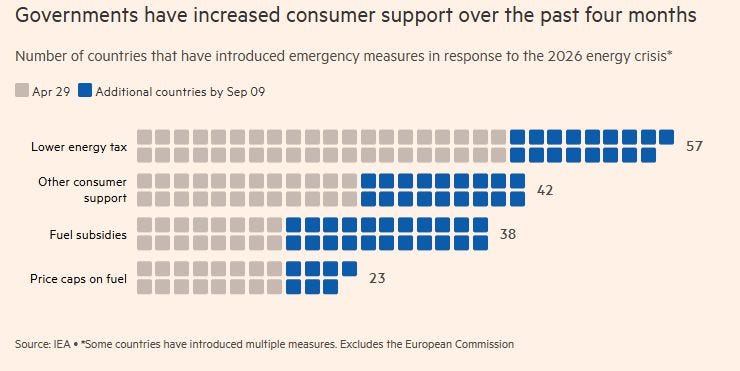
Instead, the disruptions have worsened. With the Houthis rapidly constricting the Red Sea fuel routes meant to bypass Hormuz and Ukrainian strikes on Russian refineries further reducing fuel supplies, further emergency measures are underway; the US has floated diesel export bans, and France has been forced to roll out emergency fuel subsidies in what Roland Lescure, the country’s finance minister, had called “a very difficult and unchosen situation”.
Whilst this combined energy shock has also galvanised a massive surge in renewable energy uptake—often explicitly justified on national security grounds—the question of liquid fuel is trickier. Electrifying vehicle fleets is expensive and time-consuming, and in some sectors, such as heavy goods transport, liquid fuel is technically difficult to replace with an electrified alternative.
The Biofuel Bet
As a result, concerns over domestic energy security have intensified, and one strategic response has been to increase biofuel production. Brazil, India, Indonesia, and the US have promoted biofuels as a key means of rapidly adapting to fuel supply shortages. This strategy provides some key advantages: production can be ramped up relatively quickly; biofuels can fuel existing vehicle fleets; and, being produced on their own soil, they are a fuel substitute less vulnerable to increasingly chaotic global supply chains.
According to a recent Chatham House report, ‘The problem with biofuels as a response to the Gulf energy supply shock’, global biofuel production is expected to be 68% higher in 2030 than in 2025. Governments have increased mandates for blending biofuels into existing fuel and moved to rapidly expand production capacity. Globally, meeting all these new biofuel mandates would require around 36 million hectares of additional land for biofuel production, an area the size of Germany.
This would have severe impacts on ecosystems, food supplies, and long-term fiscal stability. The production of biofuels is incredibly land-intensive and linked to widespread ecosystem destruction. In Indonesia, palm oil is a key driver of deforestation, and in Brazil, soybean production is (often illegally) encroaching on the Amazon rainforest at a rate of 200 to 500 square kilometres a year. Even when the plantations stop, the damage doesn’t—Pesticides, human disturbance, and even palm-oil-loving boars fan out to wreak havoc on the surrounding ecosystems, which struggle to bounce back. This is one of the key insights from the Chatham House report: even a temporary ramp-up in production to fill the fuel gap could have irreversible consequences.
Likewise, many of the feedstocks for biofuels—such as soy, palm oil, and rice—are also key food sources, creating food-security trade-offs with biofuel expansion. Whilst the new mandates will almost certainly lead to expansion of plantations, much of the new production will inevitably come from rerouting crops from food supply chains into biofuel refineries. This will exacerbate food shortages and price spikes, just as fertiliser shortages and the current super El Niño batter global agriculture. Worse, in Global South nations, energy shocks tend to become embedded in policy rather than remain time-bound—making any conversion to bioenergy a long-term proposition, difficult to reverse even when the immediate crisis passes. Fuel subsidies of all types, including biofuel incentivisation, are notoriously hard to reverse. Any public capital expenditure dedicated to biofuel production will also be capital not spent on the long-term transition to electrification—further locking in a crisis-caused policy decision.
Despite these drawbacks, biofuels can seem a tempting plug for growing energy security gaps—especially for short-term, crisis-ridden contexts. Yet increasing reliance on them risks locking in greater long-term vulnerability as the climate changes.
Trading Geopolitical Risk for Climate Risk
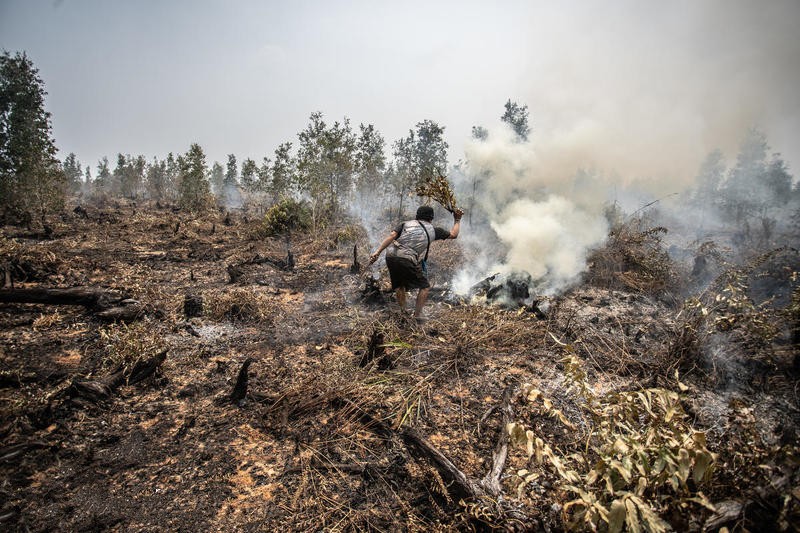
Biofuels, like all agricultural products, are particularly vulnerable to the effects of climate change. The price of palm oil—a key biofuel crop—has surged amid disruptions caused by wildfires, which burn plantations, displace workers, and create widespread smoke clouds that slow plant growth. With the current super El Niño set to cause major agricultural disruptions, Indonesia’s crude palm oil production is expected to fall by 2 million tonnes compared to 2025 levels. As Patrick Schröder, lead author of the Chatham House paper, has said:
“An energy security strategy that depends heavily on climate-vulnerable [biofuel] crops is not genuinely resilient.”
Increasing reliance on biofuels in response to fossil fuel shocks means that a growing part of the fuel supply chain is no longer subject only to geological stocks and geopolitical disruptions, but also to weather. Though biofuels are a small component of global fuel supplies in aggregate, they are growing and are increasingly being used to plug a critical gap in national fuel supplies. In Brazil, for example, roughly a third of commercial gasoline consists of biofuels—and in some parts of the country, they are experimenting with a completely fossil-fuel-free diesel alternative. New biofuel strategies rely on growth in fuel crops to plug the growing fossil fuel gap, but with a changing climate, increasing inputs are needed just to keep yields stable, let alone grow them.
If simultaneous disruptions to biofuel crops occurred due to extreme weather, this could trigger a shock to global fuel supplies. Globally, it would be nowhere near the scale of the Gulf energy crisis, but would be concentrated in countries that have bet on it for their domestic energy security. Worse, this could lead to crops destined for food markets being diverted to prop up biofuel production, as outlined by Schröder:
“…governments could find transport fuels competing with food supplies precisely when both are under severe pressure.”
Such a scenario is a recipe for social discontent. Fuel and food costs are themselves often causes of popular protest—at the time of writing, fuel protests are ongoing in Syria, Guatemala, Kenya, and Portugal—but more consequential is their tendency to bring long-simmering tensions to a boiling point. The impact of Syria’s drought on food prices, for example, was a key driver of the Syrian revolution and the devastating civil war that followed.
A worst-case scenario, such as a series of major, unexpected climate shocks that crash yields across key biofuel crops, could lead to a collapse of the biofuel supplies specifically designed to bridge an existing shortfall. This would drive up costs and depress economic activity—potentially even for biofuel production itself, as the agricultural and transportation diesel needed to harvest and transport biofuels is often heavily blended with those same biofuels, leading to a vicious cycle. Almost by definition, an agricultural shock to biofuels is also a shock to food supplies. High costs of transport and food, along with reduced economic activity, could trigger waves of popular discontent and emergency government policy, all in an already charged geopolitical environment. A government choosing between supporting energy and food security faces an impossible choice. Protests would be very likely, with government collapses and even revolutions not beyond the realm of possibility—this exact scenario played out in Sri Lanka after the 2022 energy crisis, amid an economic crisis.
Ramping up biofuels may be seen as a quick, expedient solution to the Gulf energy crisis. But in a changing climate, this strategy risks locking in far greater energy vulnerability. “Expanding biofuel use in response to constrained fossil fuel supplies”, cautioned Schröder, “could mean replacing one form of energy insecurity with another.”




Comments