

Starting out, making mistakes, and rising to challenges
As the saying goes, “water is life.” This rings true when you’re backpacking the dry Siskiyou Mountains at the height of summer. The sight of a snow-melt-fed spring is almost as refreshing as drinking the clear, cold water after filtering it.
When I started my 650-mile hike along the Pacific Crest Trail from Castle Crags State Park in northern California to the Columbia River on the border between Oregon and Washington, I brought along a two-liter hydration reservoir that fit securely in my backpack, snuggled against my spine. I could sip my filtered spring water from it (and hence maintain the metabolic processes needed for life) with an easily accessible straw anytime I liked—or so I thought. At only the second water stop on day one of a 40-day trek, I had already ruptured my water reservoir and begun to wonder whether I was remotely prepared for this endeavor. (Spoiler: this was the first of approximately 27,846 errors I would make on the trip).
Two things allowed me to keep walking, instead of retreating to town (or curling up in a ball and crying on the trail). The first was minor—I had packed a 1-liter water bottle as a backup. The second was huge. My friend Frank and his son Sylas were accompanying me for the first hundred miles, and they had spare water-carrying capacity and a willingness to share.
Resilience lesson: Even when you think you’re on a solo journey, allies are key.
The mythology of modernity, especially in the United States, leans overwhelmingly toward individualism. Sure, it’s worth developing some self-sufficiency, especially if you’re doing something like backpacking. But there is no scenario in which a human can survive and thrive alone, apart from community and companionship. We will have to depend on one another and strengthen our social skills to deal with the hardships of environmental and economic breakdown. We can look to how people come together in the aftermath of natural disasters.
I had conceived of this hike as a connecting experience in nature for me and my daughter, Skya. We were going to set out together, but there was a snag—she was unavailable to start the trip with me. A recent college graduate with an interest in a medical career, she had signed on as a counselor at a camp for children suffering from debilitating conditions. Her camp week coincided with the permit-dictated start of our trip. Having Frank and Sylas as substitute companions made a world of difference for the first 100 miles. Alone, I’m sure I would have flailed and maybe even failed. Together, the three of us overcame my embarrassing equipment failure without much ado.
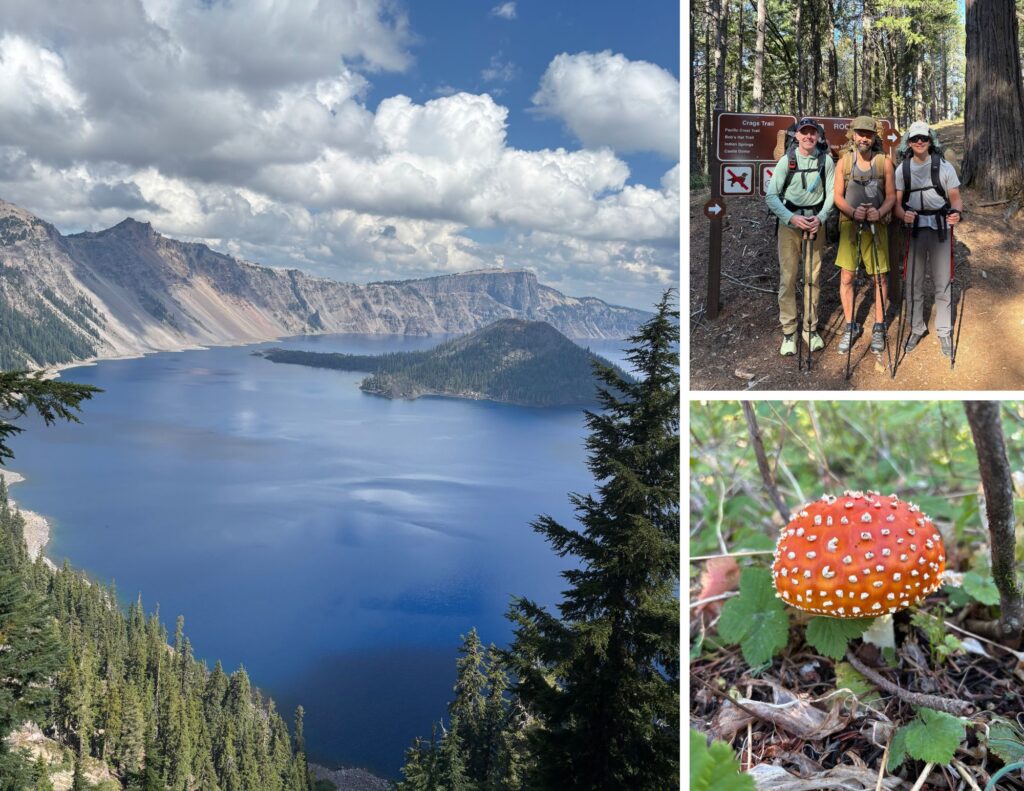
A few days into the trip, Frank, Sylas, and I stopped to rest and refill our water at a shallow creek tumbling down from the gleaming granite crags of the Russian Wilderness. As we topped off our water bottles and crammed M&Ms into our faces, a lone, panting hiker appeared.
The dark, caked-on dirt that coated his legs looked as though he were wearing black spandex leggings, which seemed unusual in this heat. He stepped straight into the creek and splashed water over himself. As the grime washed away, it revealed scraped, bare legs beneath a pair of homemade shorts. I later learned his name was Nick Fowler. Nick was nearly halfway into his record-setting through-hike of the Pacific Crest Trail from Canada to Mexico. He hiked and ran 57 miles a day to complete the 2,650-mile distance in 45 days. By the time we encountered him, I had developed a habit of peppering through-hikers with questions on how to do this trip more gracefully.
I asked Nick what kind of water filter he was using. He said he used to have one, but now he just drinks unfiltered water. I figured it might be wise to disregard, or at least question, everything this risk-taker had to say. But then again, if he really had hiked 15,000 miles in the past year, he might have some nuggets of wisdom to share.
I told him that I was making mistake after mistake and asked whether it ever stopped or got easier. His memorable response: “No, I keep making mistakes. Sometimes you learn from them, but there are always new mistakes to make.”
Then, as if to prove his point, he clumsily dropped his sock into the water, condemning himself to another 20 or 30 miles of soggy footsteps. (Sorry for jinxing you, Nick).
Resilience lesson: We hikers can be unbelievably tough, and we will always have to overcome obstacles, many of which spring from our own mistakes.
Humanity continues to make mistake after mistake, burning too much fuel, wasting too many materials, and running roughshod over ecosystems. Overcoming these mistakes will require restraint, which in turn will require toughness (especially mental toughness), to pull back from overshoot and learn how to live peacefully in alignment with nature.
My own foot problems went quite a bit deeper than a moist sock. Months before the hike began, as I was training and upping my mileage on walks and runs, I developed a condition called Morton’s neuroma. It’s a notoriously hard-to-treat ailment that makes it feel like you’re walking on a pebble that’s stuck in the middle of your transverse arch (the side-to-side arch in the forefoot that runs between the base of the big toe and the base of the pinky toe). At times it can feel like that pebble is coated with razor wire or shards of glass—not the most auspicious circumstance for attempting the longest walk of my life.
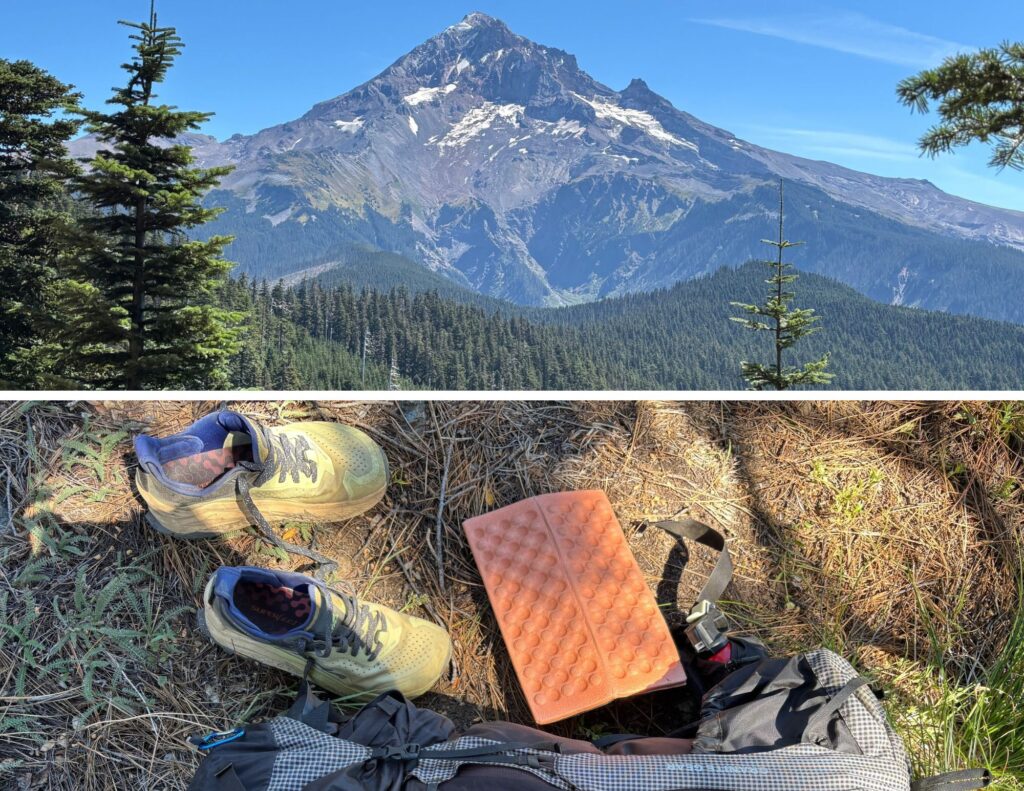
I had trouble hiking more than 10 miles without debilitating pain, and I was planning to hike 15 or more miles, day after day. I went to the podiatrist. I got advice from two physical therapists. I tried a dizzying array of shoe/insole/sock/padding combinations, as well as a variety of sports taping methodologies. Sometimes something would work for a while, but then it would stop. I figured I’d just give the trip a try and bail out if the pain got to be too much.
If the foot issues weren’t enough of a challenge, a month before I set out on my trip, I caught a cold that settled into my lungs. I felt so weak that I stopped training, and I didn’t seem to get any better. A day before leaving, I was preparing a box of food to mail to a designated resupply point on the trail when I got so tired I had to lie down. I went to an urgent care doctor’s office, where they checked my lungs for pneumonia (whew, didn’t have that) and prescribed some medications to help me kick this persistent bug. It felt like the forces were conspiring against me, and my expectations were off base.
Resilience lesson: Sometimes you need to hit the low point so you can create a good comeback story. Expectations often need to be readjusted, or even disregarded altogether.
For decades, scientists and activists have been warning society about the perils of burning too much fossil fuel, consuming too many resources, dumping too many wastes, and overshooting the regenerative capacity of the planet. Society has mostly ignored the warnings or feebly tried to address these problems with the same logic that created them (apply more technology and complexity). With each passing season, we find ourselves painted deeper and deeper into a corner. How much scarier does it have to get, or what will the low point be, before we launch our comeback?
Ahh, expectations—you devilish thoughts—as if my ideas about what the future holds are owed to me or have any bearing whatsoever on what is to happen. I had naively thought I’d train diligently and be in good shape for a big hike, but my 54-year-old body had other plans. I had to cultivate an attitude of accepting what I was given, rather than bemoaning what wasn’t going the way I wanted. I figured I’d just try to walk myself to healthier days.
On the first day of the trip, I felt better. Maybe it was the medication, maybe it was the dry mountain air, or maybe it was the relief of doing rather than endless cycles of planning, but my lungs and legs seemed up for it. And despite the often-contradictory advice about treating my Morton’s neuroma, I confidently chose a shoe and insole setup that seemed to work.
Resilience lesson: Get help from experts. But also trust your intuition and experience with decisions about staying healthy.
I’ve been a public pundit for quite a while now, whether writing and speaking about how to build a sustainable economy or co-hosting the Crazy Town podcast. One truth that has emerged from this work is that there’s no simple recipe to follow that will reverse the polycrisis of environmental and social breakdown. Everyone who understands overshoot or tracks humanity’s ecocidal behavior must make decisions about how to respond. When you ask yourself, “What should I do?” you can get ideas from the pundits, but you’re in the best position to know what skills and resources you can bring to help your community survive and thrive during the Great Unraveling.
If I can hike 15 miles on day one, then obviously I’m all set for the next 635 miles. Begun is half done, right? RIGHT??!!??
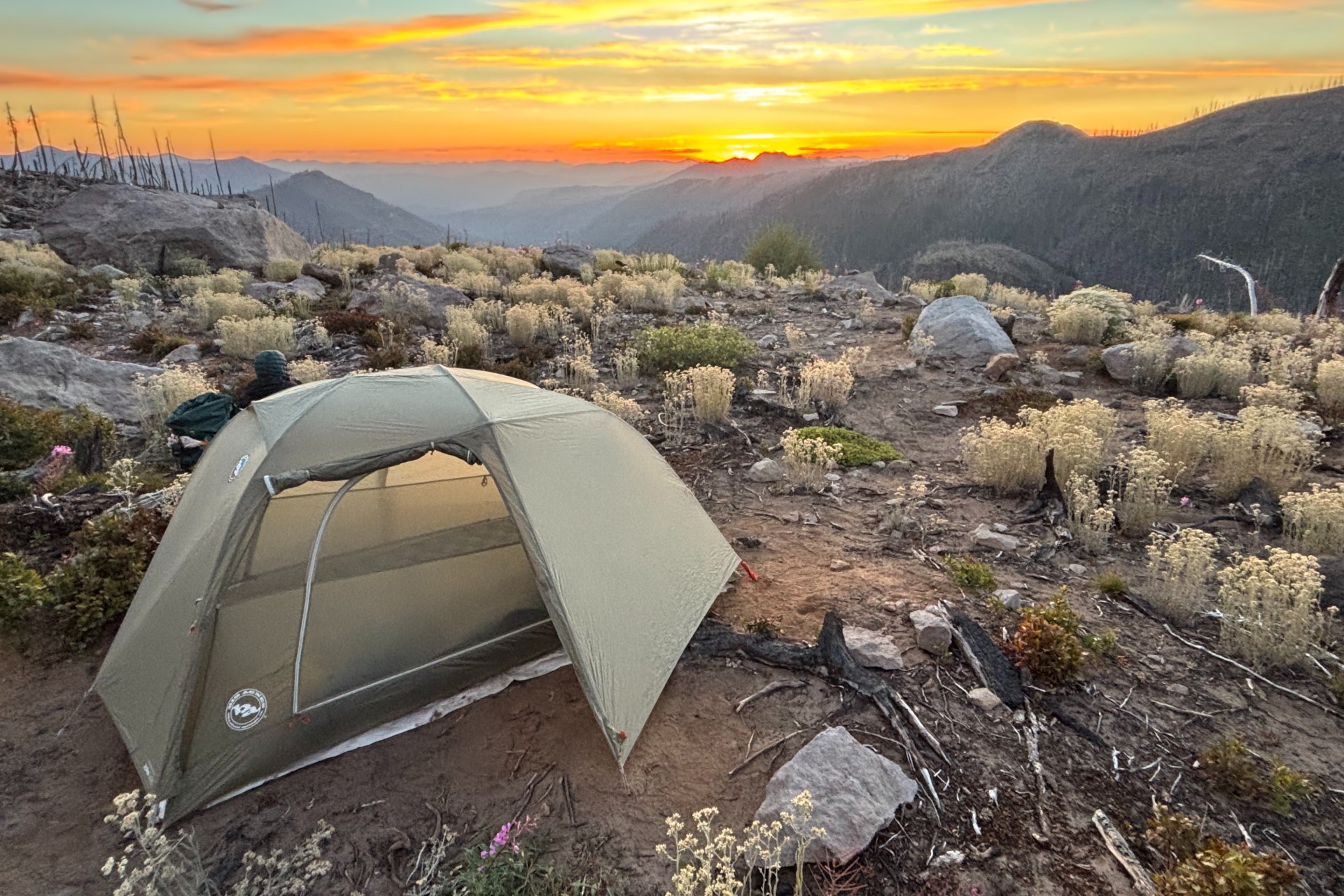
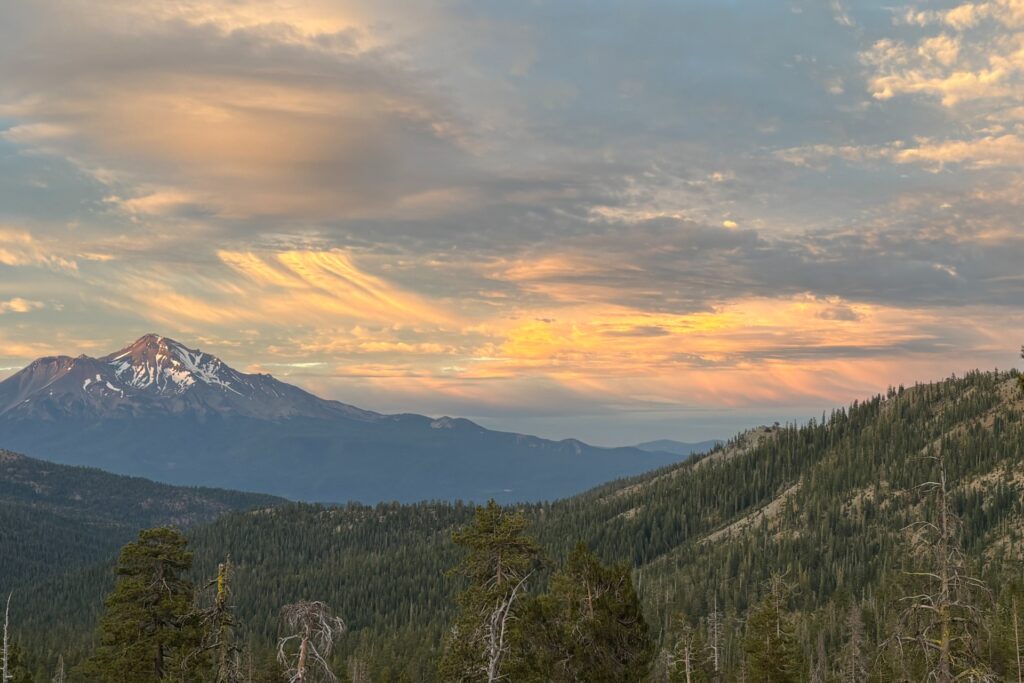
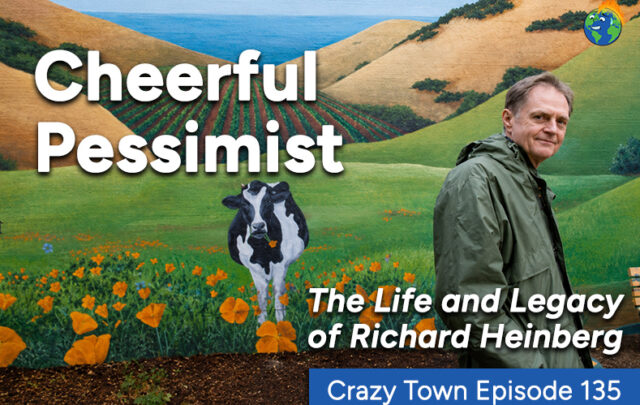
On day two, after another mostly successful 15 miles, we set up camp at a sublime spot. My tent had a direct line of sight to Mount Shasta, with the setting sun casting a pinkish glow on California’s most majestic volcano. Because we were high up on a ridge, my cell phone had a signal, which allowed me to get some shocking and heartbreaking news. My friend and work colleague, Richard Heinberg, had passed away.
The week before I left on the trip, he had let our team know that he had received a devastating cancer diagnosis. He was just getting started on his treatment journey when the universe prescribed a different journey for him. I crumpled on the ridgeline and cried. Richard’s passing colored my entire trip, but sometimes grief morphed into gratitude.
Richard always struck me as a deeply thankful and gracious soul. Even though he wrote many sharp critiques of modern society and the destructive behaviors of certain factions of humanity, he was truly thankful for the gifts that flow from nature, culture, community, and personal relationships. For me, resilience on the trail had a lot to do with gratitude, a sometimes-euphoric feeling that accompanied a chance wildlife encounter, appreciation for my ability to walk to and through such beautiful places, or the joy of a high red-to-green ratio in a handful of Skittles. I looked, and will continue to look, to Richard as a model of grace in a world that seems to be trying to stub it out.
Resilience lesson: Cultivate gratitude, even under trying circumstances.
People like Richard point the way. A thankful, gracious personality is more likely to be influential as an agent of change or a community leader. I often think of Aesop’s fable The North Wind and the Sun and how effective gentle persuasion can be. Finding moments of gratitude, even when climate chaos is raging, or habitats are dwindling, or people are suffering, is a good tactic for maintaining equanimity, overcoming feelings of helplessness, and getting down to the work that needs to be done.
Building momentum and finding connection
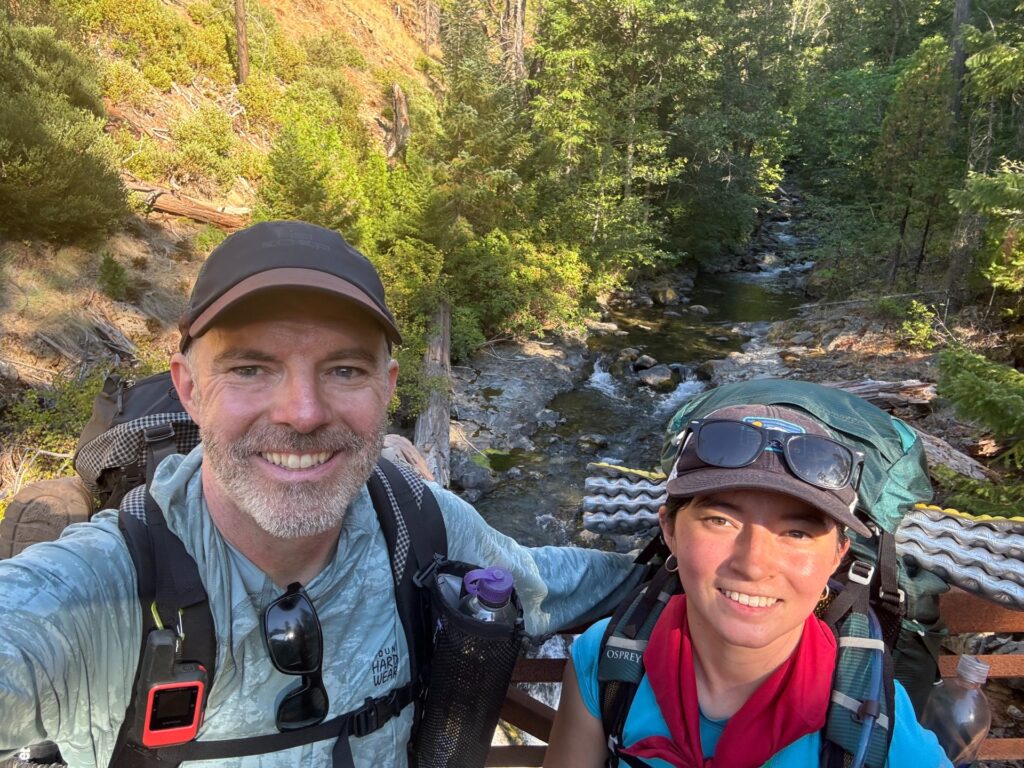
When Skya joined me (and Frank and Sylas de-trailed), I felt a renewed sense of gratitude—it was good to have completed the first hundred miles and good to be walking with my daughter. Crater Lake was many miles up the trail from us, but the last time she and I had visited that impossibly blue body of water, she was three years old, and I was hauling her up the trail in a kid-carrier backpack. We have walked together her whole life, and now I’d get the chance to do so on more equal terms at this transitional time for her.
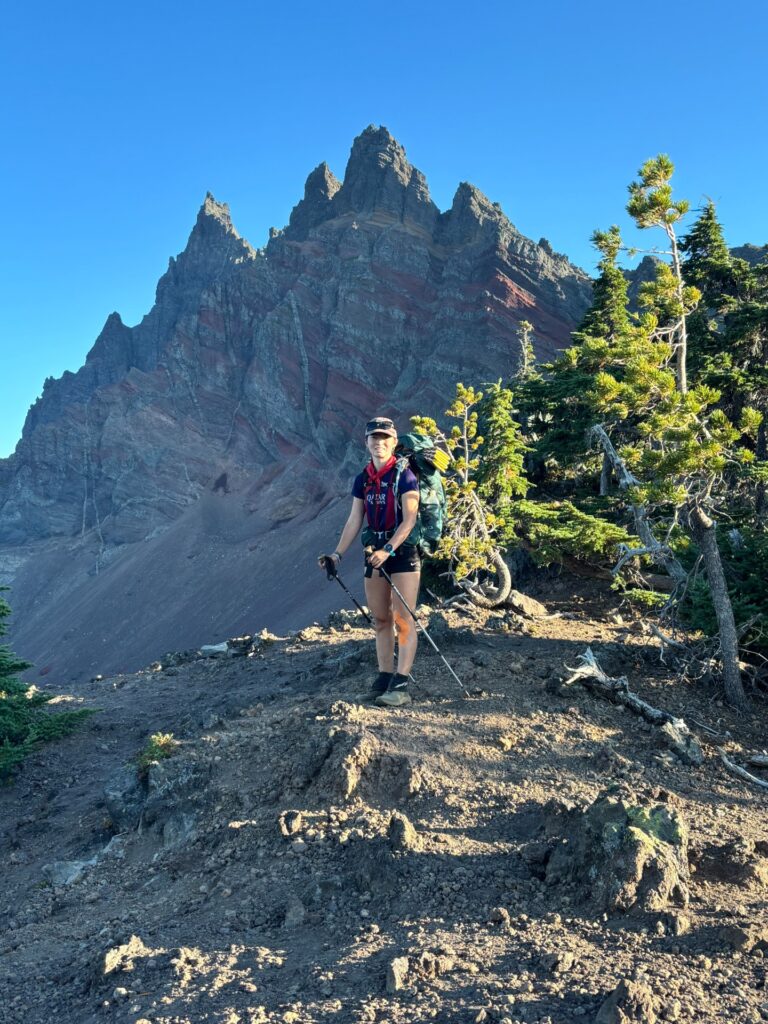
Walking the PCT across Oregon is mostly a tour of high-on-the-ridge forests, punctuated by awe-inspiring volcanoes. From south to north (or NOBO, as they like to say on trail), there’s Mount McLoughlin, Mount Thielsen, Diamond Peak, Crater Lake (or what was once Mount Mazama), the Sisters, Mount Washington, Three Fingered Jack, Mount Jefferson, and Mount Hood.
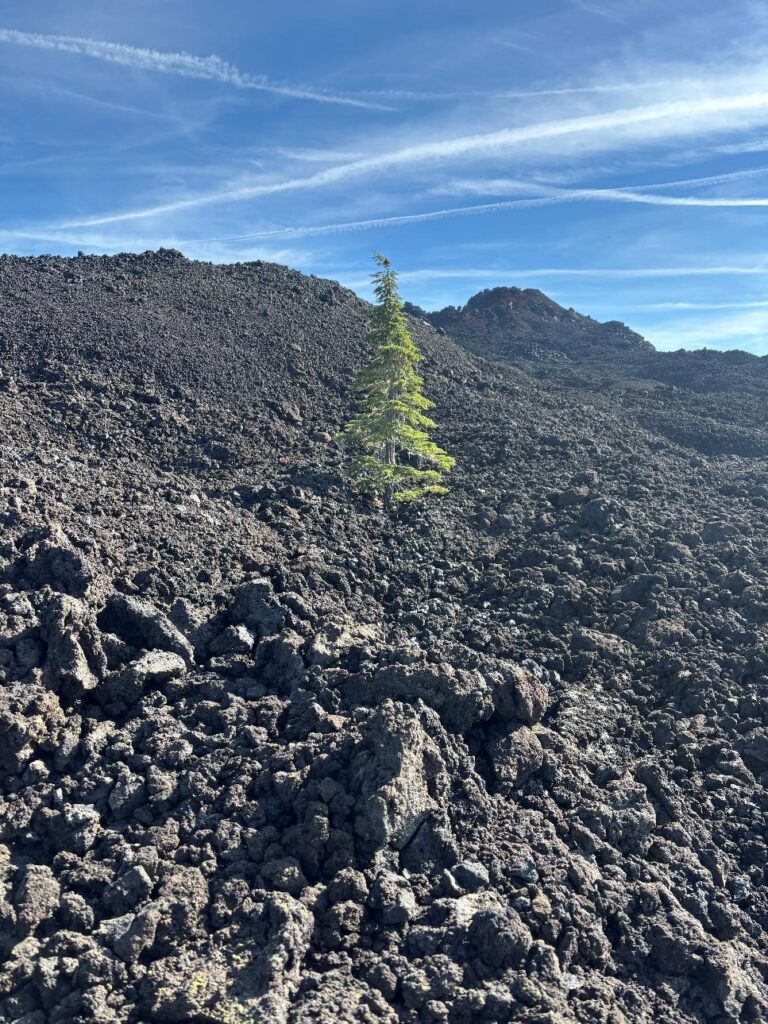
I’m no geologist, no possessor of an uncanny ability to discern the deep-time upheavals of a volcanic landscape, but anyone putting foot to ground in this section of the Ring of Fire can sense the newness and harshness of the rock-strewn setting. Some stretches of trail wind through scenes that would be at home in J.R.R. Tolkien’s Mordor. And yet, lichens, mosses, fungi, plants, trees, and animals find footholds and homes. Even after something as disruptive and cataclysmic as a volcanic eruption, life returns.
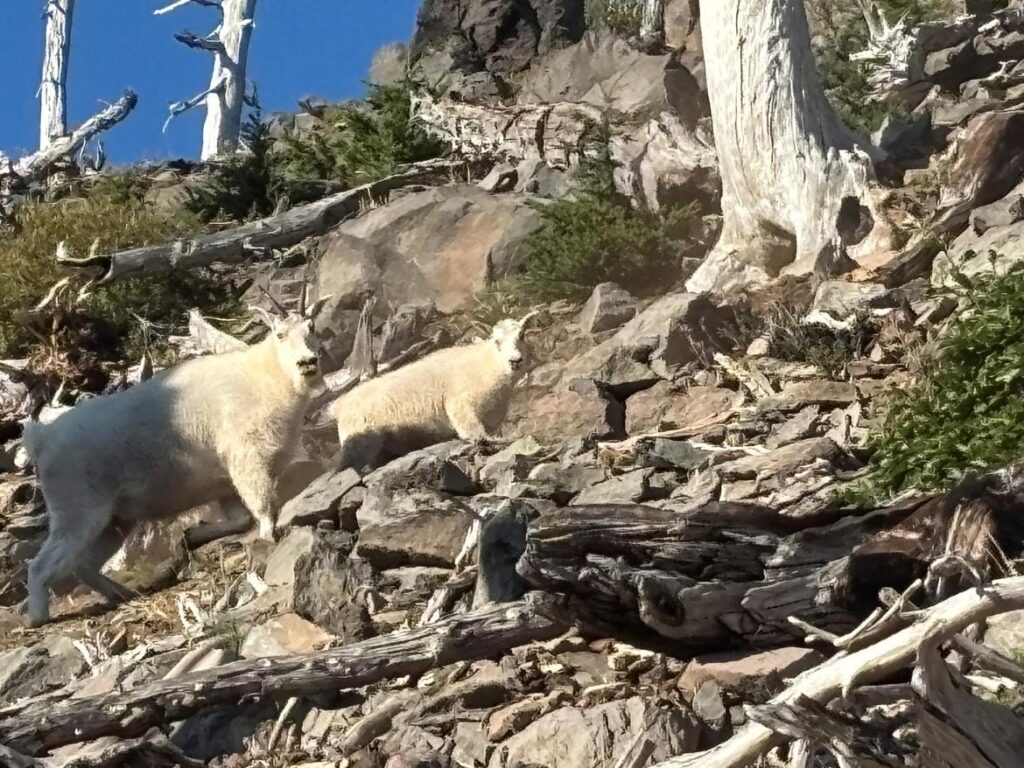
One of my favorite moments on the entire hike came while crossing the scree field covering the west-facing slope of Three Fingered Jack. Two mountain goats, a mother and her kid, crossed the trail right in front of us, casually cruising up the steep slope toward the heights of this jagged crag. They seemed more at home in this landscape than I seem in my living room. As the kid repeatedly made eye contact with me, I felt connection and awe. The brief encounter was a reminder that “community” is much more inclusive than a set of human neighbors.
Resilience lesson: I feel stronger and more connected when I share the landscape with other creatures.
Upheaval and regeneration are part of the story for all of us living organisms. Many disasters (natural and unnatural) are bearing down on us, and many more are yet to come—we need to consider the whole community of life, as we figure out how to weather them.
As stark as volcanic landscapes along the PCT are, perhaps the starkest markers of upheaval are the burn scars. Fire is a natural part of the ecosystem. The forest has evolved to burn, as bolts of lightning from periodic thunderstorms serve as effective igniters. The frequency and severity of fires, however, are increasing, spurred by dual human causes that collaborate in a diabolical partnership: extreme heat caused by climate change and people doing dumb things with campfires, cigarettes, and fireworks.
If you walk the trail, you’re never far from a burned area. Some burns feel benign, as wildflowers and shrubs recolonize the soil and small trees take root in the early stages of the successional march back to mature forest. But other burns feel apocalyptic, from a fire so hot that it not only burned the vegetation, but damaged the soil to the point that ecological recovery is a much longer-term project.
Getting across these burn scars can be a slog. They are hot, since the tree remnants can’t cast shade the way they used to. The mineralized soil (essentially sand) slows each footstep. The lack of green and reminders of death can feel desolate and demoralizing. When Skya and I ran into a long burn scar or some other imposing obstacle, we had to find a way through. I found myself saying, “Well, this trail isn’t going to hike itself.” I came up with a gentle rallying cry to shift my perspective and build momentum.
This sort of perspective-shifting is also useful when the obstacle is more internal, like just being tired from carrying a backpack on a hot day. As our trip progressed, we found we could walk more steps each day. Our fitness grew such that we could hike 20 miles, then 22, then 25 (our longest day was 32 miles), but there was a price to pay. A long day meant a later finish with a tired body.
After tramping 25 miles, it wouldn’t be odd for me to drop my backpack on the ground and plop down next to it with a thud. But camp chores await. You have to pitch the tent, collect and filter water, cook and eat some dinner, and do about 327 other tasks before darkness descends and you pass out in the tent.
I had plenty more rallying cries to overcome my own inertia: “This tent isn’t going to pitch itself. This bear bag isn’t going to hang itself…” After a while, overcoming inertia became a habit. We developed a rhythm to getting camp chores done and to deciding who does what. We never reached the efficiency of most through-hikers we encountered, but we developed a bodies-in-motion-tend-to-stay-in-motion inertia of our own. We could walk day after day, feeling mostly healthy and satisfied, making tangible progress toward our destination at the Columbia River.
Resilience lesson: The inertia of being stuck can be hard to overcome, but the inertia of making progress can get you where you need to go.
Along our 650-mile route, we met friendly, helpful people. And we benefited from timely visitors who brought good food, good sleeping quarters, and good cheer. Some of my family members, Huong, Zoey, and Bijou, treated us to luxury accommodations (beds, tacos, beers, and showers!) and enabled us to spot a bear cub. My Crazy Town co-hosts, Asher Miller and Jason Bradford, made a visit that included perks like freshly picked farm food and a night in a lodge on the shores of an alpine lake. Close friends, Jeremy and Farren, lifted our spirits, even as they gritted out 90 challenging miles through the central Oregon wilderness. Fellow hikers told stories, offered encouragement, shared supplies, and heaped out useful advice based on hard-won trail expertise.
I loved being part of the trail community. I applied a field dressing to a hiker who was struggling with shin splints. I gave away a dehydrated dinner to a hungry Scotsman (win-win: I had an extra meal and could lighten my pack). I generated laughs (or at least groans) with my steady stream of dad jokes.
There’s a term called “Trail Magic.” It consists of kind-hearted souls who find joy in delivering treats and rest-break opportunities for hikers. At one Trail Magic pitstop, we sat in comfortable chairs while the Trail Magician, Rex, grilled breakfast sandwiches for us. For the first time in my life, I took sips from a hot coffee in my left hand and a cold beer in my right. It was rewarding to be part of a community that lived the value of reciprocity and genuinely enjoyed caring for one another.
My final lesson: When you can, take time away from the hustle and bustle of modernity to be in nature, to be with people close to you, and to be in community with all the creatures (humans and non-humans) who share this one life-giving planet.
We collectively face a huge task to reverse overshoot and start repairing holes in the fabric created by The Great Unraveling. The inertia of the fossil-fueled, capitalist, consumerist, technotronic frenzy has proven to be gargantuan. It’s like trying to turn around a giant oil tanker with a kayak and a tow rope. But with enough kayakers, it can be done. Like walking a 650-mile journey. One step at a time, and we’ll reach our destination.



Comments