

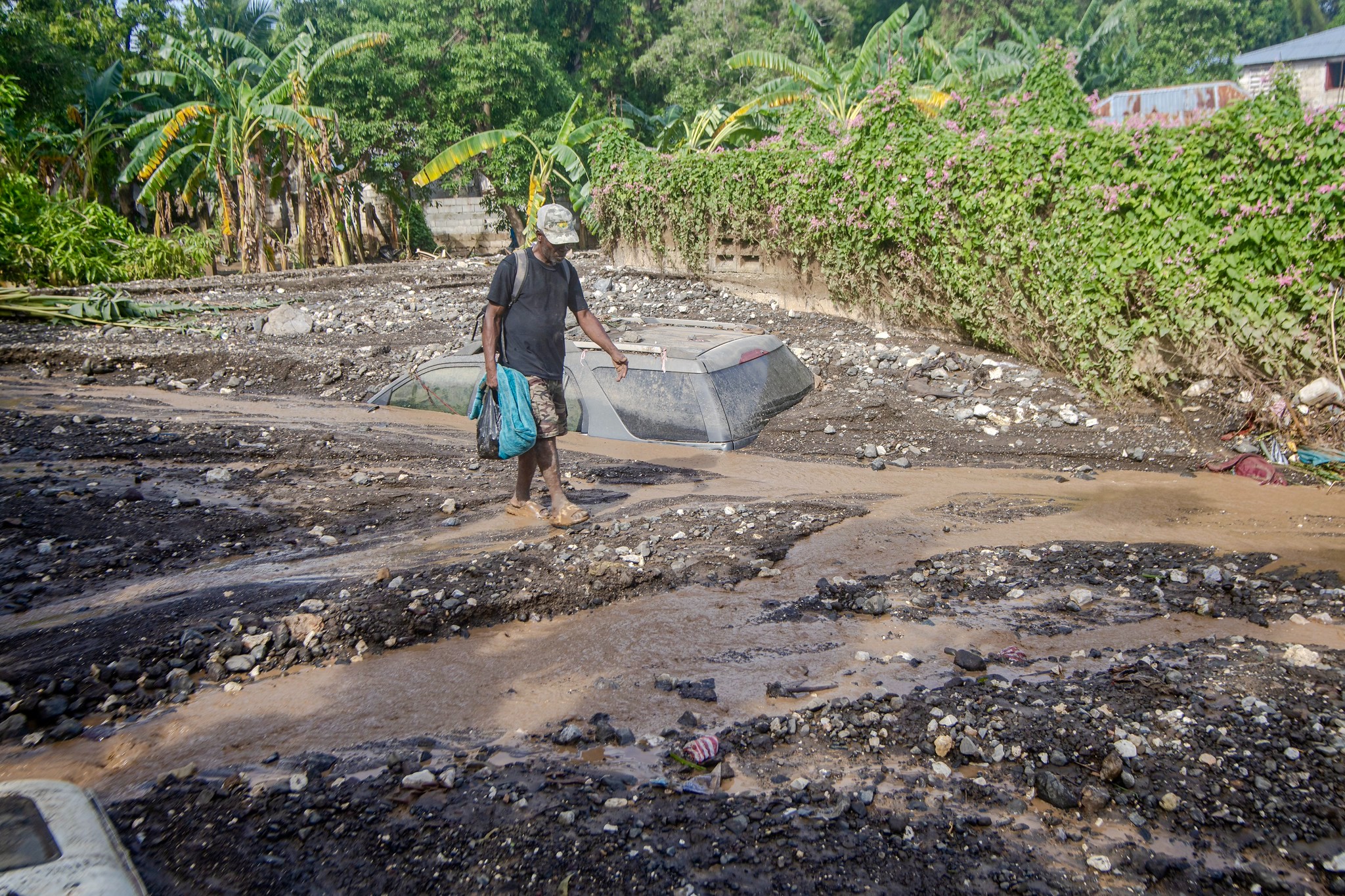
It is September, which means the hurricane season is upon us. The Atlantic hurricane season runs from June through November, but the heaviest of it arrives between the middle of this month and the end of October. In my family, that has never been a date on a calendar. It is a change in posture.
My mother scanned the horizon in September the way other people check a lock. She learned it from my grandmother, who learned it in Swift River, Jamaica, where the floods came suddenly and took everything within reach. The first one swallowed homes whole, carrying off goats, chickens, fruit trees, even the small wooden bridge that joined one side of the valley to the other. My grandmother said it sounded like thunder rolling underground.
When the second flood came, the family moved to higher ground. Then they kept watching anyway. Four generations later, thunder still tightens my chest before my mind catches up.
I used to think of that as one family’s nervous system, handed down like a recipe or a name. I have come to think of it as something else: a set of lessons, most of them much older than us, that the water has been repeating for a very long time. Here is what I have been able to learn from them.
The water is older than the fear
There is no new water. Whatever falls on Portland Parish this season was not made this season. It has been here roughly as long as the planet has, and some of it is older still, formed as ice in the cloud of gas and dust that became the solar system. Nothing in the water cycle is produced. One body of water is relocated, endlessly: days in the atmosphere, years in our bodies, millennia in the deep ocean, tens of thousands of years locked in ice.
Venus almost certainly had water once and lost it to space. Mars had rivers, and the dry channels are still visible from orbit. Earth kept hers, through ice ages and the slow brightening of the Sun, and Gaian thinking holds that life was not a bystander to that. The water stayed because the living Earth kept it.
The lesson there is not comfort exactly, but it is steadying. A hurricane is not a new enemy arriving. It is an old circulation doing what it has done since long before there was anyone here to be afraid of it.
We are not standing outside it
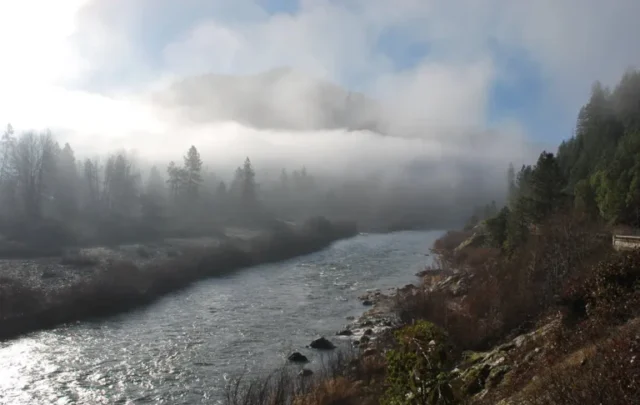
Water is not a resource the Earth contains. It is the Earth’s circulation, the means by which a living planet stays in contact with every part of itself. Portland is the wettest parish in Jamaica because the northeast trades come off the Atlantic heavy with ocean, meet the John Crow and Blue Mountains, and are forced to rise. Rising air cools, and cooling air cannot hold what it carried. My family’s weather is made a thousand miles offshore.
That reframes what a flood takes. I used to describe it as livestock and fruit trees, as though the loss were inventory. But the goats drank that water. The breadfruit tree drank it and released it back into the air over the valley. My grandmother drank it, and it became the tissue of my mother, and then mine. We were the same water in different arrangements. What the river took was kin, in the most literal sense: shared substance.
The record is the warning
A water molecule keeps no record of me, and reverence is worth more when it is accurate. But the system keeps records, and keeps them with precision. Ice sheets hold hundreds of thousands of years of weather, laid down layer by annual layer, with ancient air still sealed in bubbles inside them. Coral lays down bands. Sediment keeps its strata. Earth keeps a ledger, and it is written in water.
Bodies keep a version too. My mother watching the sky was consulting a record. An ice core and the way a body flinches at a remembered pain are both forms of memory — a living system storing what happened so that it can be read later and acted on. That last part is the whole point. A record that changes nothing is only grief with a filing system.
It is why I write this down. Not to escape what the water took, but to keep the record legible for whoever in my family is standing at a window in September thirty years from now.
The terms have changed
Here is where inherited instinct stops being enough on its own. Warmer air holds more moisture, roughly seven percent more for every additional degree Celsius. That means a storm has more to release when it finally releases. It means warmer Caribbean water now feeds hurricanes that strengthen faster than warning systems built for a slower era were designed to track. In 2024, Beryl became the earliest Category 5 ever recorded in the Atlantic, and that was July.
The floods my great-grandmother lived through belonged to a rhythm her own mother would have recognized. What reaches Swift River now comes faster, carries more, and gives less notice. The people farming that valley did not cause it. Jamaica’s annual emissions are a rounding error beside the countries that rebuilt the atmosphere over two centuries. The farmer replanting for the third time in a decade is servicing a debt someone else ran up.
The water itself has done nothing wrong. It is physics running faithfully on terms we changed.
Fluency, not mastery
So the lesson my family learned by moving uphill has to be updated rather than discarded. What is available is not mastery of water; every civilization that has tried to master water has eventually met, or will meet, the limit of its walls. What is available is fluency — knowing how a system works when you belong to it and cannot command it. Preparing without the fantasy of control. And understanding that the storm over someone else’s island is moving through the same body we belong to. There is no upstream far enough to stand on.
What to do with it, this week
Reverence that stops at the riverbank is decoration. So while the season is on us: know your water — which river, which aquifer, which mountain caught which cloud, and where it goes when it leaves you. Know your own exposure, and make the plan before you need it rather than during. Check on the neighbor who will not ask. And give something to recovery in flood country, where people are on the front edge of a change the rest of the world made.
My family has feared this water, depended on it, and moved uphill from it for four generations. The watching was never the point. What we did with what we saw was the point.



Comments
Welcome to the new Resillience commenting system!
We have moved from the former Disqus commenting system to a new system as of September 10, 2026.
We made this change because of privacy concerns regarding Disqus. It's also part of a set of changes to bring more services to the Resilience community under a single login: commenting, (coming September 2026), and online courses (coming 2027). Unfortunately, your old Disqus comments may not reliably link to your account in this new system. Please contact us if you have any questions or concerns.