I was walking past Farragut Square in Washington, D.C. It was the end of my lunch break, and I needed to get back to work.
Suddenly my phone rang. I looked down at the caller ID and noticed it was a Kentucky number. My stomach lurched. I answered.
“Hello?”
“Gracy? This is Wendell Berry. How are you?”
Well, I was on the phone with my personal hero and favorite author. I was not sure how I felt, exactly, but definitely a bit shaky. I lied, however, and said I was fine. “How are you, sir?” I asked.
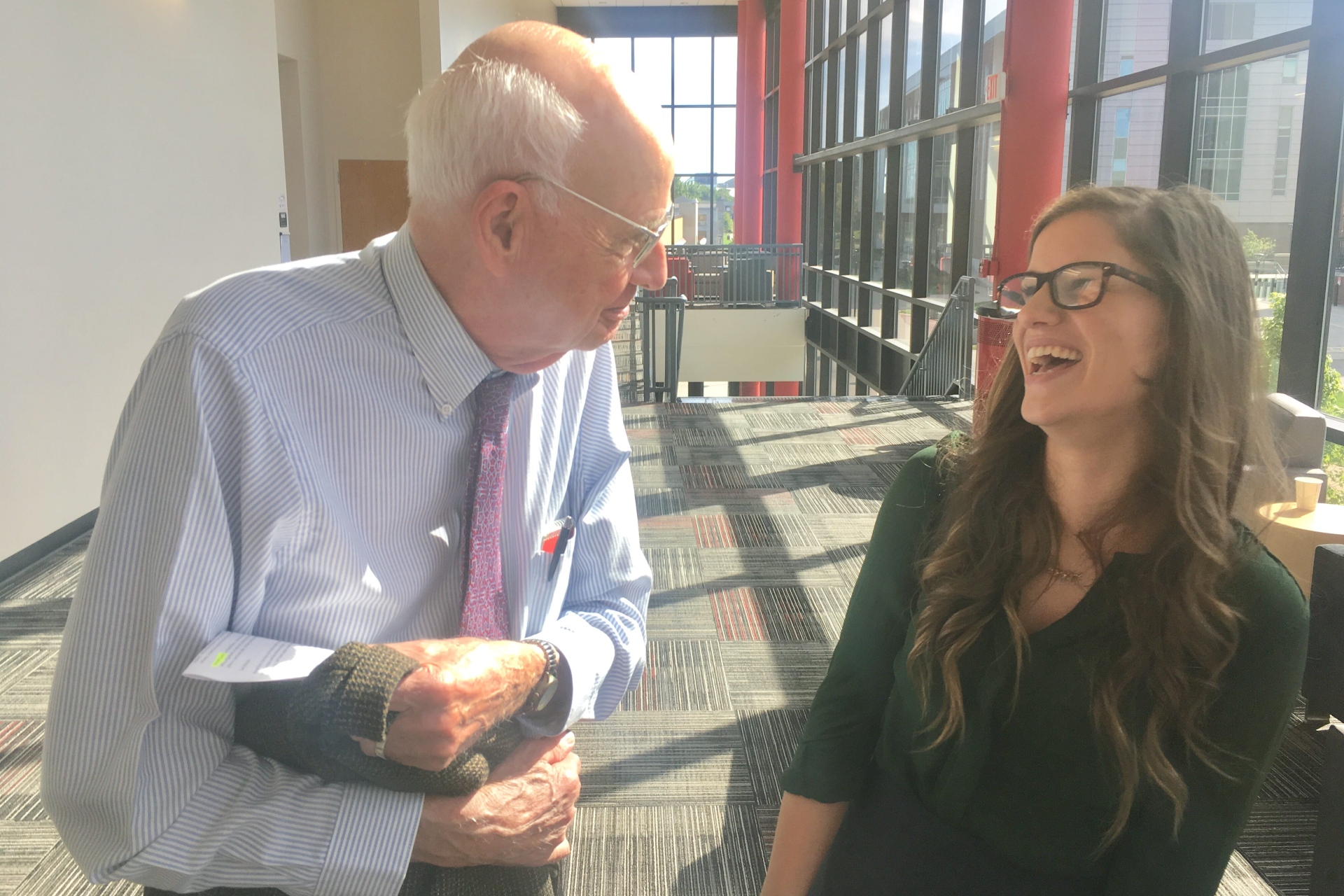
“Just fine,” Wendell said. “I wanted to apologize for taking so long to respond to the questions you sent me in the mail. They were good questions, and it’s taken me some time to figure out how to answer them. I am putting my answers in the mail now.”
I don’t remember how I answered Wendell. There may have been a blush of pride (I wrote good questions?!), along with nervousness and excitement at the thought of receiving his answers back.
But as I reflect back on this short phone conversation ten years later, I am most impressed by Wendell’s kindness. I was not alone in receiving the gift of Wendell’s correspondence. (One of the sweetest gifts of this week has been seeing folks post pictures all over the internet of their letters and notes from Wendell. Each has emphasized how much these letters from Wendell meant to them. To those who would suggest that letters are a thing of the past—that they can be replaced by text messages, Zoom calls, or TikTok—let the record stand corrected!) For decades, Wendell answered people’s letters and questions. He hosted both fans and critics at his home (with the support and help of Tanya, his incredible wife, “co-worker, friend, and critic”), talked to them on the phone, and attended their conferences. And he did all this with immense kindness and charity.
In addition, Wendell was interested in supporting the writers, poets, scholars, farmers, and activists who shared his interest in the fate of good farms, strong communities, and healthy ecosystems. He took each of us under his wing, somehow. He attended to us, advised us, and encouraged us. He named the gifts and hopes in us that often were not even fully realized. And he helped us become more than we ever could have without his wisdom and support.
Looking back, I don’t think my questions were anything special; the truth of the matter was that I had simply and earnestly asked Wendell the questions I most needed his thoughts on. But by calling my questions “good,” he helped me aspire to become a good questioner. Wendell saw a power in words that few others have. He always recognized and respected that power. He carefully crafted and pruned his own prose and poetry. His conversation was full of clever humor. He knew that the right word, rightly said, could bring forth a great harvest—of mirth, hope, or conviction. In the years that followed, I would not always ask Wendell good questions. He would graciously let me know that I needed to ask better ones. And I would strive to follow his advice.
My correspondence with Wendell lasted for thirteen years. In those thirteen years, I had three children, wrote a book, got a master’s degree, and moved back to Idaho. So many of the decisions I made in those thirteen years stem from my friendship with Wendell, from the conversations I was constantly having with him—either via letters, or as the result of reading his prose and poetry. Both Wendell and Tanya taught me that my marriage, my home, and my children mattered more than money, success, or fame. They taught me to “look and see” the beauty of God’s creation, the simple beauties of a well-lived life, and the treasures that are not skin-deep but eternity-deep.
The last time I got to visit Wendell in person was in March of this year. The tenderness with which Wendell talked about his wife and family are hard to talk about just yet. But it’s important to emphasize that he was still “calling forth” a loving vision of the people around him. He said of Tanya, “If she hadn’t come here with me, this country would have been different. Mary would not have inherited her grandfather’s legacy. It all pivots on Tanya.”
My heart aches for Wendell’s loss, and for the grief that Tanya, as well as their children, grandchildren, great-grandchildren, neighbors, church family, and other loved ones, are feeling right now. Please, if you have the time and ability, give something to The Berry Center, to support Mary and all the other folks who are keeping Wendell’s work alive.

I know Wendell has entered his hard-earned rest. And so even with the tears, there is joy. Wendell’s experiencing his sabbath, but we can keep doing the work he inspired us to do. Attend to the beauty of the world (especially the beauty of your corner of it) and work for its wholeness. Love your neighbor. Ask good questions. Put health before profit.
And when you meet people who are hungry for Wendell’s vision of the world, follow his example: listen to them. Advise them. And teach them to ask good questions.
There’s more to say… more than I can honestly ever say. But I know you all understand the pain and difficulty of saying them. Here is a poem from Wendell, in closing:
Some had derided him
As unadventurous,
For he would not give upWhat he had vowed to keep.
But what he vowed to keep
Even his keeping changedAnd, changing, led him far
Beyond what they or he
Foresaw, and made him strange.What he had vowed to keep
He lost, of course, and yet
Kept in his heart. The thingsHe vowed to keep, the things
He had in keeping changed,
The things lost in his keepingThat he had kept in his heart,
These were his pilgrimage,
Were his adventure, nearAnd far, at home and in
The world beyond this world.
Blessings,
Gracy