


In late September, ERC Agrihouse participated in a public gathering at the 2025 Venice Architecture Biennale as part of the GENS Public Programme Thinking hands – constructing our collective response to the climate crisis. Hosted at the Arsenale and curated by Austrian artist Nicolas Panelli, the event brought together farmers, architects, artists, researchers and civic practitioners to reflect on how societies can respond, together, to a rapidly changing climate.
Barbara Giorgi, restoration leader at Agrihouse located in the Latium (Lazio) region of Central Italy, was invited to the discussion as an Ecosystem Restoration Communities representative, but also as President of the Biodistretto dei Laghi di Bracciano e Martignano, a biodistrict of Latium where the climate crisis is no longer an abstract concept but a measurable reality.
During the Biennale, the Biodistrict presented the alarming scenario observed and monitored over the past decade: a progressive lowering of groundwater levels and lake surfaces averaging around 13 cm per year, affecting Lake Bracciano and Lake Martignano, two strategic freshwater reservoirs for central Italy and the Rome metropolitan area.
This evidence presented is the result of a collective and structured research effort carried out through the Latium Biodistricts Working Group on Climate Change (Tavolo di Lavoro sui Cambiamenti Climatici dei Biodistretti del Lazio), in close collaboration with researchers from Centre for Research on Energy and Clean Air, Italian National Agency for New Technologies, Energy and Sustainable Economic Development, and Italian Foundation for Research in Organic and Biodynamic Agriculture. Together, biodistricts and scientists have been monitoring water resources, soil conditions, and agricultural impacts, translating local observations from farmers into scientific data and policy-relevant information.
Throughout the Architecture Biennale session, one theme emerged as central and unavoidable: water. Not only as a physical element shaping landscapes and agricultural systems, but as a political and cultural issue. Many speakers emphasized that the current climate crisis is also a crisis of outdated rules and fragmented governance. Across disciplines, there was a shared awareness of the urgent need to rethink water policies, simplify regulatory frameworks, and remove barriers that today prevent farmers and local communities from implementing small-scale, nature-based solutions.
This reflection strongly resonates with the work carried out by the Biodistretto dei Laghi di Bracciano e Martignano and the wider network of Latium biodistricts. In regions increasingly exposed to drought, water scarcity and fire risk, farmers are already experimenting with rainwater harvesting systems, small retention ponds, regenerative grazing, agroforestry and soil restoration practices. However, these solutions can only scale and generate real impact if supported by enabling policies that recognize farmers as daily custodians of soil and water.

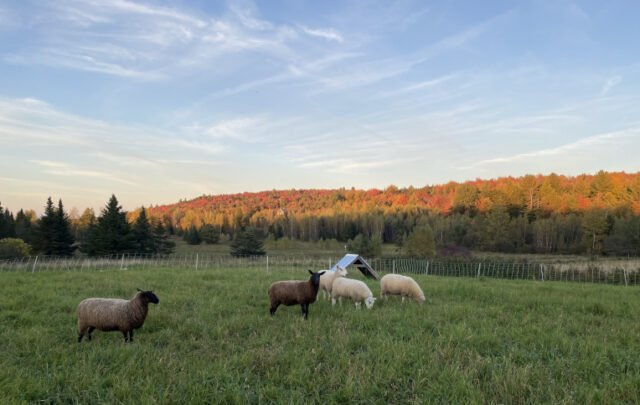
The Agrihouse landscape
Representing the Biodistrict at the Biennale also meant sharing a concrete political outcome that has been achieved through joint efforts: Thanks to the continuous dialogue between biodistricts, researchers and institutions, the Region of Latium has committed concrete funding for the construction of small rainwater retention basins in agricultural areas, aimed at emergency irrigation, fire prevention and increased resilience during prolonged droughts. This result is the outcome of the coordinated action of five organic districts in Latium – Laghi di Bracciano e Martignano, Valle di Comino, Castelli Romani, Terre dei Colonna and Salto Cicolano – through the success of the Latium Biodistricts Working Group on Climate Change.
Beyond funding, this process has opened the path toward new regional water governance, including the creation of a permanent dialogue platform between institutions, research bodies and local regions, and the drafting of new regional water management laws focused on storage, recharge and protection of aquifers and surface waters.
What became clear in Venice is that agriculture, culture and policy are inseparable. Just as architecture cannot be detached from ecology, land management cannot evolve without changes in the legal and economic frameworks that govern it. New rural economies will not be built by farming alone, but through a convergence of ecological restoration, food production, research, education and institutional innovation.
At Agrihouse, these dimensions coexist every day. The farm is simultaneously a place of production, experimentation, learning and hospitality – a space where policy discussions are grounded in real landscapes and lived experience. As an Ecosystem Restoration Community, Agrihouse functions as a testing ground where ideas discussed in conferences and policy tables are translated into soil, water, trees and relationships.

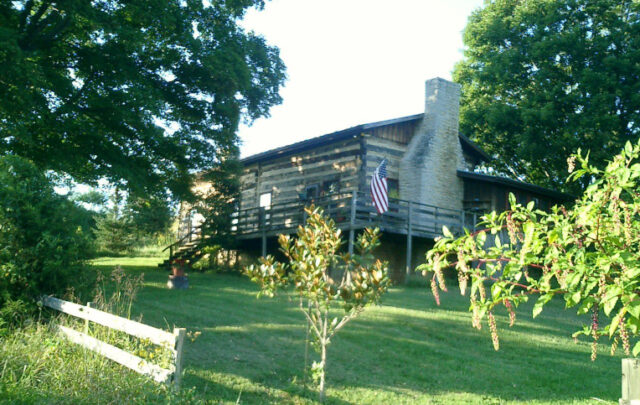
Some of the creative natural building design being explored at Agrihouse
Participating in the Venice Architecture Biennale was therefore not about presenting finished solutions but about contributing to an ongoing collective process. It reaffirmed Agrihouse’s belief that rural areas are not peripheral, but central to the climate transition. When farmers, researchers, designers and policymakers work together, farms and bio districts can become true laboratories of resilience – capable of regenerating ecosystems while shaping fairer and more adaptive governance models.
The conversations at the Arsenale has strengthened Agrihouse’s commitment to continue this work collectively, across disciplines and regions. Through land stewardship, scientific collaboration and the co-creation of new water policies, Agrihouse and the Biodistretto dei Laghi di Bracciano e Martignano will continue to cultivate landscapes – and institutional frameworks – that allow life to thrive in times of profound climatic change.


Comments