

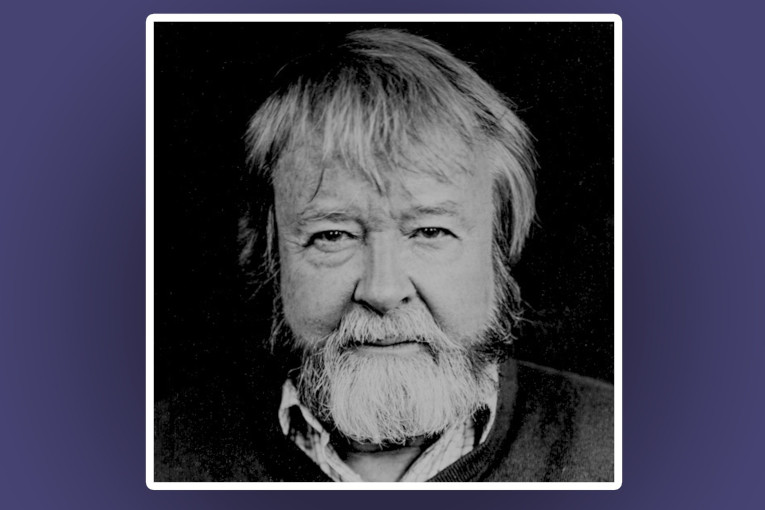
(Conversation recorded on January 2nd, 2025)
Show Summary
When looking at our global challenges, it can be easier to focus on the external factors that could be different. Yet a critical part of creating impactful change is turning the scope of reflection inward towards how our patterns of thinking influence the way we contribute to our surroundings. Is it possible that a path toward a better future begins in our own heads?
Today Nate is joined by psychiatrist and neurologist Iain McGilchrist for a deep dive on the implications of western society’s over-reliance on analysis and categorization on the quality and expectations of our leadership and governance systems. Iain emphasizes the need for a shift in perspective, advocating for wisdom over power and a deeper understanding of the impact of technology on our values and attention.
How can spiritually healthy and aware individuals lead the way towards societal change rooted in wisdom? How can focusing on the well-being of our closest communities create ripple-effects of emergence for broader humanity? Finally, how can embracing wonder and humility throughout our lives – in the face of our scariest challenges – guide us towards a more interconnected and sentient humanity?
About Iain McGilchrist
Dr. Iain McGilchrist is a Quondam Fellow of All Souls College, Oxford, an Associate Fellow of Green Templeton College, Oxford, a Fellow of the Royal College of Psychiatrists, a Fellow of the Royal Society of Arts, and former Consultant Psychiatrist and Clinical Director at the Bethlem Royal & Maudsley Hospital, London.
Iain has been a Research Fellow in neuroimaging at Johns Hopkins Hospital, Baltimore and a Fellow of the Institute of Advanced Studies in Stellenbosch. He has published original articles and research papers in a wide range of publications on topics in literature, philosophy, medicine and psychiatry.
Iain is the author of a number of books, but is best-known for The Master and his Emissary: The Divided Brain and the Making of the Western World (2009); and his book on neuroscience, epistemology, and ontology called The Matter with Things: Our Brains, Our Delusions and the Unmaking of the World (2021).
Show Notes & Links to Learn More
00:00 – Iain McGilchrist info + works, prior TGS Episode, The Master and His Emissary, The Matter with Things
01:40 – The divided brain animated video
11:55 – Complex systems
12:47 – Duck-Rabbit illusion
13:52 – Matthew 22:36-40
19:59 – Louis Lavelle
21:28 – Max Scheler + hierarchy of values
22:18 – Martin Heidegger
22:46 – Gotthold Ephraim Lessing
31:57 – Roman Empire + Ancient Greece
33:23 – Multilevel selection
33:25 – E.O. Wilson, David Sloan Wilson + TGS Episode
43:24 – Abraham Heschel + on wonder
47:58 – Margaret Mead
52:03 – Rod Dreher + Substack blog + The Benedict Option
52:24 – Oxford Literary Festival
58:00 – Michel de Montaigne
1:01:30 – Aletheia
1:05:00 – Alfred North Whitehead
1:05:16 – Stephen Jay Gould + on science and God
1:06:38 – Alex O’Connor podcast + conversation with Iain McGilchrist
1:10:45 – Postmodernism
1:22:59 – The structure of the periodic table + the ring structure of benzene came from dreams
1:23:42 – Sigmund Freud
1:24:51 – Aleksandr Solzhenitsyn
1:27:22 – Viktor Frankl
1:32:24 – Dunbar’s number
1:36:13 – Solzhenitsyn’s nobel speech
1:37:10 – The Sovereign Individual Frankly
1:41:09 – Indra’s net
1:42:20 – Verb-based languages
1:44:12 – Tonal languages
1:50:18 – Jude Currivan
1:58:13 – Patrick Ophuls

Comments