

Ed. note: This piece is a public letter that you can sign if you wish to show your support. The links to see who has signed already and how to add your signature are at the bottom of the piece. The letter is written by “A group of us in Ontario, Canada, who have been doing some collective analysis on energy descent for the last couple of years. Inspired to take action we’ve drafted a public letter and have begun collecting signatures and endorsements from mainly community-based environmental activists in our communities here in Ontario. We hope to get 30 signatures by Earth Day. Our goal here is to continue to foster the energy descent conversation as well as invite people to publicly endorse the concept, who otherwise haven’t. It’s been fascinating to hear people’s responses as we ask them for signatures.” Isaiah Ritzmann, who is named as the author of the article on Resilience.org, is the liaison for the group in Ontario, who are all contributing to the work and research in support of the public letter.
Energy transition is essential. But it’s not enough. We also need to prepare to live with less energy in the future.
It is not enough to adopt clean technology. We also need to prepare to live with less energy. This preparation includes new cultural norms, new institutions, and new infrastructure – not just new technology. And it’s a collective preparation. It’s something we need to do together. We can’t do it alone.
Scientists say we have less than two decades to avoid the worst effects of climate change. We therefore must transition away from fossil fuels as quickly as possible. We must replace coal and oil with solar and wind. The first step to avoid catastrophic climate change is abandoning fossil fuels as quickly as possible.
Energy transition is essential, but the question of how we transition may be even more important. We have options before us and they are not all equal.
The first set of options we will call Energy-as-Usual. This set of options stresses replacing fossil fuels with renewables and gaining greater energy efficiency. But that’s it. Otherwise, this option envisions society continuing to consume energy at present levels. We don’t need to prepare to live with less energy, it says. We just need to prepare to live with different energy sources.
The second set of options we will call Energy Descent. This set of options stresses replacing oil and coal with solar, wind, and other renewables. It also stresses the need for greater energy efficiency. But it adds as absolutely indispensable the need to prepare to live with less energy. We need more than different energy sources. We need different energy societies.
Those who believe in energy descent believe that while we must abandon fossil fuels as quickly as possible it is highly unlikely that we can continue to consume as much energy as we have been. And it’s even less likely that we can do so in a just way. The case against energy-as-usual goes something like this:
- We Don’t Have Time. The renewable energy technology (i.e. solar panels, wind turbines, etc.) needed to supply current levels of energy consumption is staggering – to deploy this infrastructure will take more time than we have.
- Material Footprints. It is an unsettled question whether there are enough non-renewable resources and rare earth materials to physically build all the solar panels, wind turbines, and batteries we need.
- Climate Colonialism. The scale and speed at which we need to deploy renewables will expand the exploitation of marginalized peoples all around the world who live near the mining sites. Destruction of livelihoods and lives, dispossession, and forced relocation will increasingly be imposed by force. This isn’t just a risk. It’s already happening.
- Environmental Degradation. It’s not just people. The scale and speed at which we need to deploy renewables would incentivize the exploitation of ecologies worldwide. We would see the loss of biodiversity, deforestation, loss of wetlands, peatland, etc. In fact, we are already seeing this. And the transition has only just begun.
- Nature of Renewable Energy. Renewable energy differs not only in the quantity of energy it can deliver, but the kind of energy. For example renewable energy is intermittent – the sun is not always shining and the wind isn’t always blowing. And while we hope we get there soon, we have yet to resolve our battery storage challenges.
- Political Reality. Governments have hardly begun to take the transition away from fossil fuels seriously. Even if we could transition to renewables and continue current levels of energy consumption, every year that becomes more challenging with inaction. Even if it were possible at some point, it eventually becomes impossible.
A future with less energy is likely. But a desirable future is not inevitable. A future with no preparation for living with less energy is not where we can meet everyone’s needs. And it certainly won’t be innovative, meaningful, or joyful. Yet a future with less energy can be desirable if we get ready for it. If we prepare we can find ways to meet everyone’s needs. And we can do so in innovative, meaningful, and joyful ways.
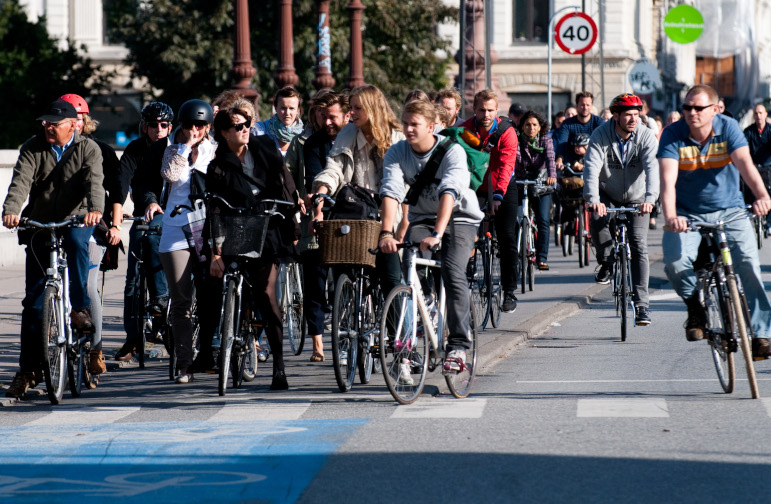
A desirable future includes more bikes, buses, and heat pumps. More clothes that last. More repair skills. Less flying, driving, and buying for sure – but more time, more creative pursuits, and more community. There will be less energy to go around – but there will be more equality and more meaningful ways of living.
This future may have less energy – but it will have more of what really matters.
Link to see who has signed the letter so far:
https://docs.google.com/document/d/1JrFEbBuTyZDOa-Me66A1O02-ZHLwnBec0-tdrvUzD7c/edit
Link to sign the letter:
https://docs.google.com/forms/d/e/1FAIpQLSfKiBlXSCSIppCp_liIAzMYFbfA9rhCFFAmOMhX5HuV0gcQsw/viewform



Comments
Welcome to the new Resillience commenting system!
We have moved from the former Disqus commenting system to a new system as of September 10, 2026.
We made this change because of privacy concerns regarding Disqus. It's also part of a set of changes to bring more services to the Resilience community under a single login: commenting, (coming September 2026), and online courses (coming 2027). Unfortunately, your old Disqus comments may not reliably link to your account in this new system. Please contact us if you have any questions or concerns.
I disagree with your diagnosis of the overarching problem.
It is not feeding the masses – that we can easily do while using energy much more wisely.
The overarching problem is an economics which demands to control how energy is disbursed and costed as a commodity. A dirty commodity at present.That is the problem.
A democratic and social political economics could choose to provide the energy necessary for necessities at a fully affordable cost while ending the entitlements of private sector energy autocrats to control energy markets and their functioning. No public debt is required. Ending private commodification of a life necessity must be accomplished.
We can use available energy differently than we do now. Economics as politics refuses to transition.
I could not agree more, pokiwi. Having paid a lot of attention to ecological design and its principles for decades, I’m fully convinced that if we were to use our human intelligence much more effectively, we could meet all of our legitimate needs on less than half of the energy and materials (and with less than half of the harmful impacts) as the world presently uses. Likely far less than half as much, really. But that’s not a conversation the world is having with itself. That conversation is being obviated wherever it strives to emerge.
While it is ecologically true that trophic energy drives fecundity, it’s much more complicated than simply that.
For example, in energy-rich nations, increased energy use has resulted in reduced fecundity. In short, when you can get all the energy you need by flipping a switch or filling a tank, offspring are an energy liability, rather than an asset.
Consider that in an increasingly energy-poor world, a return to personal food security seems inevitable. Who will weed the gardens needed to feed even a family of four? More children.
Also, most third-world countries do not have state or even private retirement plans, and such are under attack even in the industrialized world — a certain US Presidential candidate could severely damage or even do away with Social Security, for example.
It may once again become necessary that women in industrial countries will have to breed their slave labour force and retirement plan, much as those needs currently drive persistent fecundity in much of Africa today.
So in my crystal ball, I see increased birth rates combined with reduced child survival and reduced longevity. The net result is Malthusian: total population will remain as high as the food supply will allow, with periodic famine.
Want to see the future of the industrial world? Look at Africa.
Aside: I’ve been doing family geneology, doing computer entry from paper records going back to the early 1800s. You can plainly see the demographic switch from large families — inevitably with numerous childhood deaths — to families with two children, and no childhood death.
A reversion to the mean is inevitable.
In the so-called “developed world” there are myriad ways of reducing energy use without risking starvation, death by freezing and death by heatstroke. These are worth looking into.
Yes, but the overarching problem is the energy needed to feed and supply the helpless masses. Of whom there are too many – even in the First World.