

Many know that our fossil-fuel-powered way of life is destroying the social, economic, and environmental conditions we depend upon for our survival. But fewer know that, despite high hopes, renewable energy technologies cannot and will not save us because there is neither sufficient time nor available resources.
The only feasible way, then, to achieve a livable future for all is for the industrialized world to simplify our lives by steadily reducing our energy use to well below current levels. To be sure, this will require appropriate technologies to enable a simplified way of life and most of us will sooner or later have to move back to and live off the land. Fortunately, country life can be healthier and happier than city life and that is where most of us will end up anyway. Some have already made the move; more and more of us need to.
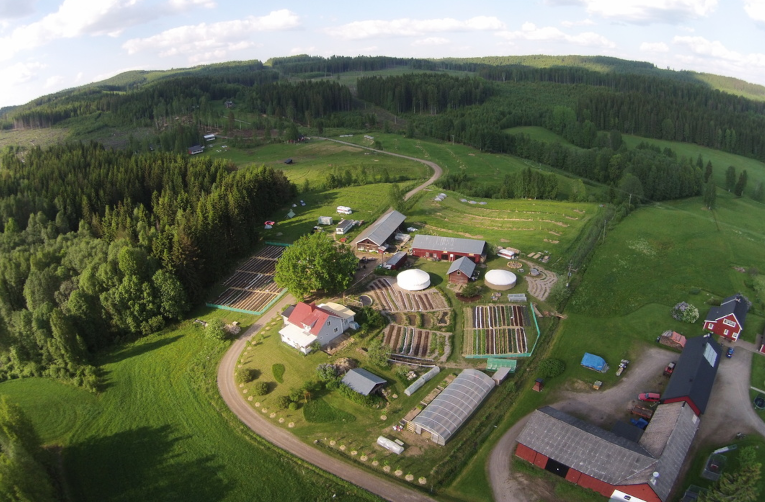
The Resilient Communities Project, comprised of an experienced organizing team, multiple Pacific Northwest landholders with from 2 to 120 acres, and an initial formative group of prospective community members, has recently developed a framework to accelerate this necessary trend. We are forming a network of small socially and economically cooperative communities that can survive and thrive as the neoliberal system continues to unravel. Together we will innovate and demonstrate the transformative power of a truly convivial, equitable, and sustainable way of life.
Many have floundered or failed at “intentional community” for a variety of reasons, including the fact that interpersonal relationships can be incredibly complex and challenging. What is required, then, for success? One ubiquitous failure of organizations, institutions, and communities is that they have lost the ability to learn from their mistakes so as to actually fix them. The Resilient Communities Project instead builds the ability to learn from both our successes and failures into everything we do. If we always remember that however much we know, it is not that much in the big scheme of things, never complete, and sometimes wrong, we can leave our egos at the gate and grow together in humility.
A practical framework
The Resilient Communities Project defines a Resilient Community as one that:
- nurtures the healing and well-being of members and the wider community
- rejuvenates ecosystems while building soil and benefiting the climate
- provides simple, affordable, low impact housing
- regeneratively produces much or most of its own food and other necessities
Under our novel framework a Resilient Community offers a chance for small groups (perhaps 5-15 adults) to cooperatively acquire permanent land and housing subject to sound agreements for the good of all. Individuals, couples, and families, whether or not they have capital, establish a network of multi-generational communities, whether helping to create one or joining an established one. They adopt a cooperative land tenure model with processes to achieve a good fit among members. Their economic structure largely frees them from the extractive economy: by greatly reducing exorbitant living costs they can invest the surplus into growing a more sustainable and equitable alternative economic system.
Instead of paying rent or a mortgage, members make affordable monthly equity-share payments along with a specified share of operating costs. Mechanisms can be created to provide for “sweat equity” or valuation of material contributions. Members receive qualified permanent control over a specific housing unit and/or portion of the land subject to housing co-op rules and land trust conditions. If they later wish to leave, they can sell their equity share to people vetted according to co-op and land trust policies. They would then receive the originally agreed upon value plus inflation and a fairly determined value for improvements they may have made to the land, housing, or infrastructure.
A Resilient Community Land Trust establishes a permanent commons as a basis for living sustainably on the land within a regenerative economic system. If members are part of the initial core team they can help develop a binding land-use charter that will define how the land is to be fairly allocated and stewarded for regenerative purposes. They can also help elect or even possibly serve on the board.
Resilient Community Housing Co-ops will typically be composed of clustered housing that meets zoning rules while providing desired privacy. The housing co-op’s membership bylaws are crafted to help prevent, manage, or resolve interpersonal problems or conflicts through initial vetting, communication training, mediation, etc. As part of an initial core team members can help develop the bylaws specifying community rules and member selection policies. If through fair procedures anyone’s membership is terminated for serious violations of the housing co-op bylaws or land trust charter, their equity would be returned minus any mediation, arbitration, or other properly deductible costs.
If members’ savings are kept in a community fund, they could invest their collective capital in developing the community and financing community enterprises. With provisions for ongoing funding, long-term care in old age or disability could be included in the land trust charter and/or housing co-op bylaws. Resilient Communities will require a diverse membership with a variety of resources, experience, and skills:
Operations
- Permaculture, food production, and animal husbandry
- Arboriculture and silviculture
- Building construction and maintenance
- Facilities and site operations
Management
- Vision, leadership, and facilitation
- Organization and entrepreneurship
- Administration and finance
- Architectural and landscape design
Some principles and values to guide such communities are:
· We are all in this together
- People Care, Land Care, Fair Share
- Love of the natural world
- Roots in land and community
- Healthy bodies, minds, and interpersonal relationships
- Individual or collective spiritual foundation
- Self-motivation and resourcefulness
- Integrity and financial responsibility
- Creativity, collaboration, and courage
The Resilient Communities Project is growing and welcomes collaborators, whether prospective members, landholders, or as part of our support team. Contact Brad Smith at [email protected].



I live on a land trust in West Virginia founded 50 years ago. It started with 19 idealistic young people; within a few years it was down to one member, as happened to every other commune I’m aware of. The nabout 16 years ago, the remaining member and his wife cultivated a new person, who ended up deciding on another place but the following year my husband and I joined, then a couple who left after two years of poor progress in building a house, a single man joined who has now had his lease terminated, and then another couple joined who finished their end of the road and built a house. The oldest member, after his wife died formed a new relationship with someone at a community a couple hours away–a young couple with a baby is starting a six month trial period in his house. This is a small land trust with only four leaseholds It works better because each leasehold is essentially autonomous–we share several tools and appliances but each decides its own projects. The process of vetting and accepting members has changed now that there is a house of sorts on all four leaseholds–a six months trial period is a much better way of deciding if prospective members are right for us (and us for them) than just a couple of meetings or a lot of emails. But we couldn’t do that when new people had to build their own house–couldn’t expect them either to live in a tent doing little for six months, or invest a mot of money and work in a project they weren’t sure they would own. We get more and better bites now (mostly from the directory of the intentional communities website at ic.org ) because it seems, not that many people feel like they could build their own house.
most of us will sooner or later have to move back to and live off the land
Moving back to and living off the land is very important indeed, but only a tiny percentage of the people now living in cities and large metropolitan areas will be able to do it.
Do you really think there is any alternative?
Prior to the widespread exploitation of fossil sunlight, it took about 15 people on the land to support just one person living in a city.
Today, a single farmer supports over 700 people living in cities. What could possibly go wrong with that?
A reversion to the mean is inevitable!