

Early this month it was reported that members of the Subcommission on Quaternary Stratigraphy (which is part of the International Union of Geological Sciences), who had been tasked with adopting or rejecting a proposal to declare that we are in a new geological epoch called the Anthropocene, declined the motion. This comes after years of lobbying by many Earth scientists to formally acknowledge that humanity is in the process of changing the planet in ways that any future geologist would find obvious and undeniable.
My first reaction to the news was disappointment. I’ve been using the term “Anthropocene” for years, and had the impression that the main opposition to its formal adoption came from those who believe that humanity is incapable of changing Earth systems in ways that will make a difference for thousands or millions of years to come. Assuming that humans are too puny to alter the planet significantly is a mental pathway habitually trodden by climate change deniers, and it’s an excuse for doing nothing to avert a hellish future.
However, it turns out that the dispute among the roughly 20 scholars on the Subcommission was mainly about whether humanity’s impact on Earth should be viewed as an event—like a mass extinction or an asteroid impact—or as the start of a new epoch. The majority favored the former; and, even though the legitimacy of their decision is being questioned, I think they’re right.
Ripples from human actions during the last few decades will spread far into the future. However, the consequences of the activities that are currently having profound impacts on the climate, oceans, and biota will limit those activities, so that humanity’s industrial growth-based economy driven by fossil fuels will be mostly if not entirely gone by the end of this century. There will likely be fewer people on the planet then, and they will have far less power per capita. Earth simply doesn’t have enough resources to enable a continuation of population growth and economic expansion for much longer before a decline commences. We will have the opportunity to shape that decline somewhat—to make it more beneficial by sharing the burden of contraction, or to make it more painful by fighting over what’s left—but the techno-optimist vision of a future of ever-increasing human potency is a mere fantasy, and a dangerous one at that.
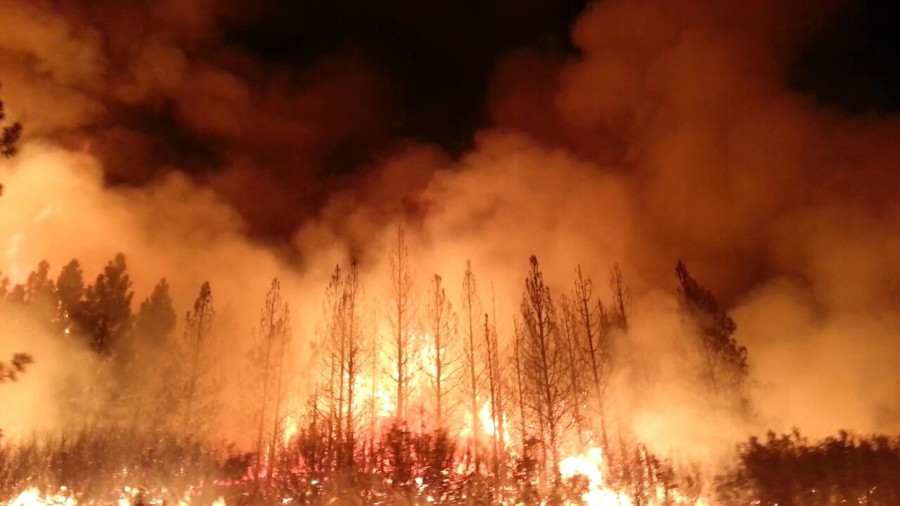
So, it’s probably better to think of the geological moment (a couple of centuries at most) of human techno-transformation and population explosion as an event—like a global conflagration—rather than a durable new regime (geological epochs tend to be several million years in duration). The results of human overshoot will persist: if there are people around 10,000 or even a million years from now, they will be able to discern residue from the 20th and 21st centuries in the stratigraphy of lake beds around the world. That’s when the Earth’s climate changed; when toxic chemicals suddenly proliferated through atmosphere, soil, and waters; when glaciers melted; when radioactive particles were dispersed by atomic weapons tests; when untold numbers of animals and plants went extinct; and when ocean currents shifted. The generations to come will inhabit a different world indeed. Earth’s new regime, once it has stabilized, will surely be classifiable as a new geological epoch—but currently it’s too soon to name it. We’re still in the midst of the transitory event that is driving the end of the Holocene and the beginning of something else.
Perhaps it’s this event that we should be naming. I hereby nominate “the Anthropic Unraveling” or “The Great Burning” as suitable candidates for the title.




Comments
Welcome to the new Resillience commenting system!
We have moved from the former Disqus commenting system to a new system as of September 10, 2026.
We made this change because of privacy concerns regarding Disqus. It's also part of a set of changes to bring more services to the Resilience community under a single login: commenting, (coming September 2026), and online courses (coming 2027). Unfortunately, your old Disqus comments may not reliably link to your account in this new system. Please contact us if you have any questions or concerns.
Yes, and this disturbance of climate stability is just one among six planetary boundaries which “civilization” has crossed recently–though perhaps (just barely next to the biodiversity crisis) the most worrisome of these. Six of nine boundaries have been crossed. Industrial civilization cannot possibly survive, and our task now is to take seriously the project of creating viable post-industrial economies and cultures which might possibly weather this protracted storm… while saving as many threatened and endangered species as possible.
It’s time to abandon mass jet travel and mass tourism, car-dependent living, industrial agriculture, consumer-based culture, etc. If we’re not growing food where we live to feed people nearby, we’re out to lunch.
I am in favor of calling our current and ongoing geological events :
The Not So Sapien Boundary Layer
(Humans are not “Wise men” we are story telling fire chimps. pan piro narrans)
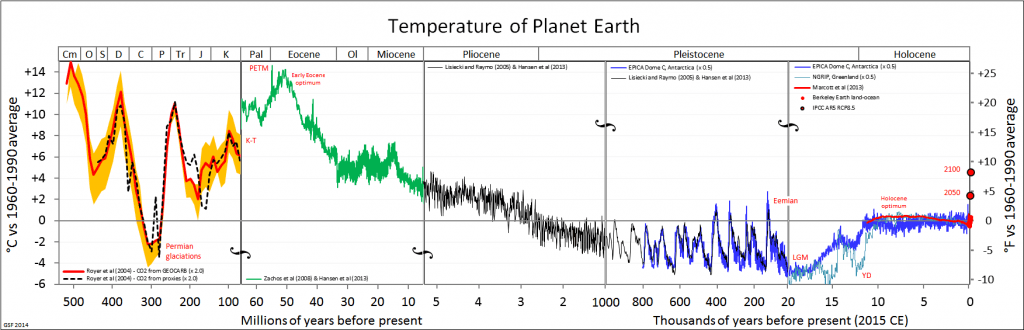
Everyone says “climate change” as if our having destroyed the Holocene climate will result in a “new stable regime” that we’ll somehow need to “get used to” – but the overwhelming likelihood, based on about a million years of data, is that it will simply be unstable. Too bad. Climate Breakdown is the reality, but much more terrifying because there’s no evidence at all that advanced civilization can exist under non-Holocene climate conditions.
This has been known for a long time and is mostly overshadowed by the insane rhetoric to which we’ve all gotten, basically, accustomed. So we just don’t talk about this truth.
_________________
_________________
We often talk, in private these days, about the “anomalous stability” of the Holocene. Someone here told me, “Don’t scare the horses (i.e., don’t scare the ignorant with the facts).”
_________________